
There is something timeless about a warm wood kitchen. Unlike highly trendy finishes that can quickly feel dated, natural wood brings texture, warmth, and character into a home in a way that works across different interior styles. Whether you love modern organic interiors, transitional design, farmhouse kitchens, or a more elevated luxury aesthetic, warm wood can make the kitchen feel welcoming without sacrificing sophistication.
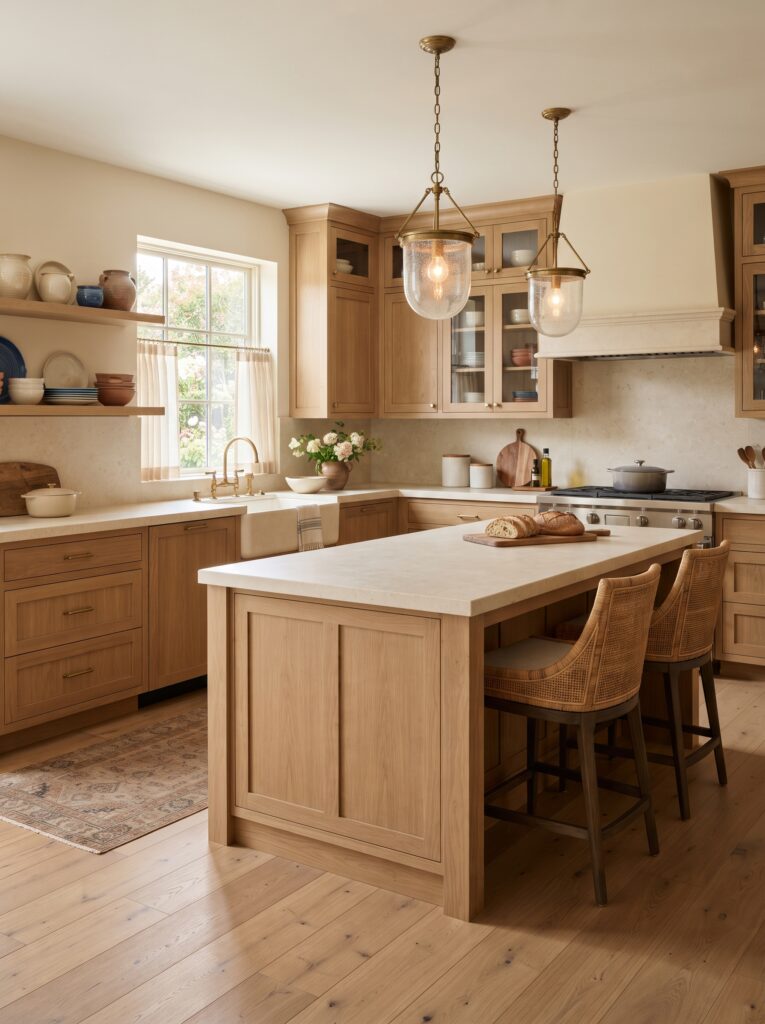
In 2026, natural wood cabinetry is receiving renewed attention in kitchen design. The 2026 U.S. Houzz Kitchen Trends Study found that wood became the most popular cabinet color among renovating homeowners, with 29% choosing wood compared with 28% choosing white. The study also found that medium wood tones were particularly popular.
This renewed interest does not mean returning to the heavy, overly orange wood kitchens of decades past. Today’s warm wood kitchens are more refined. Designers are combining visible wood grain with creamy whites, natural stone, soft lighting, aged metals, linen textures, and carefully selected decorative details.
The result is a kitchen that feels expensive without necessarily relying on excessive decoration.
Why Warm Wood Kitchens Are So Appealing
Kitchen design has gradually moved toward spaces that feel more personal, comfortable, and connected to natural materials. Instead of treating the kitchen as a purely functional workspace, homeowners increasingly want it to feel like an extension of the rest of the home.
Natural wood helps achieve that feeling because it introduces variation and texture. Every piece of wood has its own grain, tone, and subtle character, which prevents the room from looking completely flat or overly manufactured.
Current kitchen design reporting also points toward natural woods, earthy neutrals, authentic materials, and layered lighting as important elements in contemporary kitchen interiors.
Warm wood is also remarkably versatile. You can use it as the main cabinetry material or introduce it through an island, open shelving, ceiling beams, stools, flooring, or smaller decorative elements.
That flexibility makes it easier to create a kitchen that feels current while still having a timeless foundation.
1. Choose the Right Wood Tone
One of the first decisions to make when designing a warm wood kitchen is the tone of the wood.
Light oak can create an airy, relaxed appearance. Medium oak offers more warmth and visual depth, while walnut creates a richer and more sophisticated atmosphere.
For a timeless American kitchen, medium and natural wood tones can be particularly effective because they provide warmth without dominating the room.
White oak remains especially popular in contemporary kitchen design. The National Kitchen & Bath Association’s 2026 kitchen trends reporting identified wood grain cabinetry as a growing preference and white oak as a leading wood choice.
If your kitchen receives plenty of natural light, slightly deeper wood tones can create beautiful contrast. In a smaller or darker kitchen, lighter oak can help maintain an open and bright feeling.
The key is not simply choosing the lightest or darkest wood. Instead, consider how the cabinet color interacts with your flooring, countertops, backsplash, wall color, and natural light.
2. Pair Warm Wood With Creamy Neutrals
One of the easiest ways to make wood cabinetry feel sophisticated is to combine it with warm neutral colors.
Instead of a stark white that can create a sharp contrast, consider:
- Warm white
- Cream
- Ivory
- Soft beige
- Mushroom
- Taupe
- Light greige
These shades allow the natural grain of the cabinetry to remain the visual star while creating a soft and cohesive background.
A warm oak kitchen with creamy walls and an off-white stone countertop can feel significantly more relaxed than a kitchen filled with cold gray surfaces.
This combination also gives you more freedom when decorating. Neutral backgrounds make it easier to change stools, rugs, artwork, ceramics, and textiles later without redesigning the entire kitchen.
3. Create a Statement Island
You do not necessarily need wood cabinetry throughout the entire kitchen to achieve the warm wood aesthetic.
A wood kitchen island can become the focal point while the surrounding cabinetry remains painted.
For example, imagine:
Cream perimeter cabinets + warm oak island + stone countertop + aged brass hardware.
This combination creates contrast without making the room visually busy.
Another option is to use natural wood on the lower cabinets and a soft painted color on the upper cabinets. This creates visual layering while keeping the kitchen grounded.
The 2026 U.S. Houzz study also found that wood has become particularly prominent in contrasting island countertop choices, reflecting the broader movement toward natural materials and warmer kitchen compositions.
4. Use Natural Stone to Elevate the Look
Wood and stone are natural partners.
If you want your kitchen to have a more expensive, designer-inspired appearance, combine warm wood cabinetry with a stone surface that has subtle movement.
Depending on your budget and overall style, you might consider:
- Quartz
- Quartzite
- Marble
- Limestone-inspired surfaces
- Soapstone
- Natural stone with soft veining
The goal is not to make every surface dramatic.
In fact, warm wood often looks best when paired with relatively calm stone.
A creamy countertop with delicate veining can provide just enough visual interest without competing with the cabinet grain.
This balance is especially useful if you want an elegant kitchen that photographs beautifully for Pinterest but still feels practical for everyday life.
5. Add Aged Brass for Subtle Luxury
Hardware may seem like a small detail, but it can dramatically change the personality of a kitchen.
Warm wood cabinetry pairs beautifully with aged brass, antique brass, bronze, and other softly finished metals.
Instead of extremely shiny hardware, consider finishes that have a slightly muted appearance.
Think:
- Aged brass pulls
- Antique brass knobs
- Bronze faucets
- Brass pendant lights
- Mixed-metal accents
The combination of natural wood and warm metal creates a subtle sense of luxury without making the kitchen feel overly formal.
For an especially cohesive look, repeat the metal finish in two or three places rather than using it everywhere.
For example, you could use aged brass for cabinet hardware, pendant lights, and the faucet.
6. Bring in Handmade and Organic Details
A warm wood kitchen becomes much more interesting when you introduce objects that look collected rather than perfectly coordinated.
Try adding:
- Handmade ceramic bowls
- Stoneware pitchers
- Wooden cutting boards
- Woven baskets
- Linen towels
- A ceramic vase
- A cookbook displayed on a stand
- Fresh herbs
- A small olive tree or potted plant
These details make the kitchen feel lived-in.
Recent designer commentary has also emphasized personal objects, greenery, handmade pottery, cutting boards, and window treatments as ways to make kitchens feel warmer and less sterile.
The important thing is moderation.
You do not need dozens of accessories. A few beautiful objects with different textures can have much more impact than a crowded countertop.
7. Mix Wood With Soft Textures
Wood is naturally tactile, so soft textiles can help balance the harder surfaces of a kitchen.
Consider adding a runner made from a natural-looking material, upholstered counter stools, linen window treatments, or woven seating.
For example, a kitchen with:
oak cabinetry + stone countertop + woven stools + linen Roman shades
can feel much warmer than the same kitchen with only hard, glossy surfaces.
Texture is particularly useful in neutral kitchens because it creates depth without requiring lots of color.
8. Choose Lighting That Makes Wood Glow
Lighting is one of the most underrated parts of kitchen design.
Natural wood can look completely different depending on the lighting around it.
Warm, layered lighting tends to bring out the richness of wood grain, especially in the evening.
Instead of relying only on one overhead fixture, consider combining:
- Pendant lights
- Under-cabinet lighting
- Ceiling fixtures
- Wall sconces
- Accent lighting
- Natural daylight
Layered lighting is also being emphasized in current kitchen design discussions because it helps shape atmosphere and balance darker or richer materials.
For a luxury-inspired appearance, choose lighting fixtures that have sculptural shapes or interesting materials rather than treating lighting as purely functional.
9. Let the Wood Grain Be Visible
One of the biggest advantages of natural wood is its texture.
Rather than choosing a finish that completely hides the grain, consider a finish that allows the natural character of the material to remain visible.
Visible grain adds dimension to flat cabinet doors and can make a kitchen feel more authentic.
This is particularly effective in modern organic kitchens where the goal is to combine clean lines with natural materials.
You do not need elaborate cabinet detailing when the material itself provides visual interest.
10. Combine Wood With Greenery
Plants are an easy way to reinforce the natural feeling of a warm wood kitchen.
You can use:
- Fresh herbs near a window
- A small potted olive tree
- Trailing greenery
- Branches in a ceramic vase
- Seasonal flowers
- Simple leafy plants
Greenery works particularly well against oak, walnut, and other natural wood tones.
It also prevents a neutral kitchen from feeling too rigid or staged.
If you prefer a minimalist look, one large plant can make more impact than several tiny decorative plants scattered around the room.
11. Try a Two-Tone Kitchen
If you love warm wood but do not want an entirely wooden kitchen, a two-tone approach can be the perfect solution.
Some combinations worth considering include:
Natural Oak + Cream
This is soft, timeless, and easy to decorate around.
Natural Oak + Sage Green
The green reinforces the natural character of the wood and creates a relaxed atmosphere.
Walnut + Warm White
This creates a richer and more sophisticated contrast.
Oak + Deep Navy
A deeper blue can provide drama while the wood prevents the kitchen from feeling too cold.
Wood + Mushroom Taupe
This combination creates a sophisticated neutral palette that works beautifully in transitional interiors.
Two-tone kitchens also allow you to introduce personality without overwhelming the room.
12. Add Warm Wood Through Smaller Updates
You do not need to remodel your entire kitchen to participate in the warm wood trend.
If your existing cabinets are in good condition, introduce wood through smaller elements.
Try:
- A wooden kitchen island
- Wood floating shelves
- A butcher-block section
- Wooden bar stools
- A wood-framed range hood
- Natural wood cutting boards
- A wooden pantry door
- A small wood furniture piece
- Wood-toned decorative accessories
These changes can create a noticeable visual difference without requiring a complete renovation.
This is especially useful for homeowners who want to refresh their kitchen while working within a realistic budget.
13. Keep the Countertops Visually Calm
If your cabinetry has strong wood grain, the countertop does not necessarily need an equally dramatic pattern.
A calm surface can actually make the cabinetry look more luxurious.
Consider soft white, cream, beige, or subtly veined surfaces.
The idea is to create visual hierarchy.
Let one or two materials become the stars of the room while the remaining finishes support them.
For example:
Warm oak cabinets + quiet cream countertop + simple backsplash + aged brass hardware
creates a cohesive palette without competing patterns.
14. Use Open Shelving Carefully
Open shelving can make a warm wood kitchen feel relaxed and personalized.
Wood shelves are particularly effective when they echo the cabinetry.
However, open shelves need to be styled intentionally.
Instead of filling every inch, leave some negative space.
Display a small collection of:
- Neutral ceramics
- Glassware
- Wooden boards
- Cookbooks
- Small plants
- Handmade bowls
The goal is to make the shelves look collected rather than cluttered.
If you do not enjoy regular dusting and styling, using glass-front or closed storage can provide a similar decorative effect with less maintenance.
15. Make the Kitchen Feel Connected to the Rest of the Home
One reason warm wood kitchens are so versatile is that they transition naturally into other rooms.
If your home already includes wood flooring, wooden furniture, woven textures, or warm neutral textiles, carrying similar tones into the kitchen can make the entire home feel more cohesive.
Instead of choosing every finish independently, repeat a few materials throughout the house.
For example:
Kitchen: warm oak cabinets
Dining area: oak table
Living room: walnut side table
Entryway: wood console
Decor: woven baskets and linen textiles
This creates continuity without making every room look identical.
16. Warm Wood Kitchens Work With Different Design Styles
Another reason to consider natural wood is its ability to adapt.
Modern Organic
Pair light oak with stone, linen, greenery, and soft neutral walls.
Transitional
Combine medium-toned wood with classic cabinetry, marble-inspired surfaces, brass hardware, and traditional lighting.
Farmhouse
Use natural oak, vintage-inspired hardware, ceramics, woven baskets, and simple textiles.
Contemporary
Choose streamlined wood cabinetry with minimal hardware, sculptural lighting, and clean stone surfaces.
European-Inspired
Combine wood with plaster-like walls, natural stone, antique accents, and understated decorative pieces.
The same basic material can create completely different atmospheres depending on the surrounding finishes.
17. How to Make a Warm Wood Kitchen Look Expensive on a Budget
An expensive-looking kitchen is not necessarily about using the most expensive materials everywhere.
Instead, focus on visual consistency.
Start by choosing a limited palette of three or four main materials.
For example:
Warm oak + cream + aged brass + natural stone
Then repeat those materials throughout the kitchen.
Replace inexpensive-looking decorative pieces with fewer, more intentional objects.
A beautiful ceramic bowl can have more impact than a countertop covered in small accessories.
Similarly, a single statement pendant can create more visual interest than multiple inexpensive light fixtures.
If you are working with an existing kitchen, focus on high-impact details first:
- Change the cabinet hardware.
- Add warm wood accessories.
- Introduce better lighting.
- Add natural textiles.
- Bring in greenery.
- Style the countertop intentionally.
- Add one memorable decorative feature.
These small changes can make the space feel more considered.
18. Avoid Making the Kitchen Too Matchy-Matchy
A common mistake with warm wood kitchens is trying to make every wood element exactly the same.
A little variation can actually make the room feel more natural.
You can combine oak cabinetry with walnut stools or a darker wood table, provided the overall undertones work together.
The goal is coordination rather than perfect matching.
Natural materials rarely look completely identical in real homes, and that variation can contribute to the relaxed, collected quality that many homeowners are looking for today.
19. Think About Function as Much as Appearance
A beautiful kitchen still needs to work beautifully.
Before choosing decorative elements, think about how the kitchen is actually used.
Where do groceries enter?
Where are coffee and breakfast prepared?
Where are appliances stored?
Do you need additional pantry space?
Would a drawer be more convenient than a cabinet?
Could the island provide seating without interfering with movement?
Current U.S. kitchen remodeling research shows that homeowners are placing significant emphasis on functionality, storage, and long-term usability alongside appearance.
The most successful warm wood kitchens therefore combine visual warmth with practical organization.
20. The Timeless Formula for a Warm Wood Kitchen
If you want a simple formula to recreate this aesthetic, start here:
Warm natural wood + creamy neutral + natural stone + soft metal + layered lighting + organic accessories.
This combination creates a kitchen that feels sophisticated without being overly formal.
It also gives you flexibility.
You can make the space more modern with black accents, more traditional with antique brass and classic lighting, more coastal with pale oak and linen, or more dramatic with darker cabinetry and rich stone.
That versatility is what makes warm wood such a useful foundation for long-term kitchen design.
Conclusion
Warm wood kitchens are more than a passing aesthetic. Natural materials have a way of giving a home visual warmth and character that can remain appealing even as individual trends change.
The current interest in wood cabinetry reflects a broader movement toward kitchens that feel warmer, more personal, and more connected to natural materials. U.S. kitchen research and 2026 design reporting both point toward growing interest in wood tones, timeless design, earthy neutrals, and functional spaces.
If you are planning a complete kitchen renovation, warm oak or another natural wood can serve as the foundation for an elegant and adaptable design. If you are simply refreshing an existing kitchen, smaller additions such as wooden stools, shelving, cutting boards, lighting, textiles, and natural accessories can create the same feeling without a major renovation.
The most beautiful warm wood kitchens are not necessarily the ones with the most expensive finishes. They are the ones where materials, colors, lighting, and everyday function work together.
When natural wood is balanced with soft neutrals, thoughtful textures, and a few carefully chosen details, even a simple kitchen can feel warm, elevated, and beautifully designed.
- Moody Blue Room Ideas for a Sophisticated Cozy Home
- White Oak and Black Kitchen Ideas for a Modern Timeless Home
- The Garden Patio Ideas That Make Outdoor Spaces Feel Magical
- Dark Cottagecore Kitchen Ideas With Timeless Charm
- Warm Wood Kitchen Ideas That Make a Home Feel Instantly Expensive