
Mixing vintage and modern decor is one of the most beautiful ways to create a home that feels personal, collected, and timeless. Instead of filling a room with furniture and accessories from the same era, combining old and new pieces creates contrast, character, and visual depth.
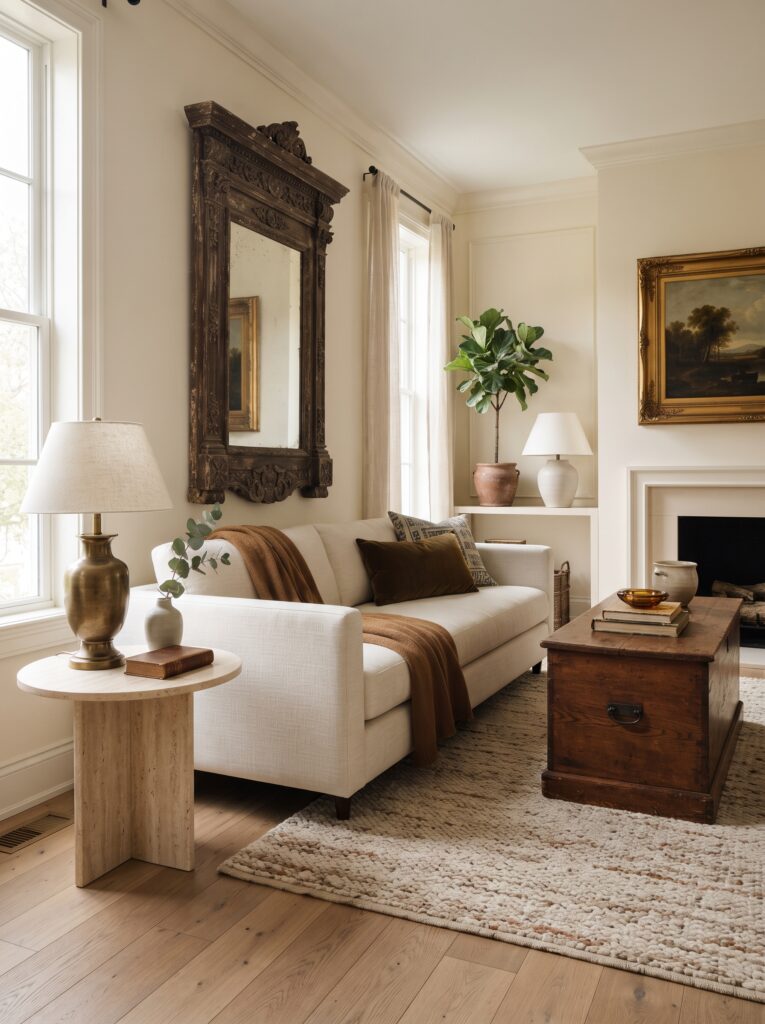
A sleek modern sofa can look completely different when paired with an antique wood table. A contemporary bedroom can become warmer with a vintage nightstand. Even a minimalist kitchen can feel more interesting with an old-fashioned runner, aged brass hardware, or a vintage piece of artwork.
The challenge is creating balance.
Without a clear design direction, mixing different eras can make a room feel cluttered or disconnected. The goal isn’t to make every vintage piece match every modern piece. Instead, you want the different elements to communicate with one another through color, proportion, material, texture, and repetition.
This approach works especially well for homeowners who want an interior that feels sophisticated but not overly staged.
Whether you live in a traditional American home, a modern apartment, a suburban house, or a smaller rental, these ideas can help you combine vintage and modern decor in a way that feels intentional.
Why Vintage and Modern Decor Work So Well Together
Modern interiors often emphasize clean lines, simplicity, and functional design.
Vintage interiors tend to bring warmth, craftsmanship, patina, history, and individuality.
When these qualities are combined, each one can make the other more noticeable.
A streamlined modern sofa can make an antique coffee table feel more special.
A vintage cabinet can soften a contemporary room.
A modern lamp can make an old wooden desk feel fresh again.
This contrast creates the feeling of a home that has evolved naturally over time rather than being purchased as a complete matching furniture set.
That collected appearance is one of the reasons vintage-modern interiors can feel so personal.
1. Start With One Strong Vintage Piece
You don’t need dozens of antique or vintage objects to create this look.
In fact, starting with one meaningful piece is often more effective.
Consider a vintage:
- Sideboard
- Wooden chest
- Mirror
- Armchair
- Console table
- Writing desk
- Dining table
- Cabinet
- Art piece
- Ceramic collection
Let that item become the starting point for the room.
For example, a modern living room with a simple sofa and contemporary rug could be transformed by adding one beautifully aged wooden coffee table.
The vintage table becomes a focal point without making the entire room feel old-fashioned.
2. Keep the Large Furniture Simple
One of the easiest ways to balance vintage accents is to keep larger furniture pieces relatively simple.
A contemporary sofa, modern bed frame, streamlined dining chairs, or simple upholstered headboard can create a neutral foundation.
Then you can introduce vintage character through smaller or medium-sized pieces.
This prevents the room from becoming visually overwhelming.
For example, imagine a living room with:
- A simple cream sofa
- A contemporary area rug
- A vintage wooden coffee table
- A modern floor lamp
- One antique mirror
- A few ceramic accessories
The overall room still feels current, but it has much more personality than a completely coordinated modern set.
3. Use Color to Connect Different Eras
Color is one of the strongest tools for making old and new pieces feel connected.
Your vintage furniture and modern furniture don’t have to match in style if they share a common color relationship.
Suppose you have a dark walnut vintage cabinet.
You could repeat the warm brown tone through:
- A leather accent chair
- Picture frames
- Decorative bowls
- Wood accessories
- A woven basket
The repetition creates visual continuity.
Similarly, an antique blue-and-white vase can be connected to modern upholstery or artwork that contains similar tones.
Color gives different design eras a common language.
4. Repeat Materials Throughout the Room
Material repetition can be just as powerful as color repetition.
If your vintage piece is made from warm wood, introduce additional wood elements throughout the room.
If you have aged brass hardware, repeat brass through lighting or small decorative accents.
If your vintage piece includes natural stone, connect it with another stone surface.
This doesn’t mean everything needs to be identical.
The materials simply need to appear more than once so that the vintage piece doesn’t look randomly placed.
5. Pair an Antique Table With Modern Seating
Dining rooms are particularly good spaces for mixing eras.
An old wooden dining table can look stunning with contemporary dining chairs.
The contrast between the aged tabletop and clean-lined chairs creates visual interest.
You could also reverse the approach.
A sleek modern dining table can be surrounded by vintage-inspired or antique chairs.
The result feels much more individual than purchasing a complete matching dining set.
For a sophisticated American dining room, consider combining warm wood, neutral upholstery, simple lighting, and one or two vintage decorative elements.
6. Mix Vintage Lighting With Modern Furniture
Lighting is another easy way to introduce an older design element.
A vintage chandelier can become a statement piece above a modern dining table.
A vintage table lamp can sit beautifully on a contemporary nightstand.
An antique-inspired sconce can add warmth to a minimalist hallway.
Because lighting occupies relatively little physical space compared with large furniture, it can introduce personality without overwhelming the room.
If the vintage fixture has an unusual shape or finish, allow it to stand out.
You don’t need to surround it with additional vintage objects.
7. Let an Old Mirror Become the Focal Point
Vintage mirrors are particularly effective in modern interiors.
An aged frame can introduce texture, history, and visual contrast.
Try placing a vintage mirror above:
- A modern console
- A streamlined fireplace
- A contemporary vanity
- A minimalist dresser
- A modern entryway table
The contrast makes both pieces more interesting.
An ornate vintage mirror against a simple wall can also create a beautiful statement without requiring a large gallery wall.
8. Don’t Mix Too Many Design Styles at Once
Vintage and modern already create contrast.
Adding too many additional styles can make the room difficult to visually understand.
For example, combining modern, farmhouse, coastal, industrial, bohemian, traditional, and maximalist elements all in one space can quickly become chaotic.
Instead, choose a clear foundation.
You might create:
- Modern + vintage
- Contemporary + traditional
- Minimalist + antique
- Organic modern + vintage
- Transitional + collected vintage
A clear combination makes decorating much easier.
9. Use the 80/20 Approach
One useful way to maintain balance is to make one style dominant and use the other as an accent.
For example, you might use approximately 80 percent modern elements and 20 percent vintage details.
Or you could reverse the ratio if you love traditional interiors.
The exact percentage doesn’t matter.
The principle is simply to avoid giving every design style equal visual weight.
A room needs a dominant language.
The secondary style then becomes the contrast that makes the room interesting.
10. Mix Old Art With Contemporary Furniture
Artwork can bridge different eras beautifully.
A traditional landscape painting can look surprisingly sophisticated above a modern sofa.
An antique botanical print can add character to a contemporary bedroom.
A vintage portrait can create an unexpected focal point in a minimalist hallway.
You can also place contemporary abstract art inside a vintage frame.
This creates an especially interesting contrast because the artwork and frame come from visually different worlds.
11. Use Vintage Books as Decorative Layers
Old books can add instant character to modern rooms.
Stack a few vintage books on a coffee table, console, or bedside table.
You can place a ceramic bowl, candle, small sculpture, or vase on top.
The books create height while also introducing color and texture.
However, avoid filling every surface with decorative books.
A few thoughtfully placed stacks usually look more sophisticated than large piles scattered throughout the room.
12. Combine Vintage Ceramics With Modern Shelving
Open shelving is another opportunity to mix eras.
Modern floating shelves can display vintage ceramics, old pottery, antique-looking vessels, or collected objects.
The clean architecture of the shelves keeps the overall composition contemporary.
The objects provide warmth and personality.
Try grouping pieces by color or material instead of arranging them strictly by age.
A collection of cream, brown, muted green, and natural ceramic pieces can feel cohesive even when every object is different.
13. Mix Different Wood Tones Carefully
Different wood tones can work together, but they need some visual connection.
If you have a dark vintage wood cabinet and a lighter modern oak table, repeat one of those tones somewhere else in the room.
For example, introduce a dark wood picture frame or a lighter wood accessory.
You don’t necessarily need every wood finish to match.
In fact, too much matching can make the room feel like a furniture showroom.
The goal is coordination rather than uniformity.
14. Give Vintage Pieces Space to Breathe
One common mistake is placing too many vintage pieces together.
If you have an antique cabinet, vintage mirror, old chair, traditional rug, and collection of antique accessories all in one corner, the area can quickly become visually heavy.
Give important vintage pieces room around them.
A beautiful antique cabinet may look much more impressive against a simple wall than surrounded by dozens of decorative objects.
Negative space allows character pieces to stand out.
15. Combine an Antique Rug With Contemporary Furniture
An antique or vintage-inspired rug can completely transform a modern room.
Place it beneath a contemporary sofa and coffee table.
The traditional pattern introduces softness and history while the modern furniture keeps the room current.
This combination works particularly well when the rug has muted colors rather than extremely saturated tones.
Look for tones that already exist in your room.
Muted rust, faded blue, olive, cream, tan, charcoal, and warm brown can all work beautifully in a neutral interior.
16. Use Modern Textiles Around Vintage Furniture
If your vintage furniture feels visually heavy, contemporary textiles can help balance it.
For example, an antique wooden bed can be paired with:
- Crisp white bedding
- Textured neutral pillows
- A simple modern throw
- Minimal bedside lighting
This prevents the room from feeling like a historical reproduction.
The vintage furniture provides character while the textiles keep the atmosphere fresh.
17. Add One Unexpected Contemporary Element
Sometimes the best vintage-modern rooms contain one element that feels completely unexpected.
Imagine a traditional wooden cabinet paired with a sculptural contemporary lamp.
Or a vintage dining table beneath a modern oversized pendant.
Or an antique mirror above a minimalist bathroom vanity.
Unexpected contrast creates personality.
It tells the eye that the combination is intentional rather than accidental.
18. Use Brass as a Bridge
Warm metals can help connect vintage and modern elements.
Aged brass, antique brass, and warm bronze can work particularly well because they have enough character to complement vintage pieces while still fitting into contemporary interiors.
For example, you might have:
- A vintage wooden dresser
- A modern upholstered bed
- Brass bedside lamps
- Brass cabinet hardware
- A simple brass picture frame
The repeated finish subtly connects the room.
19. Mix Curves With Straight Lines
Shape is another important design tool.
Modern furniture often includes clean, straight lines.
Vintage furniture may introduce curves, carved details, rounded edges, or decorative silhouettes.
Instead of avoiding these differences, use them deliberately.
A curved vintage chair can soften a room filled with rectangular furniture.
A round vintage mirror can balance a long modern console.
A curved lamp can introduce softness into a minimalist bedroom.
Contrast in shape can make a room feel more dynamic.
20. Make Your Entryway a Collected Moment
The entryway is a perfect place to experiment with vintage-modern decorating because you don’t need many pieces.
Try combining:
- A modern console
- Vintage mirror
- Contemporary table lamp
- Small antique bowl
- Simple vase
- Framed artwork
This creates a welcoming first impression without requiring a complete room makeover.
Because entryways are usually smaller, even one vintage piece can have a strong impact.
21. Create a Vintage-Modern Bedroom
Bedrooms are particularly beautiful when vintage and modern elements are balanced carefully.
A modern upholstered bed can be paired with vintage bedside tables.
A contemporary dresser can sit beneath an antique mirror.
Modern bedding can be layered with an old-fashioned bench at the foot of the bed.
Keep the color palette calm if you want the room to feel restful.
Cream, beige, warm white, muted brown, dusty blue, soft olive, and natural wood can create a relaxed atmosphere.
22. Bring Vintage Character Into a Modern Kitchen
You don’t need to renovate your entire kitchen to introduce vintage personality.
Small details can make a major difference.
Consider:
- Vintage cutting boards
- Antique-style ceramics
- Aged brass hardware
- Vintage-inspired artwork
- Old wooden stools
- Collected pottery
- Traditional runners
- Vintage glassware
These details can soften a highly modern kitchen while maintaining its functionality.
23. Use Vintage Furniture in a Home Office
A vintage writing desk can completely change the atmosphere of a home office.
Pair it with a contemporary desk chair, modern task lamp, and simple artwork.
The result can feel much warmer than a room filled exclusively with office furniture.
An old wooden desk also introduces craftsmanship and visual texture.
The modern elements keep it functional for everyday work.
24. Don’t Try to Make Vintage Pieces Look New
Part of the beauty of vintage furniture is its imperfections.
Small scratches, faded finishes, aged wood, and signs of use can give an object personality.
Instead of trying to eliminate every sign of age, allow some of that character to remain.
The contrast between natural patina and clean modern surroundings can make the vintage piece even more interesting.
25. Choose Vintage Pieces With a Story
The most successful collected interiors usually feel personal.
Instead of buying vintage objects simply because they look old, consider choosing pieces that have a story or a quality you genuinely appreciate.
Maybe it’s an antique mirror found at a local market.
Maybe it’s a wooden cabinet passed through your family.
Maybe it’s a vintage lamp discovered while traveling.
These pieces can make a home feel more meaningful.
Even if the story isn’t visible to guests, the personal connection can influence the way you decorate around the object.
26. Keep Accessories Edited
Vintage-modern interiors don’t need dozens of accessories.
In fact, editing is often what makes the design feel sophisticated.
Choose a few pieces that have different heights, textures, and shapes.
For a coffee table, you might use:
- A small stack of books
- A ceramic bowl
- One sculptural object
- A simple branch arrangement
Instead of covering every available surface, leave some areas empty.
This creates visual breathing room.
27. Create Cohesion Through Repetition
Repetition is the secret to making different pieces feel like they belong together.
Repeat a color.
Repeat a material.
Repeat a shape.
Repeat a metal finish.
Repeat a texture.
For example, if your vintage cabinet has warm walnut tones, you can repeat that warmth through a wooden picture frame and a small bowl.
These connections help the eye move naturally around the room.
28. Let the Architecture Guide You
The architecture of your home should influence how you mix styles.
A historic American home with original trim may naturally support more traditional vintage elements.
A modern apartment may benefit from only a few carefully selected antique pieces.
A suburban home with neutral finishes can become more interesting with vintage furniture and artwork.
Don’t fight the architecture.
Use it as the foundation.
29. Avoid Turning the Room Into a Theme
There is a difference between a collected interior and a themed interior.
A collected home feels like it developed naturally.
A themed room can feel as though every object was purchased from the same store or chosen to recreate a particular era.
If you love vintage style, you don’t need every piece to look antique.
Mixing contemporary objects into the room keeps the design fresh.
30. Think About the Feeling You Want
Ultimately, decorating isn’t only about objects.
Think about how you want the room to feel.
Do you want it to feel:
- Warm?
- Relaxed?
- Sophisticated?
- Collected?
- Creative?
- Comfortable?
- Timeless?
- Personal?
Once you know the feeling, it becomes easier to decide which vintage and modern pieces belong together.
A room doesn’t need to follow a strict decorating formula.
It needs a sense of intention.
How to Mix Vintage and Modern Decor on a Budget
You don’t need to purchase expensive antiques to achieve this look.
Thrift stores, flea markets, estate sales, vintage markets, local resale shops, and secondhand marketplaces can be useful sources for character pieces.
Look for objects with good proportions, interesting materials, and shapes you genuinely like.
You can also start small.
Instead of buying an entire vintage dining set, purchase one old chair.
Instead of replacing your entire living room, introduce a vintage mirror.
Instead of purchasing an antique cabinet, start with a vintage lamp or ceramic piece.
Small changes can gradually create a more collected interior.
The Biggest Mistake to Avoid
The biggest mistake is trying to make every piece belong to the same era.
A room becomes more interesting when there is contrast.
Instead of asking, “Do these pieces match?” ask:
“Do these pieces work together?”
That is a much more useful question.
Two objects can look completely different and still work beautifully together if their colors, proportions, materials, or shapes create a visual relationship.
Conclusion
Mixing vintage and modern decor is less about following a decorating formula and more about creating balance.
Let modern furniture provide simplicity and function. Let vintage pieces bring warmth, character, craftsmanship, and history. Use color, material, texture, shape, and repetition to connect the two. You don’t need a house filled with antiques to create a collected look. One beautiful vintage mirror, an aged wooden table, an old lamp, or a meaningful piece of artwork can completely change the personality of a contemporary room.
The most inviting interiors often aren’t perfectly matched. They feel layered, personal, and naturally collected over time.
When vintage character is balanced with modern simplicity, your home can feel both timeless and current—comfortable enough for everyday life while still looking thoughtfully designed.
- Playful Home Decor Ideas That Feel Fun, Stylish, and Unexpected
- Unexpected Wallpaper Ideas That Make Ordinary Spaces Feel Custom
- How to Mix Vintage and Modern Decor Without Making Your Home Feel Random
- Designer Window Treatment Ideas That Make Any Room Look More Finished
- Vintage Lighting Ideas That Make a Home Feel Instantly Expensive