
A beautiful home doesn’t always have to be serious.
While neutral interiors, quiet luxury, and minimalist spaces remain popular decorating directions, there is another way to make a home feel memorable: adding playful decor.
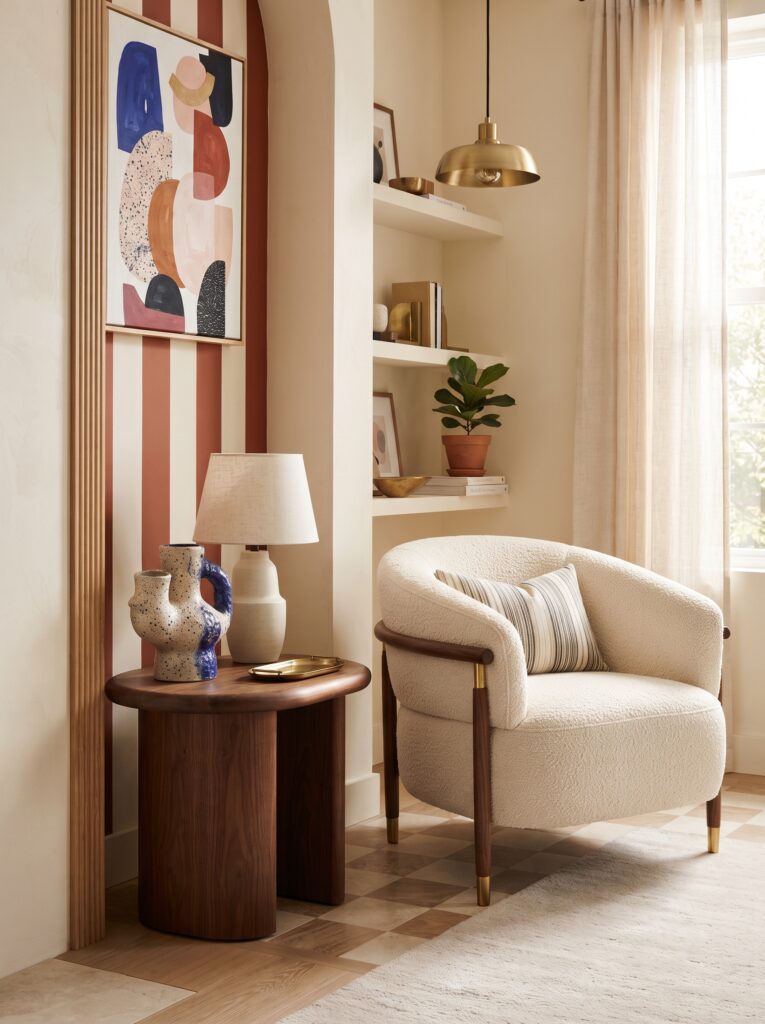
Playful home decor doesn’t mean filling every room with bright colors, cartoon-like accessories, or random statement pieces. Instead, it means allowing your personality to appear through unexpected shapes, interesting colors, unusual artwork, sculptural accessories, whimsical patterns, and objects that make you smile.
The best playful interiors still feel sophisticated.
They simply have a little more personality.
A curved chair in an unexpected color, a sculptural lamp, a colorful piece of artwork, a quirky mirror, patterned wallpaper, or an unusual ceramic object can completely change the energy of an otherwise ordinary room.
For homeowners in the United States who want their interiors to feel unique rather than copied from a showroom, playful decorating can be an easy way to create a more personal home.
The key is learning how to combine fun elements with enough structure that the space still feels elegant and intentional.
What Does Playful Home Decor Really Mean?
Playful decor is less about following a particular decorating style and more about creating moments of surprise.
It can include:
- Unexpected color combinations
- Sculptural furniture
- Whimsical artwork
- Curved silhouettes
- Unusual lighting
- Statement mirrors
- Pattern mixing
- Decorative objects with personality
- Vintage finds
- Bright accent pieces
- Oversized accessories
- Interesting textures
You don’t need all of these.
Even one playful element can change the mood of a room.
A simple neutral living room with one unusual chair can feel more interesting than a room filled with dozens of decorations.
1. Add a Sculptural Lamp
Lighting is one of the easiest ways to introduce playful personality.
Instead of choosing a traditional table lamp, look for a sculptural design with an unusual shape.
It could have:
- A rounded base
- An oversized shade
- A curved silhouette
- A mushroom-inspired form
- An artistic ceramic body
- A bold geometric structure
Because lamps are both functional and decorative, they can make a strong impact without requiring a major room makeover.
Place a sculptural lamp on a console, nightstand, desk, or side table.
Keep the surrounding accessories relatively simple so the lamp remains the focal point.
2. Try an Unexpected Accent Chair
An accent chair doesn’t have to match your sofa.
In fact, choosing a chair with a different shape or color can create exactly the kind of contrast that makes a room feel more personal.
Imagine a neutral sofa paired with a chair in:
- Deep olive
- Muted blue
- Rust
- Chocolate brown
- Soft pink
- Warm mustard
- Rich burgundy
The chair can become the room’s personality piece.
If you’re nervous about bold colors, choose an unusual shape instead.
A curved silhouette can be playful even when the upholstery is neutral.
3. Choose a Quirky Mirror
Mirrors don’t always need to be rectangular.
A wavy, irregular, scalloped, oversized, or sculptural mirror can become artwork for the wall.
Place one above a console table, vanity, dresser, or entryway table.
An unusual mirror can also make a small room feel more visually interesting without taking up floor space.
For a sophisticated look, keep the rest of the wall relatively simple.
4. Use One Unexpected Color
You don’t need a colorful home to introduce playful design.
Start with one unexpected accent color.
For example, a mostly neutral room could include a bright blue lamp.
A beige bedroom could include a burgundy chair.
A white kitchen could include olive-green accessories.
A soft gray living room could include a rust-colored cushion.
Repeat the accent color two or three times throughout the room so it feels intentional.
5. Create a Colorful Powder Room
Small spaces are perfect for playful decorating because they can handle stronger design choices.
A powder room can become a miniature design experiment.
Consider combining:
- Patterned wallpaper
- Colorful artwork
- Unusual mirror
- Decorative lighting
- Interesting hardware
- Sculptural accessories
Because the space is relatively small, you can make a strong statement without committing to a dramatic look throughout the entire home.
6. Mix Patterns Without Making the Room Chaotic
Pattern mixing can feel intimidating, but it becomes easier when the patterns share a common color.
For example, you might combine:
- A striped rug
- Floral cushions
- Geometric artwork
If all three contain similar colors, they can feel connected.
Another option is to vary the scale.
Use one large pattern, one medium pattern, and one smaller pattern.
This prevents everything from competing equally for attention.
7. Add Whimsical Artwork
Artwork is one of the safest ways to experiment with playful decor.
If your furniture is simple, use artwork to introduce humor, color, personality, or unexpected imagery.
You could choose:
- Abstract artwork
- Colorful photography
- Vintage posters
- Quirky illustrations
- Sculptural wall pieces
- Oversized graphic art
- Playful typography
The artwork doesn’t have to match the sofa perfectly.
It simply needs to contribute something meaningful to the overall atmosphere.
8. Turn Bookshelves Into a Personality Wall
Bookshelves don’t have to be purely functional.
Use them to display objects that reflect your interests and personality.
Mix books with:
- Small sculptures
- Vintage ceramics
- Travel finds
- Framed photographs
- Decorative boxes
- Candles
- Small plants
- Interesting objects
Avoid lining everything up perfectly.
A little asymmetry can make the shelves feel collected rather than staged.
9. Use Unexpected Shapes
Shape can be playful even when color remains neutral.
Look for:
- Round coffee tables
- Curved sofas
- Arched mirrors
- Organic-shaped rugs
- Wavy shelves
- Sculptural stools
- Rounded lamps
These forms can soften rooms dominated by straight lines.
A room filled with rectangular furniture can feel more dynamic when one or two curved pieces are introduced.
10. Add a Statement Coffee Table
The coffee table is often treated as a purely practical piece, but it can become a major design feature.
Instead of a traditional rectangular table, consider:
- A sculptural pedestal
- Rounded wood
- Glass with an unusual base
- Travertine-inspired shapes
- Vintage forms
- Irregular silhouettes
If the table itself is visually strong, keep the tabletop styling simple.
A stack of books and one small decorative object may be enough.
11. Make Your Dining Room More Playful
Dining rooms don’t need to feel formal.
You can introduce personality through mismatched chairs, colorful upholstery, unusual lighting, or expressive artwork.
For example, a simple wood dining table can be surrounded by chairs in different but coordinated finishes.
Another option is to use one distinctive chair at each end of the table.
This creates a collected look without requiring an entire matching furniture set.
12. Choose a Fun Pendant Light
A dining room, kitchen island, or breakfast nook is a perfect place for a playful pendant.
Instead of choosing the most conventional fixture, consider a shape that becomes a focal point.
A sculptural pendant can make the entire room feel more designed.
The key is to allow the light fixture to have enough visual space around it.
If the pendant is dramatic, avoid filling the surrounding area with too many competing accessories.
13. Add Personality to Your Bedroom
Bedrooms should remain relaxing, but relaxing doesn’t have to mean boring.
Introduce playful elements through:
- Patterned bedding
- Unusual lamps
- Colorful artwork
- Curved furniture
- Vintage accessories
- Decorative pillows
- Interesting bedside tables
Keep the larger elements relatively calm and introduce personality through smaller details.
This makes it easier to change the room later without replacing expensive furniture.
14. Use a Colorful Bedside Table
A nightstand doesn’t have to be wood or white.
A painted bedside table can introduce a small amount of personality.
Try a muted green, blue, burgundy, or even a soft pastel depending on the bedroom’s color palette.
Pair it with a neutral lamp and simple accessories.
The contrast can make a basic bedroom feel much more customized.
15. Introduce Vintage Objects With Personality
Vintage objects are naturally playful because they often have unusual shapes and details that aren’t common in mass-produced decor.
Look for:
- Old ceramic vessels
- Decorative boxes
- Vintage lamps
- Unusual mirrors
- Small sculptures
- Antique frames
- Collectible objects
One interesting vintage find can make a room feel more individual.
You don’t need a large collection.
16. Try an Unexpected Rug
A rug can completely change the personality of a room.
Instead of choosing the safest neutral option, consider a design with:
- Muted color
- Vintage pattern
- Unexpected border
- Geometric shapes
- Organic forms
- Artistic details
If the furniture is simple, the rug can become the room’s statement.
If the furniture already has strong colors or patterns, choose a quieter rug.
17. Use Playful Decor in a Home Office
A home office can benefit from a little visual energy.
A colorful chair, sculptural lamp, interesting artwork, or patterned curtain can make the space feel less institutional.
You want the room to remain functional, but there is no reason it needs to look like a traditional corporate office.
Choose one or two playful elements and keep the rest organized.
18. Create a Fun Entryway
Your entryway is the first impression of your home.
A playful detail here can immediately communicate personality.
Try:
- An unusual mirror
- Colorful artwork
- Sculptural lamp
- Patterned runner
- Bright ceramic bowl
- Interesting console table
Even a small entryway can have a strong design identity.
19. Experiment With Decorative Hardware
Cabinet hardware is a small detail, but it can create a surprising amount of personality.
Instead of standard pulls, consider unique knobs or handles with interesting finishes and shapes.
This can work particularly well in:
- Kitchens
- Bathrooms
- Home offices
- Built-ins
- Dressers
- Nightstands
Because hardware is relatively small, it offers a low-commitment way to experiment.
20. Use Unexpected Color in the Kitchen
A kitchen doesn’t have to be completely neutral.
If replacing cabinets isn’t practical, introduce color through smaller details.
Consider:
- Bar stools
- Pendant lights
- Artwork
- Runner rugs
- Ceramic accessories
- Curtains
- Small appliances
- Decorative bowls
A single color repeated throughout the kitchen can create a cohesive and energetic look.
21. Make a Reading Nook Feel Special
A reading nook is naturally suited to playful decor.
Start with a comfortable chair.
Then add:
- Sculptural floor lamp
- Small side table
- Colorful cushion
- Patterned throw
- Artwork
- Books
- Small plant
Because the area is compact, you can experiment without changing the entire room.
22. Use Oversized Decor Carefully
Oversized accessories can create a playful sense of scale.
A large vase, oversized artwork, giant floor lamp, or unusually large mirror can become an instant focal point.
The trick is to use one strong oversized element rather than several.
Too many large objects can make a room feel crowded.
One dramatic piece surrounded by simpler elements feels much more intentional.
23. Mix Old and New
Playful decorating works especially well when vintage and contemporary elements are combined.
A modern sofa can sit beside an antique table.
A traditional painting can hang above a contemporary console.
A vintage lamp can sit on a minimalist desk.
The contrast makes the room feel collected.
This is especially useful if you want your home to feel unique without relying entirely on bright colors.
24. Add Personality Through Textiles
Textiles are one of the easiest ways to experiment because they can be changed relatively easily.
Try introducing personality through:
- Patterned cushions
- Colorful throws
- Printed curtains
- Decorative rugs
- Quilts
- Upholstered stools
If you are unsure about bold decor, textiles allow you to test an idea before making a larger commitment.
25. Create a Playful Gallery Wall
Gallery walls don’t have to contain only traditional framed artwork.
Mix different formats.
You could include:
- Photography
- Paintings
- Vintage prints
- Small mirrors
- Drawings
- Decorative plates
- Sculptural objects
The key is to establish some form of connection through color, frame finish, or overall composition.
A little variation keeps the gallery wall interesting.
26. Don’t Make Everything Match
One of the easiest ways to make playful decor work is to stop trying to make every item match perfectly.
Your lamp doesn’t need to match your vase.
Your chair doesn’t need to match your coffee table.
Your artwork doesn’t need to repeat the exact color of your curtains.
Instead, look for relationships.
Maybe two objects share a color.
Maybe two pieces have similar curves.
Maybe the same metal finish appears in different areas.
These subtle connections create harmony without making the room feel overly coordinated.
27. Keep a Neutral Background
If you love playful accessories but don’t want your home to feel chaotic, use a neutral foundation.
Cream walls, warm wood, neutral upholstery, natural rugs, and simple curtains can provide a calm background.
Then introduce personality through smaller objects.
This creates a balance between sophistication and fun.
It also makes it easier to change your accent colors seasonally.
28. Try Color Drenching in a Small Space
If you’re ready for a stronger design move, consider using a similar color across multiple surfaces in a small room.
A powder room, reading nook, or home office can sometimes handle this approach particularly well.
Using related shades across walls, trim, furniture, and accessories can create a dramatic immersive effect.
Keep the accessories relatively simple so the color remains the main feature.
29. Add Humor Without Making the Home Look Childish
Playful decor can include humor, but it doesn’t have to become childish.
The difference often comes down to styling.
Instead of filling the room with novelty objects, choose one sophisticated piece that has an unexpected or humorous quality.
A quirky artwork, unusual sculpture, or amusing vintage object can make guests smile without changing the overall elegance of the room.
30. Let Your Personality Lead
The most successful playful interiors aren’t designed according to a checklist.
They reflect the people who live there.
Maybe you love unusual artwork.
Maybe you collect ceramics.
Maybe you enjoy colorful furniture.
Maybe you prefer vintage objects.
Maybe you simply want one unexpected detail in an otherwise calm home.
Use those interests as your starting point.
Your home should feel like a place where real people live, not like a showroom where every object was selected to follow a trend.
How to Keep Playful Decor Looking Sophisticated
The secret to sophisticated playful decor is balance.
If you use a bold color, keep the surrounding palette controlled.
If you choose a dramatic lamp, simplify the accessories nearby.
If you use patterned wallpaper, choose calmer furniture.
If your rug is highly expressive, keep the artwork relatively quiet.
Contrast is beautiful when it is intentional.
The goal is not to eliminate visual excitement.
The goal is to give that excitement enough space to be appreciated.
Playful Decor on a Budget
You don’t need to spend a lot of money to make your home more interesting.
Start with small pieces.
A colorful cushion, unusual vase, vintage frame, sculptural candle holder, interesting lamp, or secondhand artwork can introduce personality without requiring a major investment.
Thrift stores, flea markets, estate sales, vintage shops, and secondhand marketplaces can also be useful places to find unusual pieces.
Look beyond traditional home decor stores.
Sometimes the most memorable object in a room is something that wasn’t originally designed to be a mainstream decorating accessory.
How to Avoid Overdecorating
When you start experimenting with playful decor, it can be tempting to keep adding.
Try to pause before adding another statement piece.
Look around the room.
Ask yourself:
Does this area already have a focal point?
Is there enough empty space?
Are several objects competing for attention?
Would removing one piece make the remaining pieces stronger?
Editing is just as important as adding.
A playful home should still have breathing room.
Conclusion
Playful home decor is ultimately about creating a home that feels personal, unexpected, and enjoyable. You don’t need to abandon elegance to have fun with your interiors.
A sophisticated neutral room can become much more memorable with one sculptural lamp, an unusual mirror, colorful artwork, vintage furniture, or an unexpected accent color. Start small if you’re unsure. Choose one area of your home and introduce a detail that feels different from what you normally choose.
Then build around it carefully. The best playful interiors don’t look like every object was selected to make a statement. Instead, they feel natural, collected, and full of personality. Your home doesn’t have to be perfectly serious to be beautiful.
Sometimes the most stylish room is the one that makes you stop, look twice, and smile.
- Playful Home Decor Ideas That Feel Fun, Stylish, and Unexpected
- Unexpected Wallpaper Ideas That Make Ordinary Spaces Feel Custom
- How to Mix Vintage and Modern Decor Without Making Your Home Feel Random
- Designer Window Treatment Ideas That Make Any Room Look More Finished
- Vintage Lighting Ideas That Make a Home Feel Instantly Expensive