
Some of the most memorable areas in a home are not always the largest rooms. A small hallway, a neglected reading corner, a compact powder room, or an overlooked wall can completely change the character of a home when it receives the right design treatment.
Wallpaper is one of the easiest ways to create that transformation.
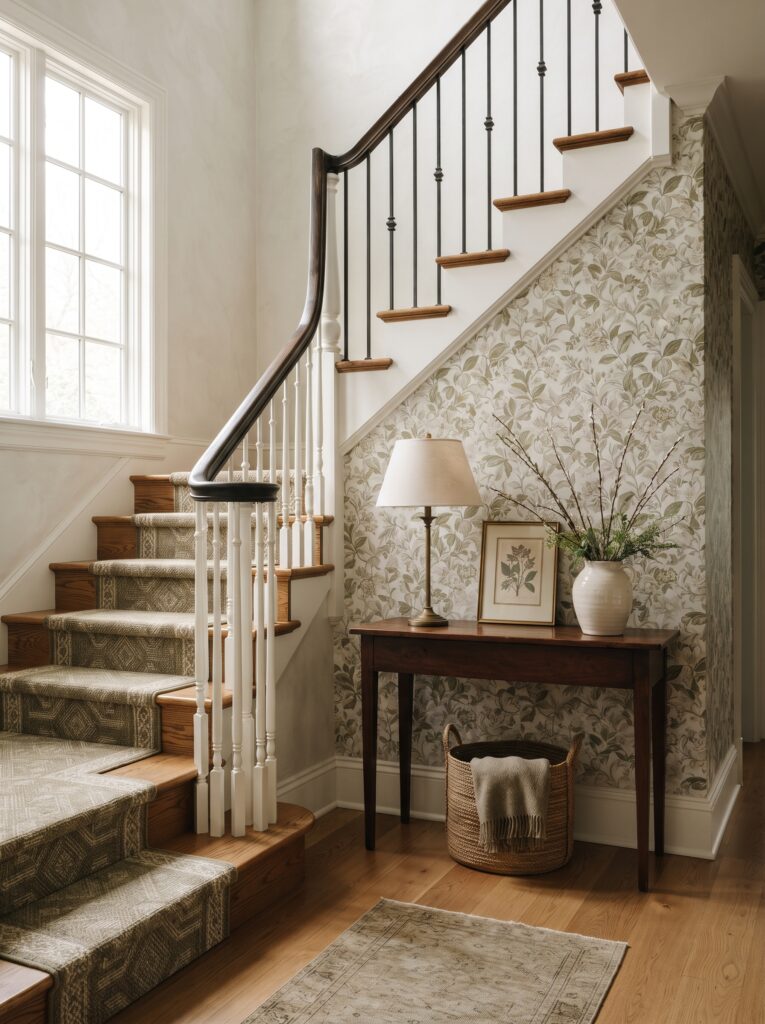
Unlike paint, wallpaper can introduce pattern, texture, depth, movement, and personality in a single design decision. It can make an ordinary wall feel architectural, give a small space a boutique-hotel atmosphere, or turn a forgotten corner into one of the most photographed areas of the house.
For homeowners in the United States who want their interiors to feel sophisticated without completely remodeling them, wallpaper offers an especially versatile option. Today’s wallpaper designs range from quiet organic textures and subtle stripes to dramatic florals, vintage-inspired patterns, murals, and modern geometric designs.
The secret is not simply choosing a beautiful wallpaper. The real design challenge is choosing the right pattern for the right space and pairing it with furniture, lighting, color, and accessories that allow the wallpaper to shine.
Why Wallpaper Can Transform a Room
A blank wall provides a clean background, but wallpaper can become part of the architecture of the room.
It can visually define a space that otherwise feels disconnected. It can create a focal point without requiring expensive furniture. It can also give a small room a distinctive identity.
Consider a plain hallway.
On its own, it may simply be a passage between rooms. Add a subtle botanical wallpaper, a narrow console, a mirror, and warm lighting, and suddenly the hallway feels intentional.
The same principle works in a home office, powder room, entryway, bedroom, dining area, or stair landing.
Wallpaper can make a space feel finished.
Start With the Forgotten Areas of Your Home
If you are nervous about using wallpaper throughout an entire room, start somewhere smaller.
Small or transitional spaces are often ideal because they allow you to experiment with pattern without changing the visual character of the entire house.
Consider areas such as:
- powder rooms
- entryways
- hallways
- stair landings
- reading corners
- home office nooks
- closet interiors
- breakfast areas
- mudrooms
- small guest bathrooms
- alcoves
- built-in shelving backs
These spaces can handle stronger design choices because they are often visually separate from the home’s main living areas.
A dramatic wallpaper that might feel overwhelming in a large living room can look incredibly sophisticated in a small powder room.
Use Wallpaper to Create a Focal Wall
One of the simplest approaches is to use wallpaper on a single wall.
This works particularly well when you have a room with an obvious focal point.
For example, in a bedroom, wallpaper behind the bed can act almost like a large-scale headboard.
In a home office, wallpaper behind the desk can create a defined work zone.
In a dining room, wallpaper on the main wall can make the dining area feel more formal and finished.
The rest of the room can remain relatively quiet so that the wallpaper becomes the visual anchor.
Try an Organic Pattern for a Calm Interior
Organic wallpaper patterns can bring a softer quality to a room.
Think of designs inspired by:
- leaves
- branches
- grasses
- delicate florals
- vines
- natural landscapes
- hand-drawn botanical forms
These patterns work particularly well with warm neutrals and natural materials.
Pair botanical wallpaper with oak, walnut, linen, rattan, woven textures, or ceramic accessories for an inviting interior.
The result can feel sophisticated without becoming overly formal.
Create a Moody Powder Room
The powder room is one of the best places to experiment with dramatic wallpaper.
Because it is usually a relatively small space, you can use a richer pattern without overwhelming the entire home.
Deep green, charcoal, navy, warm brown, burgundy, or dramatic floral patterns can create a luxurious atmosphere.
Pair the wallpaper with:
- a sculptural mirror
- warm lighting
- elegant hardware
- a stone or wood vanity
- a decorative faucet
- simple accessories
The goal is to create visual richness without filling every surface with decoration.
When the wallpaper already makes a strong statement, let the other elements support it.
Give a Small Entryway More Personality
Entryways are often overlooked despite being the first interior area visitors experience.
Wallpaper can give a small entryway an immediate sense of character.
A subtle stripe can create a tailored appearance.
A botanical pattern can make the space feel welcoming.
A textured neutral wallpaper can add depth without introducing a strong pattern.
If your entryway is narrow, avoid choosing a pattern simply because it looks attractive in a large showroom. Consider how the scale will appear in your actual space.
Large patterns can be dramatic, while smaller patterns can create a more detailed, layered effect.
Wallpaper the Ceiling
For homeowners who want something more unexpected, the ceiling can become the fifth wall.
Wallpapering a ceiling is a bold choice, but it can work beautifully in smaller rooms or spaces where the walls are relatively simple.
A subtle pattern overhead can make the room feel custom-designed.
This idea can work particularly well in:
- powder rooms
- bedrooms
- reading nooks
- small offices
- dining spaces
If the ceiling has architectural details, wallpaper can emphasize them rather than competing with them.
Use Wallpaper Inside Built-Ins
Wallpaper does not always have to cover an entire wall.
One of the most refined applications is using wallpaper inside built-in shelving.
The patterned background creates depth behind books, ceramics, artwork, and decorative objects.
This technique is especially effective when the wallpaper contains colors already present in the room.
For example, a soft botanical wallpaper behind cream-colored shelving can create a subtle layered effect.
It is also a relatively easy way to experiment with wallpaper without committing to an entire room.
Turn a Home Office Into a More Inspiring Space
A home office should be practical, but it does not need to look purely functional.
Wallpaper can help establish a distinct work environment.
A subtle geometric design can create a modern, structured appearance.
A vintage-inspired botanical can make the office feel more collected.
A textured neutral can provide visual interest without distracting from work.
If you use video calls regularly, consider how the wallpaper will appear behind your desk. A well-designed background can make the room feel polished without requiring excessive decoration.
Create a Beautiful Reading Nook
A reading nook is another perfect location for wallpaper.
Instead of decorating the entire room, use wallpaper to define the small area.
Place it behind a comfortable chair or across the wall surrounding a built-in bookcase.
Add a warm floor lamp, a small side table, a few books, and a soft throw.
A botanical or vintage pattern can create a cozy library-inspired atmosphere.
The wallpaper essentially becomes the backdrop for the reading experience.
Make a Dining Room Feel More Sophisticated
Dining rooms can benefit from wallpaper because the room’s purpose already allows for a more decorative approach.
A large-scale floral can create drama.
A classic stripe can feel timeless.
A textured neutral can provide quiet elegance.
A traditional pattern can make the room feel collected and established.
When choosing wallpaper for a dining room, consider your existing dining table, chairs, lighting, and artwork.
You want the wallpaper to complement those pieces rather than compete with them.
Consider Grasscloth and Textured Wallpaper
Not every wallpaper needs to have an obvious pattern.
Textured wallpaper can create a sophisticated backdrop while maintaining a relatively quiet appearance.
Grasscloth-inspired textures, linen-look surfaces, subtle woven designs, and plaster-inspired patterns can add dimension to a neutral room.
These designs work especially well in interiors where the homeowner wants a luxury aesthetic without a busy visual effect.
Texture can be particularly useful when you already have statement furniture or artwork.
Use Stripes for a Tailored Look
Stripes are one of the most versatile wallpaper patterns.
Vertical stripes can emphasize height and create a more traditional or tailored appearance.
Horizontal stripes can create a different visual rhythm, although the effect depends heavily on the scale and room proportions.
Thin stripes often feel delicate and classic.
Wider stripes can create a stronger, more graphic effect.
For a sophisticated American interior, consider soft combinations such as:
- cream and taupe
- ivory and warm gray
- beige and muted olive
- navy and cream
- soft blue and white
- charcoal and warm white
The right stripe can make a room feel polished without appearing overly decorated.
Try a Vintage-Inspired Pattern
Vintage-inspired wallpaper can bring personality and history into a newer home.
Look for patterns influenced by traditional botanical illustrations, old-world florals, heritage prints, or classic decorative motifs.
The key is balance.
Pair vintage-inspired wallpaper with contemporary furniture and simple lighting to prevent the room from feeling like a historical reproduction.
A modern vanity with traditional wallpaper can look especially sophisticated.
The contrast makes the design feel collected rather than themed.
Use Wallpaper in a Closet
A closet may be functional, but that does not mean it has to be boring.
Wallpaper inside a closet can turn everyday organization into a more enjoyable experience.
Consider wallpapering the back wall behind shelves or cabinets.
A soft floral, small-scale geometric, or elegant stripe can create a boutique-inspired atmosphere.
Pair it with matching hangers, warm lighting, and organized accessories.
This works particularly well in dressing rooms and walk-in closets.
Create a Luxury Laundry Room
Laundry rooms are another overlooked area where wallpaper can make a major difference.
Because laundry spaces are usually highly functional, adding decorative wallpaper can make the room feel more intentional.
Choose a washable or moisture-appropriate product based on the specific room conditions and manufacturer’s recommendations.
A subtle botanical, small geometric, or classic stripe can add personality without making the room visually overwhelming.
Pair the wallpaper with:
- closed cabinets
- woven baskets
- wood shelves
- brass or black hardware
- simple artwork
- neatly organized supplies
The result can feel more like a designed room than a utility space.
Wallpaper a Staircase Wall
Staircases often have large vertical walls that remain completely blank.
This makes them excellent candidates for wallpaper.
A staircase wall can handle a pattern that might feel too strong in a smaller sitting area because the surrounding architecture naturally breaks up the visual field.
Botanical patterns can complement traditional homes.
Geometric designs can work beautifully in modern interiors.
A subtle textured wallpaper can add depth while keeping the staircase understated.
Choose the Pattern Scale Carefully
Pattern scale is one of the most important considerations when choosing wallpaper.
A tiny pattern creates a different feeling from a large mural or oversized botanical.
Large-scale patterns can become dramatic focal points.
Small-scale patterns can create a more detailed, traditional appearance.
Medium-scale patterns often offer a balanced option.
Before committing, consider ordering a sample and looking at it in the actual room.
Wallpaper can look completely different under morning sunlight, afternoon light, and artificial evening lighting.
Think About Natural Light
Lighting changes how wallpaper looks.
A pale wallpaper may appear brighter in a sunny room.
A warm-toned pattern can become richer under evening lighting.
A dark wallpaper may feel dramatically different in a room with limited natural light.
Always consider the direction of the windows and the artificial lighting in the space.
This is especially important when selecting deep colors.
A pattern that looks elegant online may feel significantly heavier when installed in a darker room.
Match Wallpaper With Existing Materials
Wallpaper should not exist in isolation.
Look at the materials already present in the room.
If your room has warm oak furniture, consider wallpaper that includes warm beige, cream, olive, or muted brown.
If you have black metal accents, a wallpaper containing charcoal or deep gray can create continuity.
If your furniture is upholstered in cream or linen, a soft neutral wallpaper can reinforce the palette.
Matching does not mean everything needs to be identical.
Instead, look for subtle color relationships.
Use Wallpaper With Molding
Wallpaper and architectural molding can create a particularly elegant combination.
Picture-frame molding with wallpaper inside each panel can give a room a custom, architectural appearance.
This approach can work beautifully in:
- dining rooms
- hallways
- bedrooms
- offices
- entryways
You can use the same wallpaper throughout the wall or place wallpaper only inside the molding panels.
This creates depth without requiring extensive architectural renovation.
Create a Boutique-Hotel Atmosphere
Many boutique hotels use wallpaper because it can create a memorable environment without relying on excessive decoration.
You can borrow that principle at home.
Choose one strong design element.
Then keep the surrounding pieces relatively simple.
For example:
Wallpaper: dramatic botanical
Furniture: simple wood console
Lighting: warm brass sconces
Mirror: understated frame
Accessories: ceramic vase and greenery
This creates a polished composition where every piece has room to breathe.
Wallpaper Does Not Have to Mean Maximum Pattern
One common misconception is that wallpaper automatically means bold or busy.
It does not.
Some of the most sophisticated interiors use wallpaper that is barely noticeable at first glance.
A linen-textured cream wallpaper can create depth.
A tone-on-tone geometric pattern can add movement.
A subtle grasscloth-inspired design can introduce warmth.
A very small botanical pattern can make a room feel more layered.
These quieter designs are especially useful when you prefer a neutral luxury aesthetic.
How to Make Wallpaper Look Expensive
Expensive-looking interiors are rarely about using the most expensive product.
They are usually about coordination.
To create a refined wallpaper installation:
Choose a pattern that complements the architecture.
Keep the color palette controlled.
Repeat one or two colors from the wallpaper elsewhere in the room.
Use quality-looking hardware.
Avoid overcrowding the walls.
Pay attention to lighting.
Keep furniture proportions appropriate.
Most importantly, make sure the installation is clean and professional-looking.
Even a beautiful wallpaper can lose its impact if seams, corners, or edges are poorly handled.
Wallpaper Ideas for Small Spaces
Small spaces can actually be excellent places for wallpaper.
A tiny powder room can support a dramatic print.
A narrow hallway can benefit from a tailored stripe.
A small office nook can become more visually distinct with a botanical background.
A compact closet can feel like a private dressing room.
Rather than trying to make every small space visually disappear, consider giving it a clear identity.
Sometimes a memorable small room is more successful than a bland one.
Affordable Wallpaper Decorating Strategy
If a full-room wallpaper installation is outside your budget, use wallpaper selectively.
Instead of covering four walls, consider one accent wall.
Instead of wallpapering an entire built-in, use it only behind the shelves.
Instead of covering a large room, begin with a powder room.
Another approach is to use wallpaper in a small architectural area such as an alcove.
This allows you to introduce pattern and personality while controlling the overall cost.
Think Beyond Trends
While current design trends can provide inspiration, the best wallpaper choice is one that works with your home and personal style.
Trends can change quickly.
A timeless botanical, subtle stripe, organic texture, or classic geometric can remain attractive for years.
If you love a dramatic trend-driven pattern, consider using it in a smaller space where changing the design later will be easier.
For larger permanent installations, choose something you genuinely enjoy rather than selecting a design simply because it is popular at the moment.
Common Wallpaper Mistakes to Avoid
One of the biggest mistakes is choosing a wallpaper based only on how it looks in a small online photograph.
Always consider the full room.
Another mistake is ignoring pattern scale.
A design may look delicate on a sample but become much stronger when repeated across an entire wall.
Poor lighting can also affect the final appearance.
Another common issue is combining too many competing patterns.
If your wallpaper is dramatic, keep other patterns controlled.
Finally, do not overlook installation requirements. Different wallpaper materials have different preparation and installation considerations, so always follow the manufacturer’s instructions.
A Simple Wallpaper Styling Formula
If you are unsure where to begin, use this simple formula:
1. Choose the forgotten space.
Find a room or wall that currently feels unfinished.
2. Decide on the mood.
Do you want calm, classic, dramatic, organic, modern, or vintage?
3. Select the wallpaper.
Choose a pattern and scale that suit the room.
4. Pull two colors from the wallpaper.
Use those shades in furniture, textiles, or accessories.
5. Keep the supporting pieces simple.
Allow the wallpaper to remain the star.
6. Add appropriate lighting.
Lighting can dramatically change how the pattern looks.
7. Introduce texture.
Wood, linen, ceramic, metal, or woven materials can create balance.
8. Edit the room.
Remove unnecessary accessories so the design feels intentional.
The Best Wallpaper Is the One That Gives the Space an Identity
A forgotten space does not necessarily need a major renovation.
Sometimes it needs one thoughtful design decision.
Wallpaper can provide that decision.
A narrow hallway can become elegant. A powder room can become dramatic. A home office can become inspiring. A closet can become boutique-like. A staircase can become a visual feature.
The transformation happens because wallpaper gives the space a sense of identity.
Conclusion
Wallpaper is one of the most effective ways to turn an overlooked area of the home into something memorable. Whether you choose a quiet textured neutral, a classic stripe, an organic botanical, or a dramatic statement pattern, the right wallpaper can add depth and personality without requiring a complete renovation.
The most successful wallpaper interiors are not necessarily the boldest ones. They are the spaces where pattern, architecture, furniture, lighting, and color work together naturally.
For a sophisticated US home, consider starting with an area that currently feels unfinished. A powder room, hallway, staircase wall, closet, office nook, or built-in can become the perfect canvas for experimentation.
Choose a design that reflects the mood you want, pay attention to scale and lighting, and keep the surrounding decor intentional. With the right balance, wallpaper can do much more than cover a wall—it can transform an ordinary corner into a genuine design moment.
For homeowners searching for wallpaper ideas, accent wall ideas, elegant home decor ideas, small space decorating ideas, powder room wallpaper ideas, home office wallpaper ideas, and luxury interior design inspiration, thoughtful wallpaper placement offers an accessible way to make a home feel more personal, polished, and complete.
- Cozy Outdoor Living Ideas for Chilly Fall Evenings
- Wallpaper Ideas That Turn a Forgotten Space Into a Design Moment
- Beautiful Home Gym Ideas That Don’t Look Like a Garage Workout Space
- Walk-In Closet Ideas That Make Everyday Dressing Feel Luxurious
- Elegant Fall Front Porch Ideas That Feel Warm, Not Overdone