
A covered patio can completely change the way a home feels and functions. Instead of treating the outdoor area as a simple place for a few chairs and a grill, homeowners can turn it into a comfortable outdoor room for dining, relaxing, entertaining, and enjoying everyday life.
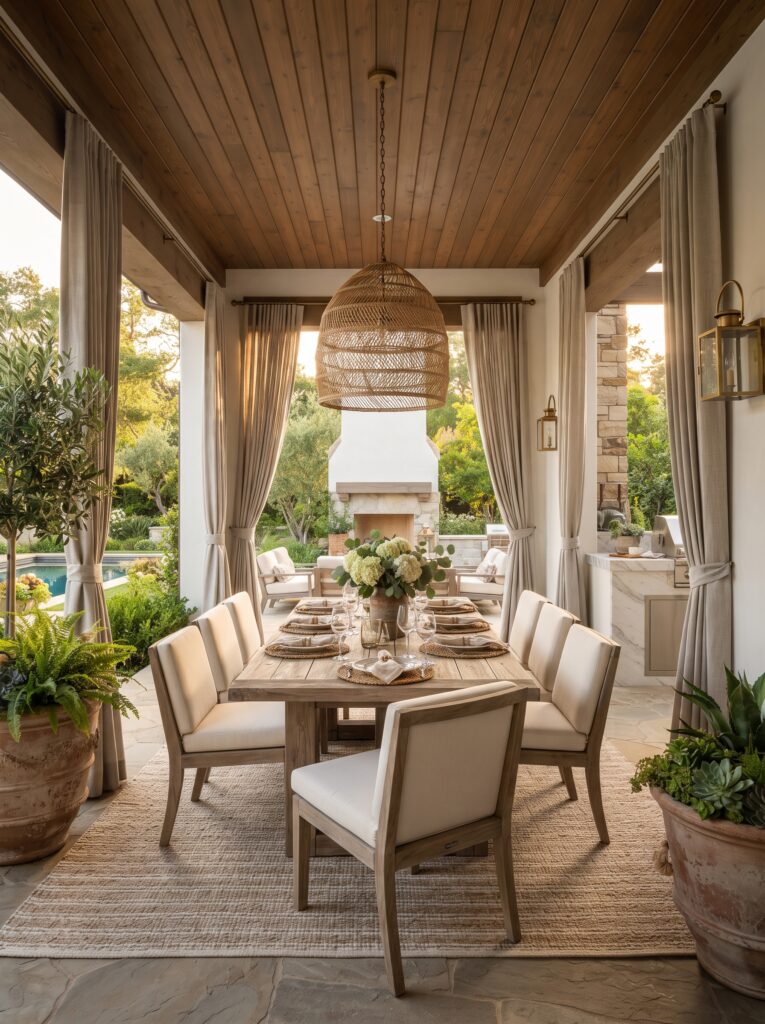
For many American homes, a covered patio offers the perfect connection between indoor and outdoor living. A roof provides shade during bright afternoons, creates a more intimate atmosphere in the evening, and allows the space to feel useful across more seasons.
The most beautiful covered patios are not necessarily the largest ones. What matters more is how thoughtfully the space is designed. Comfortable furniture, warm lighting, natural materials, layered textiles, greenery, and a cohesive color palette can make even a modest patio feel polished and welcoming.
If you are looking for covered patio ideas that feel sophisticated without looking overly decorated, there are plenty of ways to create an outdoor space that feels like a genuine extension of your home.
Why Covered Patios Are So Appealing
A covered patio offers something that an uncovered deck or patio often cannot: a stronger sense of enclosure.
The roof defines the space visually while still keeping it open to the surrounding yard.
This makes it possible to create different outdoor zones, such as:
- An outdoor dining area
- A comfortable conversation space
- An outdoor kitchen
- A reading corner
- A coffee area
- A poolside lounge
- A fire pit seating area
- An outdoor entertaining space
The goal is to make the patio feel intentional rather than like furniture simply placed outside.
1. Create an Outdoor Living Room
One of the easiest ways to make a covered patio feel like an extension of your home is to design it like a living room.
Start with a comfortable outdoor sofa.
Then add two lounge chairs, a coffee table, and an outdoor rug.
Arrange the furniture around a central focal point rather than pushing everything against the walls.
This creates a conversational layout and makes the patio feel more inviting.
Choose weather-resistant materials designed specifically for outdoor use, especially if the space receives humidity, rain, or significant temperature changes.
2. Add an Outdoor Dining Table
A covered patio can become one of the most enjoyable places to eat.
A substantial dining table immediately gives the space a purpose.
For a traditional look, consider a warm wood table surrounded by woven or upholstered outdoor chairs.
For a contemporary patio, a simple stone-look or metal table can create a cleaner appearance.
The table should be large enough for everyday meals but also practical for entertaining.
If you frequently host guests, consider an extendable table.
3. Use Warm Outdoor Lighting
Lighting can completely change the atmosphere of a covered patio after sunset.
Instead of relying on one bright ceiling fixture, layer several types of lighting.
Consider:
- Wall sconces
- Pendant lights
- String lights
- Lanterns
- Table lamps designed for outdoor use
- Recessed lighting
- Low-level landscape lighting
Warm lighting generally creates a more relaxed evening atmosphere than harsh, cool illumination.
The goal is to create enough light for conversation and movement without making the patio feel like an indoor work area.
4. Install a Statement Pendant
A large pendant light can become an architectural focal point beneath a covered patio roof.
Choose a fixture that visually relates to the home’s exterior.
Natural woven materials can soften a modern structure.
Black metal can complement contemporary architecture.
A classic lantern-style fixture can work beautifully with traditional or transitional homes.
The pendant does not need to be extremely elaborate.
Scale is often more important than ornamentation.
5. Bring in Natural Wood
Wood is one of the easiest materials for making an outdoor space feel warm.
Consider using wood for:
- Ceiling details
- Dining tables
- Side tables
- Privacy screens
- Planters
- Decorative beams
- Outdoor shelving
A wood ceiling beneath a covered patio can be particularly striking.
The natural grain adds warmth and visual depth while making the roof feel like an architectural feature.
6. Try a Wood-Planked Ceiling
A wood-planked patio ceiling can make an ordinary covered area feel much more custom.
Natural cedar, stained wood, or other appropriate exterior materials can create a warm backdrop.
The ceiling becomes especially beautiful when combined with simple lighting and neutral furniture.
If using wood outdoors, select materials and finishes appropriate for the local climate and follow proper exterior installation practices.
7. Add an Outdoor Rug
An outdoor rug helps visually define the seating area.
It can make furniture feel connected rather than scattered across the patio.
For a sophisticated look, consider:
- Cream and taupe
- Sand and charcoal
- Soft gray
- Muted blue
- Natural beige
- Subtle geometric patterns
Avoid choosing a rug simply because it looks attractive indoors.
Outdoor rugs should be designed for exterior conditions and easy maintenance.
8. Use Neutral Outdoor Furniture
Neutral furniture creates a timeless foundation.
Cream, beige, tan, gray, brown, and natural wood tones can work beautifully together.
Once the larger furniture pieces are neutral, you can introduce seasonal color through cushions, throws, planters, and accessories.
This makes it easier to refresh the patio without replacing major furniture pieces.
9. Create a Cozy Corner for Two
A covered patio does not always need to be designed for large gatherings.
A small corner can become a peaceful retreat.
Place two comfortable lounge chairs around a small table.
Add a floor lamp or nearby lanterns where appropriate for outdoor use.
A few plants can provide privacy and soften the edges.
This creates an ideal place for morning coffee, evening conversations, or reading.
10. Design a Covered Patio for Entertaining
If you frequently host friends or family, think about how people will move through the space.
Keep the main walking paths clear.
Place dining and lounge areas close enough for conversation but far enough apart to feel distinct.
A beverage station can reduce trips inside.
An outdoor refrigerator or properly designed outdoor kitchen can make entertaining even easier.
Good outdoor design is not just about appearance.
It is also about convenience.
11. Add an Outdoor Beverage Station
A small beverage station can make a covered patio feel much more functional.
You can create one using:
- A built-in counter
- A compact outdoor cabinet
- A small beverage cart
- Open shelving
- A countertop beverage cooler
Keep frequently used items nearby.
Outdoor-friendly glasses, serving trays, napkins, and pitchers can be stored in weather-appropriate cabinets.
This creates a practical entertaining zone without requiring a full outdoor kitchen.
12. Create an Outdoor Kitchen
For homeowners who regularly cook outside, a covered patio can become a complete outdoor kitchen.
Depending on the available space, this might include:
- Grill
- Countertop workspace
- Storage
- Sink
- Refrigerator
- Serving counter
The kitchen should be planned around safety, ventilation, utilities, and local building requirements.
A professional design can be particularly helpful for larger installations.
13. Add a Fireplace or Fire Feature
A fireplace can make a covered patio feel like a true outdoor living room.
It creates a focal point and can extend the usability of the space during cooler evenings.
Depending on the home’s architecture, the fireplace can be finished in:
- Stone
- Brick
- Stucco
- Tile
- Concrete
- Plaster-like exterior finishes
The material should relate to the home’s exterior rather than looking like an unrelated feature.
Any fire feature should be installed and operated according to applicable local safety requirements.
14. Use a Fireplace as the Focal Point
If the patio is large enough, arrange seating around the fireplace.
A sofa facing the fireplace with chairs on either side creates a natural conversation area.
A coffee table in the center completes the arrangement.
This is particularly effective in cooler climates where the patio needs to function as an outdoor gathering room.
15. Add Greenery in Layers
Plants make a covered patio feel softer and more connected to the garden.
Instead of using identical planters everywhere, create layers.
Use:
- Tall planters
- Medium containers
- Small tabletop plants
- Hanging plants where suitable
- Climbing greenery
- Flowering containers
The plants should suit the available light and local climate.
If the patio receives limited sunlight, choose plants that tolerate shade rather than selecting them purely for appearance.
16. Use Large Planters as Architectural Elements
Large planters can frame the patio entrance or define different areas.
Two oversized planters placed symmetrically around a doorway can create a polished appearance.
For a more relaxed look, use different heights and shapes.
Terracotta, stone-look, concrete, ceramic, and weather-resistant composite planters can all work depending on the home’s exterior.
17. Add Privacy Without Closing Everything In
A covered patio should still feel connected to the outdoors.
Instead of completely enclosing the area, use partial privacy solutions.
Options include:
- Slatted wood screens
- Tall planters
- Outdoor curtains
- Trellis structures
- Climbing plants
- Decorative fencing
These can block direct views while preserving airflow and natural light.
18. Install Outdoor Curtains
Outdoor curtains can make a covered patio feel surprisingly sophisticated.
They add softness to an otherwise hard architectural structure.
White, cream, beige, or light gray fabrics create an airy appearance.
They can also provide additional shade and privacy.
Choose fabrics specifically designed for outdoor conditions and follow the manufacturer’s care recommendations.
19. Use Black Accents
Black can provide definition in a neutral outdoor space.
Try black through:
- Window and door frames
- Pendant lights
- Furniture
- Planters
- Hardware
- Decorative accessories
The key is to use it as an accent rather than overwhelming the entire patio.
Black details can make beige, cream, wood, and greenery look more refined.
20. Create a Soft Coastal Patio
A coastal-inspired covered patio does not need to be filled with obvious nautical decorations.
Instead, focus on texture and color.
Use:
- Light wood
- Cream upholstery
- Soft blue accents
- Woven furniture
- Linen-look textiles
- Natural fibers
The result feels relaxed and sophisticated rather than themed.
21. Try a Modern Organic Look
The modern organic style works particularly well outdoors.
Combine clean-lined furniture with natural materials.
Think warm wood, stone, woven textures, soft neutrals, and plenty of greenery.
Avoid making everything perfectly coordinated.
A little variation creates a more natural appearance.
22. Create a Traditional Southern-Inspired Patio
For a more classic American outdoor aesthetic, consider symmetrical furniture arrangements, substantial columns, traditional lanterns, comfortable upholstered seating, and classic landscaping.
A neutral palette keeps the look timeless.
You can introduce personality through patterned cushions or seasonal flowers.
23. Design a Small Covered Patio
Small patios require careful planning.
Instead of trying to include every possible feature, choose one primary function.
For example, the patio might become:
- A dining area
- A morning coffee space
- A conversation area
- A grilling station
Compact furniture with a smaller visual footprint can make the space feel larger.
A round table can also improve circulation in tight areas.
24. Use Multi-Functional Furniture
Furniture that serves more than one purpose can be particularly useful in smaller patios.
Consider an ottoman that functions as seating and a footrest.
A bench can provide seating while also incorporating storage.
A side table can double as a plant stand.
This keeps the patio functional without filling it with unnecessary pieces.
25. Add a Built-In Bench
A built-in bench can maximize seating along the perimeter of a covered patio.
Add weather-resistant cushions for comfort.
The structure can also incorporate hidden storage for outdoor pillows, blankets, or entertaining supplies.
A built-in bench tends to look more architectural than freestanding furniture.
26. Make the Patio Feel Connected to the Kitchen
If the covered patio is located directly outside the kitchen, design it as an extension of that room.
Use similar colors and materials.
For example, warm wood cabinetry inside can be echoed with wood accents outside.
If the kitchen uses brass hardware, small brass-toned exterior details can subtly connect the spaces.
This continuity makes the transition from indoor to outdoor feel intentional.
27. Create a Seamless Indoor-Outdoor Transition
Large glass doors can visually connect the interior and patio.
When the doors open, the two spaces can function almost like one large entertaining area.
Keep the flooring tones visually compatible where possible.
You do not necessarily need identical materials.
Similar colors and textures can create the connection.
28. Add a Coffee Table With Texture
The coffee table is often the center of an outdoor living arrangement.
Instead of choosing something purely functional, use it as an opportunity to introduce texture.
Consider:
- Teak
- Stone
- Concrete-look finishes
- Woven materials
- Weather-resistant composite
- Metal
The table should be appropriately scaled to the seating arrangement.
29. Style the Table Without Overdecorating
Outdoor spaces usually benefit from simpler styling.
A low tray can hold:
- A small planter
- Outdoor-safe candle
- Decorative bowl
- Serving pieces
Leave enough open surface for drinks and food.
A covered patio should feel usable rather than staged.
30. Use Textiles to Add Comfort
Textiles can make a patio feel much more welcoming.
Use weather-appropriate cushions, pillows, and throws.
Layering different textures can create depth.
For example, combine smooth upholstery with woven pillows and a textured outdoor rug.
Neutral textiles provide a timeless base, while seasonal accents can change the mood.
31. Choose a Cohesive Outdoor Color Palette
A limited palette makes an outdoor space feel more sophisticated.
A useful combination might include:
Base: warm cream
Secondary: natural wood
Accent: muted olive
Contrast: charcoal or black
Another option could be:
Base: soft beige
Secondary: white
Accent: dusty blue
Contrast: warm brown
The surrounding landscape should also influence your choices.
32. Use the Landscape as Part of the Design
The patio should not look disconnected from the garden.
Frame views rather than blocking them.
If there is a beautiful tree nearby, position seating toward it.
If the backyard has a garden bed, use planters and furniture that complement its colors.
Outdoor design works best when architecture and landscape feel connected.
33. Add a Simple Water Feature
A small water feature can introduce movement and sound.
A compact fountain may work well in a courtyard-style patio.
For larger spaces, a more substantial feature can become a focal point.
Keep maintenance in mind when selecting any water element.
34. Create a Reading Retreat
A covered patio can become an excellent reading space.
Choose one deep lounge chair, a small side table, and a comfortable outdoor cushion.
Add nearby plants and soft lighting.
This type of space does not require a large patio.
Even a small covered corner can become a relaxing retreat.
35. Make It Comfortable for Evening Use
Think beyond daylight hours.
Add lighting at several levels.
Keep throws nearby during cooler weather.
Choose furniture that remains comfortable after the sun goes down.
If the climate permits, an appropriate outdoor heating solution can extend the season.
Always follow manufacturer instructions and local safety requirements for outdoor heating equipment.
36. Avoid Common Covered Patio Design Mistakes
One mistake is buying furniture before deciding how the space will be used.
Another is choosing pieces that are too large.
Too many accessories can also make an outdoor area feel crowded.
Poor lighting is another common problem.
A beautiful patio can become underused if it feels uncomfortable after sunset.
Finally, do not ignore maintenance.
Choose materials that suit your climate and your willingness to care for them.
37. How to Make a Covered Patio Look More Expensive
A polished outdoor space does not require every item to be high-end.
Focus on a few important elements.
A substantial outdoor rug can define the seating area.
A large pendant can create architectural interest.
Oversized planters can make the space feel more established.
Good-quality cushions can make furniture look more inviting.
Warm lighting can dramatically improve the atmosphere.
Most importantly, avoid filling the patio with too many small decorative items.
Large-scale, thoughtfully chosen elements usually create a more sophisticated result.
38. Keep the Design Practical
Beautiful outdoor spaces still need to function.
Make sure there is enough room to walk around furniture.
Keep doors and pathways unobstructed.
Think about where food will be served.
Consider where cushions will be stored.
Plan for rain, sun, wind, and seasonal changes.
The best patio is one that looks beautiful but is also easy to use.
39. Design for the Way You Actually Live
Do not design your patio around an imagined lifestyle.
If your family eats outside frequently, prioritize dining.
If you prefer quiet evenings, create a comfortable lounge.
If you entertain often, focus on flexible seating and serving areas.
If you enjoy gardening, incorporate more planting space.
Your outdoor room should reflect your real routines.
40. A Simple Formula for a Beautiful Covered Patio
If you are unsure where to begin, use this basic formula:
1 comfortable seating zone + 1 functional table + 1 outdoor rug + layered lighting + greenery + a few meaningful accessories
That is often enough.
You do not need to fill every corner.
Negative space can make a patio feel larger and more relaxing.
Conclusion
A covered patio can become much more than a sheltered outdoor area. With thoughtful planning, it can function as an outdoor living room, dining space, entertaining area, morning coffee retreat, or quiet place to unwind at the end of the day.
The most successful designs balance beauty with practicality.
Start with the way you want to use the space. Then choose furniture that supports that purpose, establish a simple color palette, introduce natural materials, layer the lighting, and bring in greenery to connect the patio with the surrounding landscape.
For a timeless look, warm wood, neutral upholstery, textured outdoor rugs, large planters, soft lighting, and comfortable furniture create a combination that can work across many American home styles.
You also do not need a massive backyard to create an inviting outdoor room. A small covered patio can feel just as special when every piece has a purpose.
The goal is not to make the patio look like a showroom. It should feel like another part of the home — comfortable enough for everyday mornings, beautiful enough for guests, and relaxed enough that you actually want to spend time there.
- Covered Patio Ideas for an Outdoor Room That Feels Like Home
- Staircase Gallery Wall Ideas That Feel Collected, Not Cluttered
- Built-In Home Bar Ideas for an Elevated Entertaining Space
- Fireplace Makeover Ideas That Instantly Elevate a Living Space
- Window Seat Ideas That Make Any Room Feel More Charming