
The space underneath a staircase is one of the most overlooked areas in a home. It is often left empty, used as a place to hide miscellaneous items, or turned into an awkward storage corner that does not really belong anywhere.
But with thoughtful planning, that unused space can become one of the most useful and attractive areas in your home.
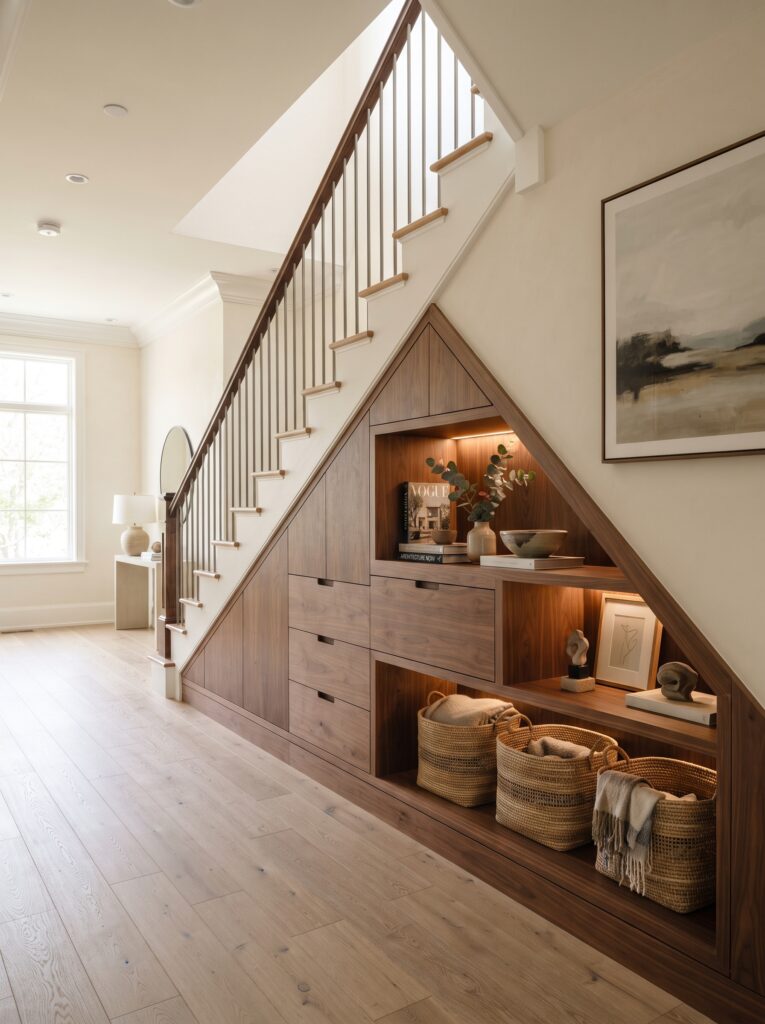
From custom built-in cabinets and hidden drawers to open shelving, beverage stations, mudroom storage, and cozy little workspaces, there are countless ways to transform the area beneath a staircase.
For homeowners in the United States, where maximizing usable square footage can be especially valuable, under-stair storage ideas offer a practical way to add organization without expanding the home’s footprint.
The best part is that under-stair storage does not have to look purely functional. With the right materials, colors, hardware, lighting, and styling, it can become an intentional part of the home’s interior design.
Whether you live in a large suburban house, townhouse, apartment-style home, or compact property, these ideas can help you turn an awkward architectural area into beautiful and useful storage.
Why Under-Stair Storage Is So Useful
The triangular or sloped space beneath a staircase can be difficult to furnish with standard furniture.
That is exactly what makes it valuable.
Traditional cabinets and shelving often waste the unusual shape of the area. Custom or semi-custom solutions, however, can use almost every available inch.
This space can be used to store things that otherwise take up valuable room elsewhere.
Depending on the location and size of the staircase, you might use it for:
- Shoes
- Coats
- Cleaning supplies
- Books
- Board games
- Household items
- Kitchen supplies
- Barware
- Pet supplies
- Seasonal decorations
- Bags
- Linens
- Office supplies
Instead of treating the area as leftover space, think of it as an opportunity for hidden organization.
1. Built-In Under-Stair Cabinets
One of the most polished solutions is a custom built-in cabinet system.
Cabinet doors can follow the angle of the staircase, allowing the storage to visually blend into the architecture.
This is particularly effective in transitional and modern homes.
Choose cabinet fronts that coordinate with nearby doors or furniture.
For example, warm walnut cabinetry can complement hardwood floors, while painted cabinetry can blend with surrounding walls.
Use simple hardware for a contemporary look or more decorative handles for a traditional interior.
Built-ins tend to look more intentional than freestanding furniture because they appear to be part of the original architecture.
2. Pull-Out Drawers for Hidden Storage
Deep drawers can make excellent use of the lower portion of a staircase.
Instead of opening a large cabinet door and searching through everything inside, pull-out drawers allow you to organize individual categories.
You might dedicate one drawer to:
- Shoes
- Winter accessories
- Pet supplies
- Cleaning products
- Toys
- Household tools
Deep drawers are particularly useful because they can take advantage of the full depth of the space.
If you are planning custom cabinetry, discuss drawer dimensions with a professional so the available space is used safely and efficiently.
3. Under-Stair Shoe Storage
If your staircase is near the home’s entrance, shoe storage can be an excellent use of the space.
A combination of drawers and open cubbies can keep everyday footwear organized without creating a cluttered entryway.
For a more elegant appearance, choose closed cabinetry for most shoes and reserve one small section for frequently worn pairs.
Add a nearby bench or wall hooks if the layout allows.
This can turn an otherwise awkward staircase into part of a functional entryway or mudroom system.
4. Create a Mini Mudroom
If the staircase is near the front or side entrance, consider turning the area into a compact mudroom.
Even a small section can provide space for:
- Hooks
- Shoes
- Coats
- Bags
- Umbrellas
- Baskets
- Everyday accessories
A built-in bench with hidden storage underneath can be particularly useful.
Add durable materials that can handle daily traffic.
A warm wood finish combined with neutral walls can keep the area functional while still looking sophisticated.
5. Open Shelving for Books
If the staircase is near a living room or hallway, open shelving can turn the unused space into a mini library.
Install shelves at different heights according to the shape of the staircase.
You can use the shelves for:
- Books
- Framed artwork
- Ceramics
- Small plants
- Decorative objects
Avoid filling every shelf completely.
Leave some empty space so the arrangement feels curated rather than crowded.
A mixture of books and decorative objects creates a warm, lived-in appearance.
6. Create a Small Home Office
A staircase can sometimes provide just enough room for a compact workspace.
A narrow built-in desk can fit beneath the lower portion, while shelves can use the higher area.
This is particularly useful in homes where a dedicated office is not possible.
The space could include:
- Compact desk
- Comfortable chair
- Floating shelves
- Task lighting
- Small drawers
- Cable management
Choose a wall color that visually connects the workspace with the rest of the room.
Because the space may be limited, keeping the desk surface uncluttered is essential.
7. Add a Hidden Home Bar
For a staircase located near an entertaining area, the space can be transformed into a small beverage station or home bar.
Depending on your household needs, it could include storage for:
- Glassware
- Coffee accessories
- Tea supplies
- Serving pieces
- Non-alcoholic beverages
- Bar tools
A compact countertop, cabinetry, open shelving, and under-cabinet lighting can create a sophisticated look.
For a family-friendly home, consider using the area as a coffee or mocktail station instead.
8. Create a Coffee Station
A coffee station is another practical alternative.
If the staircase is close to the kitchen or dining room, a small countertop can provide space for a coffee machine, mugs, beans, and accessories.
Use a cabinet below for storage.
Open shelving above can display a small collection of mugs or coffee-related items.
A warm wood finish, cream cabinetry, ceramic accessories, and subtle lighting can make the station feel like a boutique café corner.
9. Use Woven Baskets
If you do not want a fully built-in system, baskets can provide a flexible solution.
Woven baskets can store:
- Blankets
- Toys
- Shoes
- Pet accessories
- Seasonal items
- Household supplies
Natural baskets also add texture to the room.
Choose baskets that are similar in material or color for a cohesive appearance.
Instead of using many different containers, repeat one or two styles.
10. Install Floating Shelves
Floating shelves are an excellent option when you want storage without heavy cabinetry.
They can follow the staircase’s slope and create a visually interesting display.
Use them for lightweight items such as:
- Books
- Small artwork
- Plants
- Ceramics
- Decorative boxes
Floating shelves are especially effective in minimalist homes where you want the staircase area to remain visually open.
11. Build a Pet Station
Under-stair areas can also be useful for pet-related organization.
Depending on the size of the space, you might create storage for:
- Pet food
- Leashes
- Toys
- Grooming supplies
- Blankets
A small built-in feeding station may also be possible in an appropriate location.
Keep food and cleaning supplies properly contained and consider ventilation and easy-to-clean materials.
The goal is to create a designated location for pet essentials rather than allowing them to spread throughout the home.
12. Create a Children’s Storage Zone
If your staircase is near a family living area, use the space for children’s belongings.
Low drawers and baskets can hold:
- Toys
- Books
- Games
- Craft supplies
- School bags
Closed storage can help keep the room looking tidy, while a few open shelves make frequently used items easy to reach.
Choose durable finishes that can handle everyday family life.
13. Add a Small Pantry
In some homes, the area beneath the staircase can become additional pantry storage.
This is particularly useful if the staircase is near the kitchen.
Tall cabinets can store:
- Dry goods
- Canned foods
- Kitchen appliances
- Serving pieces
- Extra paper products
Because pantry storage needs careful organization, use adjustable shelves, drawers, and labeled containers where appropriate.
Before converting the space, make sure the location is suitable for food storage and does not create moisture, temperature, or accessibility issues.
14. Create Linen Storage
If the staircase is located near bedrooms or bathrooms, the area can become useful linen storage.
Shelves and drawers can hold:
- Towels
- Sheets
- Blankets
- Pillowcases
- Extra bedding
Use baskets or fabric bins to keep smaller items organized.
Closed cabinet fronts create a cleaner appearance if the staircase is located in a prominent area.
15. Use Sliding or Pocket Doors
If you want the storage hidden, consider doors that minimize the amount of space required to open them.
Depending on the structure, sliding or pocket-style doors may provide a cleaner solution than conventional swinging doors.
This can be especially useful in narrow hallways or entryways where floor space is limited.
Choose door fronts that match surrounding walls or cabinetry so the storage visually disappears.
16. Add Integrated Lighting
Lighting can make under-stair storage both more functional and attractive.
Interior cabinet lighting can help you find items quickly.
LED strip lighting beneath shelves can create a subtle glow.
Motion-activated lighting can be particularly convenient for enclosed storage.
If you are adding electrical components, have the work completed according to local requirements by a qualified professional.
Warm lighting generally works well for creating a welcoming appearance.
17. Use Matching Cabinetry for a Built-In Look
One of the easiest ways to make under-stair storage appear expensive is to make it visually consistent with nearby cabinetry.
For example, if your kitchen has warm white shaker cabinets, using similar fronts beneath the staircase can create continuity.
If your home features walnut built-ins, repeat that material.
The eye tends to perceive repeated materials as intentional design.
18. Turn the Space Into a Display Nook
Not every under-stair area needs to be purely storage.
A few open shelves can create a beautiful display area.
Consider showcasing:
- Artwork
- Sculptures
- Family photographs
- Travel objects
- Books
- Ceramics
- Plants
This is especially effective when the staircase is visible from the main living area.
Keep the display edited.
A small collection of meaningful objects often looks better than a large assortment.
19. Create a Cozy Reading Corner
If the staircase provides enough headroom and floor space, a small reading corner can be a charming option.
Add:
- Compact chair
- Small side table
- Reading lamp
- Bookshelf
- Soft cushion
- Throw blanket
The space can become a quiet retreat without requiring an entire room.
However, make sure there is adequate head clearance and safe access before using the area as a seating space.
20. Make the Storage Look Like Architecture
The most sophisticated under-stair storage solutions do not necessarily look like storage.
Instead, they appear integrated into the home’s architecture.
Flush cabinet doors, consistent materials, concealed hardware, and carefully planned proportions can make the storage blend into the staircase.
This approach is especially effective in modern and transitional interiors.
21. Choose the Right Color
The color of the storage can dramatically affect how visible it feels.
Matching the Walls
Paint cabinetry the same color as the walls for a seamless appearance.
Contrasting Color
Use a darker or richer shade to make the storage a feature.
Natural Wood
Wood adds warmth and visual texture.
Two-Tone Design
Combine painted cabinetry with wood shelves or a wood countertop.
The best option depends on the surrounding architecture.
22. Use Hardware as a Design Detail
Cabinet hardware may be small, but it can have a noticeable impact.
For an elegant look, consider:
- Aged brass
- Brushed brass
- Matte black
- Bronze
- Simple nickel
Choose hardware that relates to existing finishes elsewhere in the home.
If your kitchen uses brass hardware, repeating brass beneath the staircase can create cohesion.
23. Under-Stair Storage for Small Homes
In smaller homes, every square foot matters.
The space beneath the stairs can provide valuable hidden storage without making the room feel crowded.
Use closed cabinetry for visually messy items.
Use open shelving only for things you want to display.
Vertical organization can be particularly helpful.
Rather than filling the floor with baskets, use the height of the space through shelves and cabinets.
24. Under-Stair Storage for Townhouses
Townhouses often have multiple staircases and relatively narrow layouts.
In these homes, under-stair storage can be particularly valuable.
A hallway staircase might provide shoe and coat storage.
A staircase near the kitchen could become pantry or beverage storage.
A staircase near the living room could become a bookcase or media storage area.
The important thing is to match the solution to the staircase’s location.
25. How to Make Under-Stair Storage Look Expensive
You do not necessarily need the most expensive materials.
Instead, focus on details.
Use:
- Consistent cabinet fronts
- Quality-looking hardware
- Natural materials
- Warm lighting
- Minimal styling
- Coordinated colors
- Clean lines
Avoid combining too many different materials.
A simple design executed consistently can look more sophisticated than a complicated design filled with unrelated details.
26. Keep the Storage Organized
Beautiful cabinetry will not remain attractive if the inside becomes chaotic.
Divide storage into categories.
Use:
- Drawer organizers
- Adjustable shelves
- Baskets
- Boxes
- Labels
- Pull-out trays
Store frequently used items in easily accessible locations.
Less frequently used items can go into higher or deeper areas.
27. Think About Accessibility
Not every part of an under-stair space is equally convenient.
The lowest areas may be better for shoes, storage boxes, or seasonal items.
The taller sections can accommodate coats, shelving, or a workspace.
Design the storage according to how you will actually use it.
This prevents wasted space.
28. Safety Considerations
Before modifying the space beneath a staircase, consider the home’s structure and local building requirements.
Avoid making changes that interfere with the staircase itself, electrical systems, plumbing, ventilation, or required access.
If construction involves walls, structural elements, wiring, or plumbing, consult an appropriately qualified professional.
A beautiful storage solution should also be safe and properly constructed.
29. Common Under-Stair Storage Mistakes
Trying to Use Every Inch
Maximum storage is not always the same as good design.
Ignoring the Staircase Shape
Storage should follow the architecture rather than fighting it.
Using Too Many Open Shelves
Open storage can quickly look cluttered.
Choosing Inconsistent Materials
Too many finishes can make the area look pieced together.
Forgetting Lighting
Deep cabinets can become difficult to use without adequate illumination.
30. How to Style Open Under-Stair Shelves
If you choose open shelving, use a combination of functional and decorative pieces.
Try grouping:
Books + ceramic object + small plant
or
Basket + framed artwork + decorative bowl
or
Cookbooks + wood board + ceramic vessel
Leave some shelves partially empty.
Negative space helps the display look intentional.
Conclusion
The space underneath a staircase does not have to remain an awkward or forgotten corner of your home. With thoughtful planning, it can become hidden storage, a compact office, a coffee station, a mini mudroom, a book display, a pantry, or even a cozy personal retreat.
The most successful under-stair storage ideas combine practicality with good design. Built-in cabinetry can keep everyday clutter hidden, while open shelves, natural wood, woven baskets, and warm lighting can add character. You do not need to use every possible idea at once. Start by considering what your home genuinely needs.
If your entryway constantly becomes cluttered with shoes and bags, create storage for those items. If your kitchen lacks pantry space, explore a compact pantry solution. If your living room needs more book storage, turn the area into a built-in library.
The goal is to transform unused space into something that improves everyday life while looking like it naturally belongs in the home.
A well-designed staircase can be more than a way to move between floors. With the right storage solution, it can become one of the smartest and most attractive features in your home.
- Luxury Bathroom Styling Ideas That Create a Spa-Like Feel
- Under-Stair Storage Ideas That Make Small Spaces Feel Organized
- Statement Ceiling Ideas That Transform an Ordinary Room
- Color-Drenched Bedroom Ideas for a Cozy Designer Look
- Kitchen Countertop Decor Ideas That Look Effortlessly Expensive