
A kitchen can be functional without feeling ordinary.
The right combination of materials, colors, lighting, and accessories can transform a basic kitchen into a space that feels warm, sophisticated, and thoughtfully designed. One of the most appealing combinations for homeowners who want a modern kitchen with personality is warm wood and black.
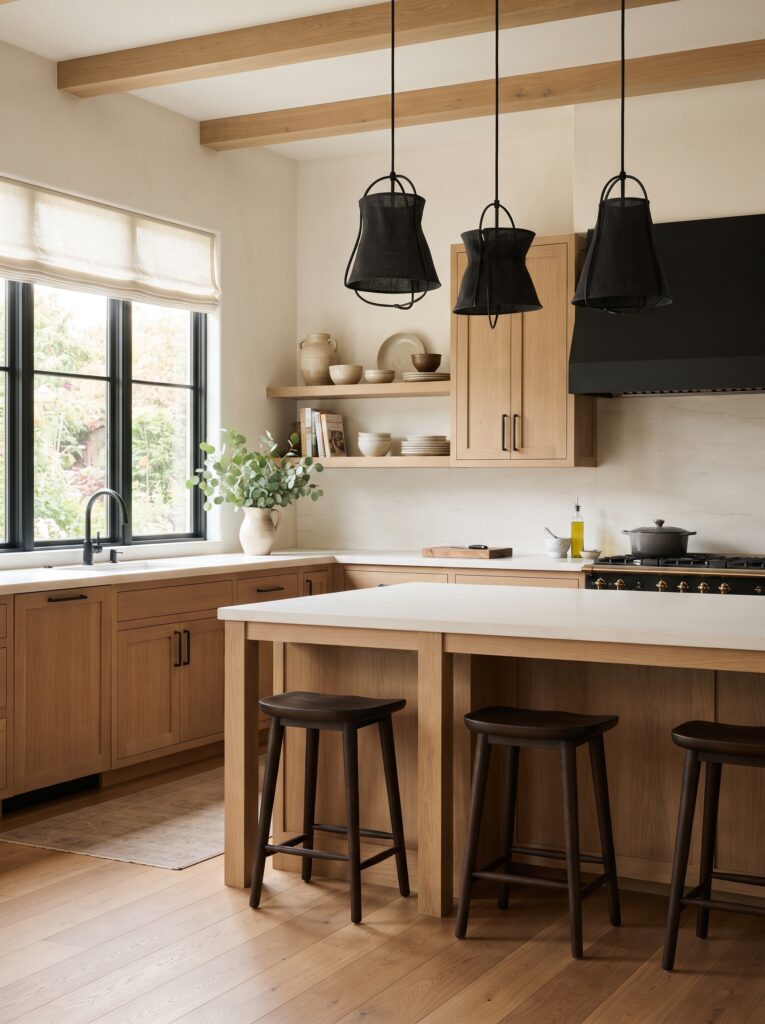
Natural wood brings warmth and softness, while black adds contrast and definition. Together, they create a kitchen that can feel modern without becoming cold, dramatic without becoming overwhelming, and luxurious without looking excessively formal.
This color and material combination also works across many American home styles, including modern, transitional, contemporary, organic modern, farmhouse-inspired, and even traditional interiors.
Pinterest’s 2026 trend reporting has highlighted growing interest in warm wood kitchens and black-and-wood combinations, including increased searches for white oak and black kitchens and kitchen countertop decorating.
Whether you are planning a complete kitchen remodel or simply looking for ways to refresh your existing kitchen, warm wood and black can provide a timeless foundation.
Why Warm Wood and Black Work So Well Together
At first glance, wood and black may seem like a strong contrast.
Wood is naturally warm, textured, and organic.
Black is deep, sophisticated, and visually grounding.
When combined carefully, the two balance each other.
A kitchen made entirely from black finishes can sometimes feel visually heavy. On the other hand, an all-wood kitchen can lack contrast.
Adding black details gives natural wood definition.
For example:
Warm oak cabinets + matte black hardware
or
Walnut cabinetry + black pendant lights
or
Natural wood island + black kitchen stools
These small combinations can create a sophisticated visual rhythm throughout the room.
What Is a Warm Wood Kitchen?
A warm wood kitchen uses natural or natural-looking wood tones to create an inviting atmosphere.
Popular wood tones include:
- White oak
- Natural oak
- Honey oak
- Walnut
- Medium brown wood
- Warm ash
- Natural maple
The exact tone matters less than the overall warmth.
Avoid combining too many unrelated wood colors unless you are intentionally creating an eclectic look.
For a polished kitchen, choose one primary wood tone and repeat it through cabinetry, flooring, furniture, or accessories.
1. Try White Oak Cabinets With Black Hardware
White oak is one of the most versatile choices for a warm modern kitchen.
Its light natural grain keeps the room bright while adding texture.
Pair white oak cabinetry with matte black hardware for a clean, contemporary look.
You can use black through:
- Cabinet pulls
- Drawer handles
- Faucets
- Pendant lights
- Bar stools
- Window frames
- Small appliances
The contrast creates definition without requiring dramatic wall colors.
2. Use Walnut for a Richer Look
If you prefer a darker, more luxurious kitchen, walnut can be an excellent choice.
Walnut has a naturally rich color and distinctive grain.
It works beautifully with:
- Cream stone
- Black hardware
- Aged brass
- Warm white walls
- Natural textiles
- Dark flooring
A walnut kitchen can feel especially sophisticated when paired with simple cabinetry and minimal hardware.
The wood itself becomes the main decorative element.
3. Make the Kitchen Island the Wood Feature
You do not have to use wood cabinetry throughout the entire kitchen.
A two-tone kitchen can be more visually interesting.
For example:
Cream cabinets + warm wood island + black hardware
or:
White cabinets + walnut island + black pendant lights
This approach allows the wood to become a focal point without making the kitchen feel too dark.
A wood island can also visually anchor an open-concept kitchen.
4. Add Matte Black Hardware
Hardware is one of the easiest ways to introduce black into a kitchen.
If your existing cabinets are in good condition, replacing the handles and pulls may provide a noticeable update without requiring a complete remodel.
For a modern look, consider simple bar pulls.
For a softer transitional kitchen, rounded or slightly curved hardware can work beautifully.
Keep the finish consistent where possible.
If you choose matte black cabinet hardware, repeat black elsewhere through lighting, stools, or plumbing fixtures.
5. Choose a Black Faucet
A black faucet can become a subtle focal point.
It works particularly well against:
- White countertops
- Cream cabinets
- Natural wood
- Light stone
- Warm beige backsplashes
For a cohesive appearance, repeat the black finish elsewhere.
A black faucet beside completely unrelated metallic finishes can look disconnected.
6. Add Black Pendant Lights
Pendant lighting is both functional and decorative.
Over a kitchen island, black pendants can create a strong visual anchor.
Look for fixtures with:
- Rounded silhouettes
- Simple geometric shapes
- Matte finishes
- Sculptural forms
- Oversized shades
If your kitchen has plenty of wood grain, a simple black pendant can provide the contrast needed to keep the room visually balanced.
7. Use Cream Instead of Bright White
If you want a warmer kitchen, consider using cream or warm white rather than an extremely bright white.
Cream tones complement natural wood beautifully.
They also soften the contrast with black.
A palette of:
Warm white + oak + black
can feel more relaxed than:
Pure white + gray + black
This is particularly effective for transitional and organic-modern homes.
8. Add Stone Countertops
Stone surfaces can bridge the gap between warm wood and black.
Depending on your style and budget, consider:
- Quartz
- Quartzite
- Marble
- Granite
- Soapstone
- Other durable stone surfaces
For a sophisticated look, a warm white or creamy surface can provide contrast against darker cabinetry.
If you already have a dark countertop, introduce lighter elements through the backsplash or accessories.
9. Choose a Warm Backsplash
A backsplash should support the overall palette rather than compete with it.
For warm wood and black kitchens, consider:
- Cream subway tile
- Handmade-look tile
- Warm white ceramic
- Natural stone
- Beige stone tile
- Soft neutral zellige-inspired tile
- Subtle marble patterns
If your cabinets already have strong wood grain, a quieter backsplash can keep the room balanced.
10. Introduce Black Through Bar Stools
Bar stools are an easy way to repeat the black accent.
For a warm kitchen, consider black stools with:
- Natural wood seats
- Woven seats
- Upholstered cushions
- Curved backs
- Simple metal frames
A combination of black and wood within the stools can visually connect the island with the rest of the room.
11. Add Natural Textures
A wood-and-black kitchen can become very sophisticated, but too many hard surfaces may make it feel cold.
Natural textures help soften the room.
Try:
- Woven baskets
- Linen towels
- Wooden cutting boards
- Handmade ceramics
- Cotton runners
- Woven counter stools
- Natural fiber rugs
These small details make the kitchen feel lived-in.
12. Use Open Shelving Carefully
Open shelves can provide an opportunity to introduce decorative objects.
A wood shelf against a light wall can look beautiful with black and neutral accessories.
Try displaying:
- Handmade mugs
- Ceramic bowls
- Small artwork
- Cookbooks
- Wooden boards
- Glassware
- Small plants
However, avoid overcrowding.
Open shelving looks best when some empty space remains.
13. Style the Kitchen Countertops
Countertop styling is often overlooked.
You do not need dozens of decorative objects.
A simple arrangement might include:
Wood cutting board + ceramic bowl + small plant
or:
Coffee maker + ceramic canister + small tray
or:
Cookbooks + olive-oil bottle + handmade pottery
The objective is to make the counter feel functional and intentional.
14. Use a Wooden Cutting Board as Decor
Wooden cutting boards are practical, but they can also contribute to the visual design.
Lean a few boards against the backsplash.
Mix different shapes and sizes.
A large walnut board beside cream ceramics can create a warm focal point.
Just make sure the pieces you display are genuinely practical if you use them regularly.
15. Bring in Aged Brass for Contrast
Warm wood and black do not mean every finish has to be black.
A small amount of aged brass can introduce another layer of warmth.
Try brass through:
- Cabinet knobs
- Lighting
- Faucet
- Decorative tray
- Small hardware
However, use it selectively.
Too many metallic finishes can make the kitchen feel visually busy.
16. Create an Organic Modern Kitchen
The warm wood and black palette works beautifully with organic-modern design.
Combine:
- Natural wood
- Black accents
- Cream walls
- Stone
- Linen
- Ceramics
- Greenery
The result is modern but comfortable.
Avoid excessive glossy surfaces.
Matte and textured materials generally make this combination feel more natural.
17. Create a Transitional Kitchen
If your home is more traditional, you can still use this palette.
Choose classic cabinet profiles rather than ultra-minimal slab doors.
Then introduce modern details through:
- Black hardware
- Contemporary pendant lights
- Natural wood island
- Simple countertops
- Modern stools
This creates a transitional kitchen that combines classic architecture with current styling.
18. Use Black Window Frames
If you are renovating or already have black-framed windows, they can reinforce the design beautifully.
The black frame provides a visual connection with other black elements.
However, you do not need to install black windows just to follow this trend.
Hardware, lighting, stools, and accessories can create the same visual relationship.
19. Add Greenery
Plants provide a natural contrast to both wood and black.
You can use:
- Small potted herbs
- Olive-style branches
- Eucalyptus
- Trailing plants
- Simple green foliage
Keep the arrangement understated.
One beautiful plant can be more effective than multiple small plants scattered around the room.
20. Use Textiles to Soften the Space
Kitchen textiles may seem like small details, but they can affect the overall atmosphere.
Consider:
- Linen tea towels
- Neutral runners
- Woven kitchen mats
- Soft cotton textiles
Choose colors that complement your main palette.
Cream, oatmeal, taupe, olive, and warm brown are particularly versatile.
21. Add Vintage Pieces
A completely new kitchen can sometimes look too polished.
One vintage or vintage-inspired object can add personality.
Try:
- Antique cutting board
- Vintage ceramic pitcher
- Old-style clock
- Decorative brass object
- Vintage artwork
- Handmade pottery
Mixing old and new prevents the kitchen from looking like a showroom.
22. Create a Coffee Station
A small coffee station can turn an unused section of countertop into a functional design feature.
Use:
- A coffee machine
- Ceramic mugs
- Wooden tray
- Small canisters
- Coffee containers
- Small artwork
Keep the color palette consistent with the kitchen.
Black appliances can naturally reinforce the overall design.
23. Create a Warm Breakfast Corner
If you have room near a window, consider a small breakfast area.
A round wooden table with black chairs can create a beautiful extension of the kitchen.
Add a pendant light above the table for a more finished look.
This works particularly well in open-concept homes.
24. Make a Small Kitchen Look More Expensive
A small kitchen does not need to feel cramped.
Use visual consistency to make the room appear more sophisticated.
Choose:
- One primary wood tone
- One black finish
- One light neutral
- Minimal countertop clutter
- Simple lighting
- Consistent hardware
Too many competing finishes can make a small kitchen look busy.
25. Warm Wood and Black Kitchen on a Budget
You can introduce the aesthetic without replacing your entire kitchen.
Start with smaller updates.
Replace Cabinet Hardware
Black handles can immediately change the appearance of existing cabinetry.
Add a Wood Cutting Board
Choose a beautiful natural wood piece.
Replace the Pendant Lights
Lighting has a major visual impact.
Add Black Counter Stools
This can create a strong focal point.
Add Warm Textiles
Linen and woven materials soften the space.
Declutter Countertops
A clean surface can make a kitchen look more expensive without spending anything.
26. Choose the Right Wood Tone
Not every wood works equally well with every kitchen.
If your kitchen is small and naturally bright, lighter oak can keep it airy.
If your kitchen is large and you want more drama, walnut can create depth.
If your home already has warm wood flooring, consider whether your cabinets should match or intentionally contrast.
The goal is coordination rather than exact matching.
27. Avoid Too Many Wood Tones
Mixing woods can create a beautiful collected look, but it requires intention.
For a simple and elegant kitchen, use one dominant wood.
If you already have wood flooring, cabinetry, and furniture, try to keep their undertones compatible.
For example, warm golden woods generally work more naturally together than a mix of very orange and very cool gray woods.
28. Use Black Sparingly in a Small Kitchen
Black is powerful.
You do not need much of it.
In a small kitchen, consider using black only for:
- Hardware
- Lighting
- Faucet
- A few accessories
This provides contrast without making the room feel visually heavy.
29. Create a Moody Version
If you love dramatic interiors, you can increase the amount of black.
Try:
Dark cabinetry + walnut island + cream stone + brass lighting
or:
Black lower cabinets + warm wood uppers + light backsplash
Balance darker surfaces with enough lighting and lighter materials.
The objective is drama without losing warmth.
30. Create a Light and Airy Version
For a brighter interpretation, use:
White oak + warm white + small black accents
This creates the visual contrast without making black the dominant color.
It is especially effective in kitchens with large windows and plenty of natural light.
31. Style a Wood Kitchen Island
The kitchen island is often the heart of an open-concept kitchen.
If your island has natural wood cabinetry, keep the countertop styling simple.
Try:
- Large wooden board
- Ceramic bowl
- Small branch arrangement
- Decorative tray
Avoid placing too many objects in the center.
You need to preserve workspace.
32. Add Sculptural Decor
A few sculptural objects can make a kitchen feel more designed.
Consider:
- Curved ceramic vase
- Stone bowl
- Abstract wooden object
- Sculptural candleholder
- Handmade pottery
Choose pieces that feel substantial but do not interfere with food preparation.
33. Use Open Shelves as a Design Opportunity
Open shelving should not become an excuse to display everything you own.
Choose a limited collection.
For example:
Three ceramic bowls + two cookbooks + one plant
can look much better than twenty unrelated objects.
Repeat colors from elsewhere in the kitchen.
34. Keep Appliances Visually Controlled
Small appliances can quickly create countertop clutter.
If possible, keep rarely used appliances stored away.
For appliances that remain visible, choose finishes that work with your palette.
Black appliances can blend naturally into a black-accent kitchen.
Stainless steel can also work, especially when paired with other cool metallic details.
35. Think About the Kitchen as Part of the Whole Home
In an open-concept American home, the kitchen is often visible from the living and dining areas.
That means the kitchen should connect visually with surrounding spaces.
Repeat materials where appropriate.
For example:
Kitchen walnut + living room walnut furniture
Kitchen black accents + black lighting elsewhere
Kitchen cream tones + cream upholstery
This creates a cohesive home rather than a kitchen that feels disconnected.
36. Common Mistakes to Avoid
Using Too Much Black
Black should create contrast, not overwhelm the room.
Mixing Too Many Wood Colors
Different undertones can make the kitchen feel inconsistent.
Overdecorating Countertops
The kitchen needs usable work surfaces.
Choosing Trendy Finishes Without Considering Your Home
A trend should complement your architecture and lifestyle.
Ignoring Lighting
Even beautiful materials can look different under poor lighting.
Making Everything Perfectly Matching
Some variation gives the room personality.
37. How to Make the Kitchen Feel More Personal
Add objects you genuinely use and love.
A favorite ceramic mug.
A cookbook you actually read.
A wooden board you use regularly.
A small piece of artwork.
A plant you enjoy caring for.
These details create warmth.
A kitchen should feel like a place where people actually cook, eat, talk, and spend time together.
38. The Best Warm Wood and Black Kitchen Formula
If you want a simple starting point, use this combination:
60% warm neutral
Walls, countertops, backsplash, or larger surfaces.
25% warm wood
Cabinetry, island, flooring, or furniture.
10% black
Hardware, lighting, stools, faucet, or frames.
5% accent
Brass, greenery, terracotta, or another subtle color.
This is not a strict decorating rule. It is simply a useful starting point for maintaining balance.
Conclusion
Warm wood and black create a kitchen aesthetic that can feel sophisticated, comfortable, and timeless at the same time.
Natural wood brings character and warmth. Black adds contrast and architectural definition. Cream, stone, greenery, and natural textures can soften the combination and make it feel welcoming.
The beauty of this style is that you do not have to completely remodel your kitchen to achieve it.
A few thoughtful changes can make a significant difference. New black hardware, a warm wood cutting board, sculptural lighting, natural textiles, or carefully styled countertops can introduce the aesthetic gradually.
If you are planning a larger renovation, the same concept can guide your cabinetry, island, countertops, lighting, and finishes. The most successful kitchens are not necessarily the ones with the most expensive materials. They are the ones where every element works together.
Choose a wood tone that complements your home. Use black strategically. Keep countertops functional. Introduce texture through ceramics and natural materials. Add lighting that creates warmth. And leave enough visual breathing room for the architecture and materials to speak for themselves.
Whether you prefer a bright white oak kitchen with subtle black accents or a dramatic walnut-and-black space, this combination can create a kitchen that feels current while still having the qualities of a timeless home.
Ultimately, the goal is not simply to follow a kitchen trend. It is to create a space that feels warm enough for everyday life, elegant enough to inspire you, and practical enough to remain beautiful long after the trend changes.
- Afrohemian Dining Room Ideas for a Warm, Collected and Sophisticated Home
- Warm Wood and Black Kitchen Ideas for a Timeless Designer Look
- Small Reading Nook Ideas That Turn Forgotten Corners Into a Cozy Luxury Retreat
- Curated Trinket Shelf Ideas: How to Create a Collected and Personal Home
- Neo Deco Entryway Ideas That Make Your Home Feel Instantly Expensive