
A kitchen does not have to be bright white or ultra-modern to feel beautiful. Sometimes the most inviting kitchens are the ones with deeper colors, natural materials, vintage details, and a little bit of character. That is exactly what makes a dark cottagecore kitchen so appealing.
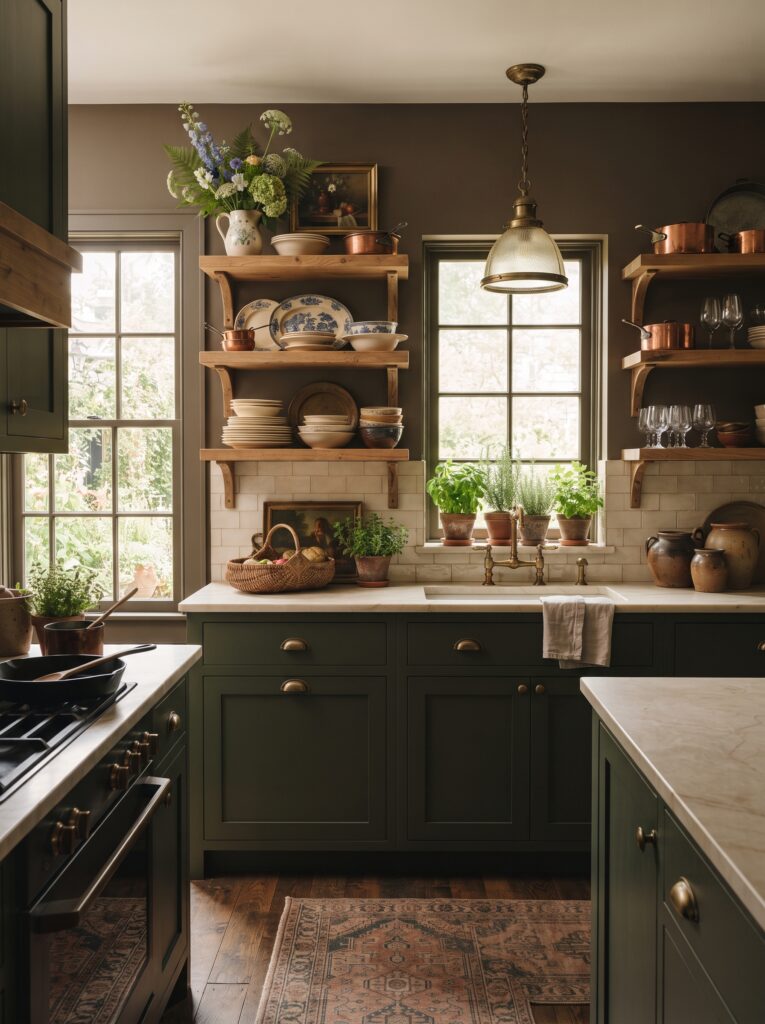
Dark cottagecore combines the cozy charm of a traditional cottage kitchen with richer colors, aged finishes, natural textures, and collected decorative pieces. Instead of looking perfectly coordinated, the style feels personal, warm, nostalgic, and lived-in.
This aesthetic works particularly well for homeowners who want their kitchen to feel like the heart of the home rather than simply a functional cooking space. Deep green cabinets, natural wood shelves, aged brass hardware, handmade ceramics, stone countertops, vintage-inspired lighting, and botanical details can all contribute to the look.
The style has also gained significant attention in current Pinterest trend reporting. Pinterest’s 2026 Spring Trend Report reported a substantial increase in searches for “dark cottagecore kitchen,” reflecting growing interest in cozy, character-rich kitchen interiors. Pinterest’s 2026 Spring Trend Report
The good news is that you do not need an old countryside cottage to recreate this atmosphere. With the right combination of colors, materials, lighting, and accessories, a standard American kitchen can take on a beautiful cottage-inspired personality.
What Is Dark Cottagecore Kitchen Design?
Dark cottagecore is essentially a moodier interpretation of traditional cottage style.
Classic cottage kitchens often use light colors, floral patterns, vintage accessories, natural wood, and relaxed styling. Dark cottagecore keeps those cozy characteristics but introduces deeper colors and more dramatic materials.
Think of:
- Forest green cabinets
- Deep olive walls
- Dark blue cabinetry
- Warm walnut or oak
- Aged brass hardware
- Natural stone
- Vintage ceramics
- Handmade pottery
- Woven baskets
- Floral or botanical accents
- Warm pendant lighting
- Antique-inspired furniture
The result is a kitchen that feels romantic without being overly decorative.
It is rustic without looking unfinished and elegant without feeling formal.
Why Dark Cottagecore Kitchens Feel So Cozy
Color plays a major role in creating atmosphere.
Deep greens, browns, blues, and earthy neutrals naturally create a more intimate visual environment. When these colors are combined with warm lighting and natural materials, the kitchen can feel especially inviting in the evening.
This is one reason dark cottagecore works so well in homes where the kitchen is connected to a dining or living area.
Instead of feeling like a bright workspace, the kitchen becomes part of the home’s overall atmosphere.
Natural materials also help soften darker colors. Wood grain, woven baskets, linen, ceramic surfaces, and stone introduce texture so the room does not become visually flat.
1. Start With Deep Green Cabinets
If you want the most recognizable dark cottagecore kitchen look, deep green cabinetry is one of the easiest places to start.
Consider shades inspired by:
- Forest green
- Moss
- Olive
- Sage with deeper undertones
- Woodland green
- Muted evergreen
Deep green works particularly well with warm wood and brass because all three have naturally earthy qualities.
For a sophisticated American kitchen, avoid making every surface a different shade of green. Choose one primary cabinet color and allow the surrounding materials to provide variation.
For example:
Deep green cabinets + warm oak shelves + cream countertops + aged brass hardware
creates a balanced palette that feels cozy without becoming overly dark.
2. Use Natural Wood to Balance Dark Colors
Wood is essential if you want your dark cottagecore kitchen to feel warm rather than heavy.
You can introduce wood through:
- Open shelving
- An island
- Ceiling beams
- Cutting boards
- Bar stools
- Flooring
- A vintage table
- Wooden doors
- Decorative bowls
Natural oak provides a lighter contrast, while walnut can create a richer and more dramatic look.
If your cabinets are very dark, medium or light wood can prevent the space from feeling too enclosed.
This combination of dark cabinetry and natural wood is especially effective because the wood grain adds visual texture without introducing another strong color.
3. Choose Aged Brass Hardware
Shiny modern hardware can sometimes make a cottage-inspired kitchen feel too contemporary.
Aged brass is a better fit when you want an old-world atmosphere.
Look for:
- Cup pulls
- Bin pulls
- Vintage-style knobs
- Bridge faucets
- Brass cabinet latches
- Antique-inspired hinges
The finish does not have to look genuinely antique. The goal is simply to avoid an overly polished appearance.
A slightly muted metal finish works beautifully with dark green, navy, brown, and cream.
4. Add Open Shelving
Open shelving is one of the easiest ways to bring cottage character into a kitchen.
Instead of filling the shelves with perfectly matching dishes, create a small collection of objects with different shapes and textures.
Try displaying:
- Handmade mugs
- Vintage plates
- Ceramic pitchers
- Wooden cutting boards
- Small bowls
- Cookbooks
- Woven baskets
- Glass jars
- Small plants
Leave some empty space between objects.
The beauty of cottagecore is that it should feel collected over time rather than purchased as a complete matching set.
5. Make Ceramics Part of the Decor
Ceramics are an important element of cottage-inspired kitchens because they add handmade character.
Cream, white, brown, muted green, and earthy pottery can all work beautifully against darker cabinets.
A large ceramic pitcher filled with seasonal branches can become a simple focal point on an island.
You can also display handmade bowls, stoneware mugs, vintage plates, or textured ceramic containers on open shelves.
The slightly imperfect quality of handmade pieces adds authenticity to the room.
6. Choose Warm Lighting
Lighting can completely change how a dark kitchen feels.
Cool white lighting can make deep cabinet colors appear harsh.
Warm lighting, on the other hand, enhances the cozy character of dark cottagecore interiors.
Consider using:
- Brass pendant lights
- Small wall sconces
- Under-cabinet lighting
- Warm ceiling fixtures
- Lantern-inspired lights
If your kitchen has a dining area nearby, a vintage-inspired chandelier can connect the two spaces visually.
The goal is to create several layers of light rather than relying on one bright ceiling fixture.
7. Consider a Vintage-Inspired Range Hood
A range hood can become an architectural feature rather than something purely functional.
For a dark cottagecore kitchen, consider a plaster-look, wood-trimmed, or traditionally shaped hood.
A simple hood painted in the same color as the cabinetry can create a seamless appearance.
Alternatively, a wood hood can add warmth and become a focal point.
The most important thing is to keep the shape relatively timeless.
Cottage kitchens generally look better when architectural details feel established rather than overly trendy.
8. Use Natural Stone Countertops
Natural-looking countertops can elevate the entire space.
Creamy stone surfaces are particularly beautiful with dark cabinetry because they provide contrast while maintaining a warm palette.
Depending on your budget and design preferences, options may include:
- Quartz
- Quartzite
- Marble
- Soapstone
- Limestone-inspired surfaces
- Honed stone
A honed or matte finish can work particularly well with cottagecore because it feels softer and less glossy.
If the cabinets already have a strong color, choose a countertop with relatively subtle movement.
Too many competing patterns can make the kitchen feel busy.
9. Bring in Floral and Botanical Details
Cottagecore has a strong connection to gardens and nature.
You can bring that feeling indoors without covering every surface in floral patterns.
Simple ideas include:
- Fresh herbs
- Small potted plants
- Branches in a ceramic vase
- Dried flowers
- Seasonal greenery
- Botanical artwork
- Floral textiles
A single arrangement of greenery on a kitchen island can be enough.
For a more traditional cottage look, introduce subtle floral patterns through a Roman shade, tea towel, cushion, or small piece of artwork.
10. Add a Vintage Rug
A vintage-style runner can instantly soften a kitchen.
Look for rugs with muted colors rather than extremely bright patterns.
Deep red, faded blue, olive, beige, brown, and cream can work beautifully with dark cabinetry.
Place the runner:
- In front of the sink
- Along a kitchen work zone
- Between the island and cabinets
- Near a pantry entrance
Besides adding color, a rug also introduces softness into a room filled with hard surfaces.
Choose a washable or kitchen-friendly rug when possible, particularly for busy family kitchens.
11. Create a Cottage-Style Coffee Station
A small coffee station can become one of the most charming areas of a cottage-inspired kitchen.
Use a wooden tray or shelf to organize:
- Coffee mugs
- A ceramic sugar bowl
- Coffee beans
- A small kettle
- Wooden spoons
- A tiny vase of greenery
Instead of hiding everything away, allow a few beautiful pieces to remain visible.
This creates the feeling of an intentional daily ritual rather than simply another appliance zone.
12. Mix Old and New
A dark cottagecore kitchen should not necessarily look like a historical reproduction.
The most livable version combines traditional details with modern conveniences.
For example:
Vintage-inspired cabinet hardware + modern appliances
Traditional pendant lighting + contemporary stone countertop
Antique wooden stool + modern cabinetry
Handmade ceramics + streamlined storage
This balance keeps the kitchen practical for everyday American living while preserving the cottage atmosphere.
13. Introduce a Freestanding Furniture Piece
One of the easiest ways to make a kitchen feel more cottage-like is to include furniture that looks like furniture rather than built-in cabinetry.
Consider:
- A vintage cabinet
- A wooden dresser
- A freestanding pantry
- A small antique table
- A painted hutch
- A narrow console
A freestanding piece can make the room feel less uniform and more collected.
If you find an older piece with a beautiful shape but an outdated finish, repainting it in a deep green, muted blue, or warm cream can give it a new life.
14. Use Dark Blue Instead of Green
Green is not the only option.
Deep navy, muted blue, and blue-gray can create a beautiful cottage atmosphere as well.
Blue works especially well with:
- Cream
- Natural oak
- Brass
- White ceramics
- Warm beige
- Stone
A navy kitchen with brass hardware and oak shelves can feel both traditional and sophisticated.
If you want something more dramatic, choose a very deep blue for the cabinets and balance it with light countertops and warm wood.
15. Consider Dark Brown for a Richer Look
Brown can create an especially warm version of cottagecore.
Deep chocolate or walnut tones combined with cream, brass, and natural stone can create a kitchen that feels intimate and luxurious.
This approach is particularly effective in larger kitchens where there is enough natural light to prevent the darker palette from feeling enclosed.
For smaller kitchens, use dark brown selectively through an island, lower cabinetry, furniture, or decorative accents.
16. Add a Butcher Block or Wood Counter
Wood countertops can introduce another layer of warmth.
A butcher-block section can be especially useful if you do not want every countertop to be the same material.
For example, you could use stone around the main kitchen and wood on a small preparation area.
This combination feels practical and visually interesting.
Wood countertops also reinforce the cottage aesthetic because they connect the kitchen to natural, tactile materials.
17. Make Everyday Items Beautiful
One of the most important ideas behind cottagecore is that ordinary objects can become part of the decor.
Instead of hiding everything, selectively display beautiful functional items.
Examples include:
- Wooden cutting boards
- Ceramic mixing bowls
- Copper cookware
- Glass jars
- Linen towels
- Woven baskets
- Vintage-style canisters
- Handmade mugs
This approach makes the kitchen feel authentic.
However, avoid displaying everything you own.
A few thoughtfully selected pieces will look much more elegant than a countertop filled with appliances and accessories.
18. Use a Soft Wall Color
If the cabinetry is dark, the walls do not necessarily need to be equally dark.
A warm cream, muted beige, soft taupe, or pale earthy tone can help balance the palette.
This creates a visual transition between the cabinetry and the ceiling.
For a more dramatic look, you can use a deeper wall color, but consider how much natural light enters the room before doing so.
A north-facing kitchen with limited daylight may benefit from warmer and lighter surrounding finishes.
19. Try a Patterned Backsplash
A subtle backsplash can introduce personality without overwhelming the kitchen.
Consider:
- Handmade-look ceramic tile
- Small rectangular tile
- Cream subway tile
- Soft patterned tile
- Natural stone
- Zellige-inspired surfaces
For a true cottage feel, slightly irregular handmade-looking tile can be especially effective.
Avoid selecting a backsplash simply because it is currently popular.
Choose something that complements the cabinet color and will still look attractive several years from now.
20. Style the Kitchen Island
The kitchen island is usually one of the first things people notice.
Instead of filling it with decorative objects, choose one central arrangement.
For example:
A large ceramic bowl + seasonal greenery + two wooden boards
or
A stoneware vase + fresh branches + a stack of cookbooks
This creates a focal point while preserving usable workspace.
If the island is large, you can also introduce seating with upholstered or wooden stools.
21. Use Window Treatments for Extra Character
A cottage-style kitchen can feel significantly softer with the right window treatment.
Consider:
- Linen Roman shades
- Small-scale floral fabric
- Natural woven shades
- Café curtains
- Soft checked patterns
The fabric should complement the cabinet color rather than compete with it.
For example, a cream linen shade can soften a deep green kitchen without introducing another major pattern.
22. Bring Cottagecore Into a Modern American Kitchen
You do not need exposed beams, old stone walls, or a farmhouse to achieve the look.
Even a modern kitchen can incorporate cottagecore details.
Start with a few elements:
- Add natural wood.
- Replace modern hardware with aged metal.
- Introduce handmade ceramics.
- Add greenery.
- Use warm lighting.
- Place a vintage-inspired rug.
- Add one freestanding furniture piece.
These changes can shift the overall mood without requiring structural renovations.
23. Small Dark Cottagecore Kitchen Ideas
Small kitchens can actually work beautifully with cottagecore because the style naturally embraces cozy spaces.
For a smaller kitchen, consider using dark color strategically.
Instead of painting every surface a deep color, try:
- Dark lower cabinets
- A dark island
- One accent wall
- Dark shelving
- A deep-colored pantry door
Then balance the palette with light countertops, warm wood, and good lighting.
Use vertical storage to make the kitchen more functional while keeping the countertops relatively clear.
24. Dark Cottagecore Kitchen Ideas on a Budget
You can create this aesthetic without replacing the entire kitchen.
Start with inexpensive visual upgrades.
Change the Hardware
Replacing standard cabinet pulls with aged brass or antique-inspired hardware can make a surprisingly noticeable difference.
Add Open Shelves
A small wooden shelf can provide both storage and decorative character.
Style With Ceramics
Thrifted or handmade-looking ceramics can create a collected cottage atmosphere.
Add a Vintage Rug
A patterned runner can introduce color and softness.
Bring in Greenery
Fresh herbs or inexpensive plants can make the room feel more connected to nature.
Upgrade the Lighting
Changing a basic light fixture can dramatically alter the personality of the kitchen.
Add Wooden Accessories
Cutting boards, bowls, trays, and stools can introduce natural texture without major construction.
25. Common Mistakes to Avoid
Dark cottagecore can easily become visually overwhelming if every element is dramatic.
Avoid combining too many:
- Dark colors
- Strong patterns
- Decorative objects
- Vintage accessories
- Different wood tones
- Metallic finishes
Instead, create hierarchy.
Choose one main cabinet color, one dominant wood tone, one metal finish, and a small number of accent colors.
This creates a more sophisticated result.
Another common mistake is making everything look artificially old.
Cottage-inspired does not have to mean distressed.
You can create the feeling through natural materials, vintage shapes, warm colors, and collected objects without making every cabinet and accessory look antique.
26. How to Make Dark Cottagecore Feel Modern
If you love the aesthetic but do not want your kitchen to look old-fashioned, introduce modern elements carefully.
For example:
Dark green cabinets + streamlined appliances + simple stone countertops
or
Navy cabinets + modern pendant lights + natural oak shelving
or
Deep brown cabinetry + minimalist hardware + sculptural lighting
The contrast between old-world inspiration and contemporary functionality can make the space feel much more sophisticated.
27. The Best Color Palette for a Dark Cottagecore Kitchen
A simple palette might include:
Primary: Deep forest green
Secondary: Warm cream
Wood: Natural oak
Metal: Aged brass
Accent: Muted terracotta or faded blue
Another palette could be:
Primary: Deep navy
Secondary: Ivory
Wood: Walnut
Metal: Antique brass
Accent: Soft olive
Keeping the palette controlled allows the kitchen to feel rich without becoming chaotic.
28. Why This Style Can Stay Relevant
Trends change, but several elements of dark cottagecore are not particularly dependent on short-lived fashion.
Natural wood is timeless.
Ceramics are timeless.
Brass hardware can remain attractive for years.
Plants and greenery never require a specific design era.
Classic cabinetry shapes can transition between different styles.
That means you can incorporate the cottagecore aesthetic while still building a kitchen that feels appropriate for long-term use.
The trick is to use the trend as inspiration rather than turning the entire room into a themed space.
29. A Simple Formula for Creating the Look
If you are starting from scratch, use this formula:
Deep cabinet color + natural wood + creamy stone + aged metal + handmade ceramics + warm lighting + greenery.
That combination creates most of the visual ingredients associated with dark cottagecore.
From there, personalize the space.
Add a vintage table if you have room.
Display your favorite ceramics.
Choose a rug that feels connected to the rest of your home.
Use family heirlooms if they have sentimental value.
The kitchen should ultimately feel like yours.
Conclusion
Dark cottagecore kitchens combine some of the most comforting elements of traditional home design with a deeper, more atmospheric color palette. Rich cabinetry, natural wood, aged brass, handmade ceramics, vintage-inspired accessories, and warm lighting can transform an ordinary kitchen into a space that feels collected and inviting.
The current interest in dark cottagecore kitchens shows how homeowners are increasingly exploring kitchen designs with more personality and visual depth rather than relying exclusively on bright, minimalist interiors. Pinterest’s 2026 trend reporting provides a clear indication that this particular search theme has gained attention among users looking for fresh kitchen inspiration. Pinterest 2026 Spring Trend Report
You also do not need to remodel everything to embrace the style. A few intentional changes—such as darker cabinet color, natural wood accents, aged hardware, warm lighting, handmade ceramics, and greenery—can completely change the atmosphere.
The most successful dark cottagecore kitchens are not the ones that look like they came from a catalog. They are the ones that feel personal, practical, warm, and slightly collected over time.
That is what gives this aesthetic its lasting charm.
- Moody Blue Room Ideas for a Sophisticated Cozy Home
- White Oak and Black Kitchen Ideas for a Modern Timeless Home
- The Garden Patio Ideas That Make Outdoor Spaces Feel Magical
- Dark Cottagecore Kitchen Ideas With Timeless Charm
- Warm Wood Kitchen Ideas That Make a Home Feel Instantly Expensive