
When decorating a home, most people naturally focus on walls, flooring, furniture, lighting, and accessories. Yet there is one large architectural surface that is frequently overlooked: the ceiling.
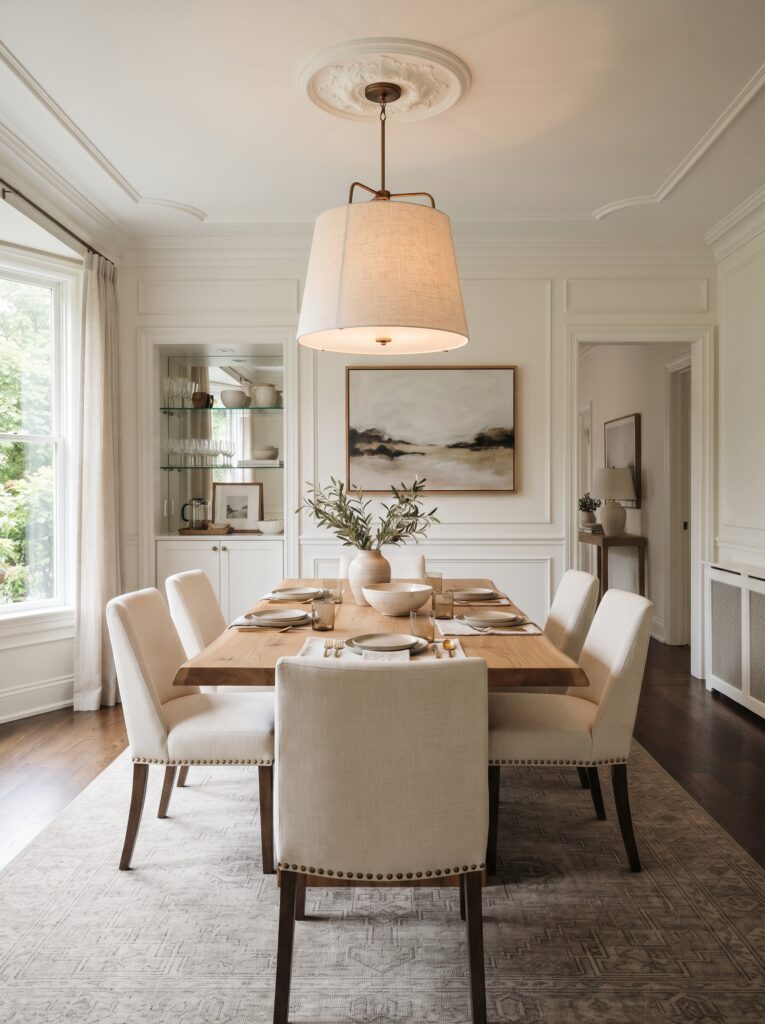
A well-designed ceiling can completely change the character of a room. It can make a space feel taller, more finished, more architectural, or even more luxurious without requiring a complete renovation. Sometimes the difference comes from something as subtle as decorative molding, a carefully chosen paint color, a statement light fixture, or a thoughtfully designed ceiling pattern.
For homeowners looking to create a polished and sophisticated interior, the ceiling offers an opportunity to add personality without taking valuable floor or wall space. This makes ceiling design especially useful in dining rooms, bedrooms, entry areas, home offices, kitchens, and living spaces where architectural details can become part of the overall design.
The best ceiling design ideas do not necessarily have to be dramatic. In fact, subtle details often create the most timeless results. A simple tray ceiling with warm lighting, delicate crown molding, natural wood beams, or a refined pendant light can give an ordinary room a custom-designed appearance.
Whether your home is traditional, modern, transitional, contemporary, or inspired by modern organic interiors, there are many ways to make the fifth wall of your home feel intentional.
Why Ceiling Design Matters in Interior Decorating
The ceiling occupies a significant visual area, even though we do not always consciously notice it.
When the ceiling is completely ignored, a beautifully decorated room can sometimes feel unfinished. Adding architectural or decorative details gives the eye another layer to discover.
A ceiling can also influence how a room feels.
A lighter ceiling may help a space feel airy and open, while a deeper tone can create a more intimate atmosphere. Wood details can introduce warmth, whereas sculptural lighting can become an artistic focal point.
This is why ceiling design should be considered part of the complete interior rather than treated as an afterthought.
1. Add Classic Crown Molding
One of the most timeless ceiling design ideas is crown molding.
Crown molding creates a finished transition between the walls and ceiling. It can be especially beautiful in traditional and transitional American homes where architectural details are already part of the design language.
For an elegant but understated look, choose molding that complements the proportions of the room.
Very elaborate molding can feel overwhelming in a smaller space, while extremely narrow molding may disappear in a large room.
White or warm ivory molding is a classic choice, but painted molding can also create a more contemporary effect.
For example, using a soft taupe or muted gray on both the walls and molding can create a sophisticated monochromatic appearance.
2. Try a Tray Ceiling
Tray ceilings are another excellent way to add architectural interest.
A tray ceiling usually features a recessed center section that creates additional depth above the room.
This design can be particularly effective in:
- Dining rooms
- Primary bedrooms
- Living rooms
- Home offices
- Large kitchens
The recessed portion can remain the same color as the surrounding ceiling for a subtle effect, or it can be painted in a complementary shade for greater contrast.
Adding discreet lighting around the recessed section can make the architectural detail even more noticeable in the evening.
3. Use Statement Lighting as Ceiling Decor
A ceiling does not always need architectural construction to make an impact.
Sometimes the lighting fixture itself can become the main feature.
A large pendant, sculptural chandelier, or elegant flush-mount fixture can immediately draw attention upward.
In a dining room, for example, a sophisticated chandelier positioned over the dining table can visually connect the ceiling with the furniture below.
When choosing statement lighting, consider the scale of the room and table. A fixture that is too small can feel disconnected, while one that is excessively large may overpower the space.
The ideal fixture should feel proportional and intentional.
4. Create a Coffered Ceiling
Coffered ceilings are an excellent option for homeowners who want a more architectural appearance.
This design uses recessed panels arranged in a grid-like pattern, creating depth and dimension.
A coffered ceiling can work beautifully in:
- Dining rooms
- Libraries
- Home offices
- Living rooms
- Large bedrooms
Traditional versions often feature crisp white molding, while modern interpretations can use natural wood, darker colors, or simplified geometric patterns.
Because coffered ceilings already provide strong visual structure, the rest of the room can remain relatively simple.
5. Consider Natural Wood Beams
Wood beams can instantly introduce warmth and character.
They work particularly well in homes inspired by:
- Modern farmhouse design
- European cottage style
- Rustic interiors
- Modern organic design
- Transitional spaces
Natural oak, walnut, and other warm wood finishes can create a beautiful contrast against white or cream ceilings.
If your home does not have structural beams, decorative beams can sometimes be incorporated for aesthetic purposes. However, installation should be planned carefully so that the finished result looks architectural rather than artificial.
A few substantial beams usually create a more sophisticated effect than many small decorative strips.
6. Paint the Ceiling a Soft Neutral
White is not the only option for ceilings.
A soft neutral can create a subtle but noticeable difference.
Consider shades such as:
- Warm ivory
- Soft beige
- Pale greige
- Light taupe
- Dusty blue
- Very soft sage
A ceiling that is slightly different from the walls can add depth without creating harsh contrast.
For example, warm white walls paired with an ivory ceiling can produce a layered monochromatic look.
This approach is especially effective when the room already contains natural wood, linen, cream upholstery, and other organic textures.
7. Use a Dark Ceiling for an Intimate Atmosphere
Although light ceilings are traditional, darker ceilings can create a dramatic and sophisticated atmosphere.
Deep charcoal, muted navy, earthy brown, or another rich shade can work particularly well in rooms designed for evening use.
Consider a darker ceiling in:
- Dining rooms
- Libraries
- Media rooms
- Moody bedrooms
- Cozy home offices
A dark ceiling does not automatically make a room feel smaller. When paired with appropriate lighting and balanced wall colors, it can create a cozy and intentional environment.
The key is to make the darker ceiling feel connected to the rest of the room.
8. Add Wallpaper to the Ceiling
Wallpaper is another creative way to transform an overlooked ceiling.
A subtle botanical print, delicate geometric pattern, grasscloth-inspired texture, or understated vintage design can add personality without using additional floor space.
Ceiling wallpaper can be particularly beautiful in:
- Powder rooms
- Bedrooms
- Reading rooms
- Small dining spaces
- Hallways
Because wallpaper already provides visual interest, keep surrounding furnishings relatively restrained.
The ceiling should feel like a deliberate design feature rather than competing with every other surface in the room.
9. Use Shiplap for a Relaxed Look
Shiplap ceilings can introduce texture and architectural character.
They are particularly associated with farmhouse and cottage-inspired interiors, but the concept can also be adapted for more contemporary homes.
For a sophisticated appearance, consider painting the boards in a warm white or soft neutral instead of using an overly rustic finish.
Natural wood can also work beautifully when the room contains other coordinated wood elements.
The key is repetition. If the ceiling introduces wood, repeat that material subtly elsewhere so the design feels connected.
10. Add Decorative Ceiling Medallions
A ceiling medallion can create a beautiful focal point around a chandelier or pendant light.
Traditional medallions can work well in historic-style interiors, while simplified geometric versions can feel more contemporary.
A medallion does not need to be enormous.
Sometimes a relatively subtle architectural detail is enough to make a lighting fixture feel more integrated into the room.
This is particularly effective in dining rooms where the chandelier is already intended to be a visual centerpiece.
11. Try Tone-on-Tone Ceiling Design
One of the most elegant approaches is to keep the ceiling, molding, and walls within the same color family.
For example:
Walls: warm greige
Molding: lighter greige
Ceiling: soft ivory
The subtle differences create dimension without making the room feel busy.
This approach works especially well for homeowners who prefer quiet luxury and timeless interiors rather than highly contrasting designs.
12. Highlight Architectural Features
If your home already has interesting architecture, do not automatically cover it up.
Exposed rafters, beams, vaulted ceilings, arches, and unusual ceiling lines can become beautiful design features.
Instead of adding numerous decorations, emphasize what already exists.
For example, a vaulted ceiling can be enhanced with a statement chandelier and carefully positioned lighting.
A beam ceiling can be highlighted with a warm natural finish.
An unusual ceiling shape can be emphasized with a restrained paint treatment.
Good interior design often comes from working with the architecture rather than fighting it.
13. Make a Vaulted Ceiling the Focal Point
Vaulted ceilings naturally create drama because of their height.
However, a very high ceiling can sometimes make furniture feel visually disconnected from the architecture.
The right lighting can help bridge that gap.
Large chandeliers, pendant clusters, and appropriately scaled fixtures can visually bring the ceiling closer to the living area.
Tall curtains, substantial artwork, and appropriately sized furniture can also help maintain proportion.
The goal is to make the room feel balanced from floor to ceiling.
14. Use Ceiling Lighting Strategically
Ceiling design and lighting should ideally work together.
A beautiful architectural ceiling can lose some of its impact if the lighting creates harsh shadows.
Instead, consider multiple layers of illumination.
You might combine:
- A statement pendant
- Recessed lighting
- Wall sconces
- Table lamps
- Accent lighting
This creates flexibility throughout the day.
Bright lighting can make the room functional during daytime activities, while softer illumination can create a relaxed atmosphere in the evening.
15. Ceiling Design Ideas for Dining Rooms
The dining room is one of the best places to experiment with ceiling design because the table naturally creates a central point.
A chandelier or pendant can become the visual bridge between the ceiling and dining table.
For a sophisticated dining room, consider combining:
- Warm white walls
- Subtle crown molding
- A tray or coffered ceiling
- A sculptural chandelier
- Natural wood furniture
- Neutral textiles
- Simple artwork
The result can feel elegant without appearing overly formal.
16. Ceiling Ideas for Bedrooms
Bedrooms benefit from ceiling treatments that create calm rather than visual stimulation.
Soft paint colors, subtle beams, delicate molding, or a simple chandelier can make the room feel more finished.
For a relaxing bedroom, consider a palette of:
- Cream
- Warm white
- Soft taupe
- Pale beige
- Muted green
- Dusty blue
Pairing these colors with natural wood and soft textiles can create a peaceful atmosphere.
A bedroom ceiling does not need to be dramatic to feel special.
17. Ceiling Ideas for Small Rooms
Small rooms require a slightly different approach.
Rather than using a highly complicated ceiling treatment, focus on details that create visual height and continuity.
A lighter ceiling can help maintain an airy feeling.
Vertical curtains can draw the eye upward.
Simple crown molding can make the room feel finished.
A small pendant can add personality without overwhelming the space.
In compact rooms, proportion is more important than decoration.
18. How to Make a Ceiling Look More Expensive
Creating a luxurious ceiling is not necessarily about choosing the most expensive material.
Instead, concentrate on:
Scale:
Choose details appropriate for the size of the room.
Consistency:
Make the ceiling treatment relate to the walls, furniture, and lighting.
Quality:
Use finishes that look intentional and well executed.
Restraint:
Avoid combining too many competing ceiling features.
Lighting:
Use illumination to highlight architectural details.
These principles can make relatively simple treatments appear significantly more sophisticated.
19. Ceiling Design Mistakes to Avoid
Even beautiful ideas can become unsuccessful when they are not properly scaled.
Avoid using extremely elaborate molding in a very small room.
Do not choose an oversized chandelier simply because you want a dramatic look.
Avoid combining multiple competing patterns on the ceiling, walls, and flooring unless the overall design has been carefully planned.
It is also important not to select a ceiling treatment solely because it is currently popular. A design should make sense with the architecture of your home and your personal style.
Timeless design is usually easier to maintain when the major architectural elements are thoughtfully considered.
20. How to Choose the Right Ceiling Design for Your Home
Before selecting a treatment, ask yourself several questions.
What is the height of the room?
A low ceiling may benefit from simpler details, while a high or vaulted ceiling can handle larger architectural features.
What is the overall style of the home?
Traditional molding may suit a classic interior, while simple wood beams or a clean tray ceiling may work better in a modern organic space.
How much visual attention should the ceiling receive?
If the room already has statement flooring, dramatic wallpaper, or elaborate furniture, a subtle ceiling may create better balance.
What is the purpose of the room?
A dining room may benefit from dramatic lighting, while a bedroom may look better with softer architectural details.
Conclusion
The ceiling is one of the most overlooked opportunities in home decorating, yet it can have a surprisingly powerful effect on the overall atmosphere of a room.
From classic crown molding and elegant tray ceilings to warm wood beams, sophisticated lighting, wallpaper, and subtle paint treatments, there are countless ways to make a ceiling feel intentional and beautifully designed.
You do not have to completely renovate your home to achieve a more luxurious appearance. Sometimes one architectural detail, a thoughtfully selected light fixture, or a carefully chosen ceiling color can completely change how a room feels.
The most successful ceiling design ideas are those that work naturally with the architecture, proportions, lighting, and decorating style of the home. Instead of treating the ceiling as an empty surface, consider it another opportunity to add warmth, character, depth, and personality.
When every surface of a room has been thoughtfully considered—including the one above your head—the entire home can feel more cohesive, polished, and custom designed.
- Small Home Details That Make Your Space Look Custom Designed
- Window Seat Ideas for a Cozy Reading Retreat at Home
- Built-In Shelf Ideas for a Custom-Looking Home
- Ceiling Design Ideas That Make a Room Feel Instantly More Luxurious
- Fireplace Mantel Decor Ideas That Look Effortlessly Expensive