
A blank wall can completely change the feeling of a room. While the traditional gallery wall remains a popular decorating choice, it is not the only way to make an empty wall interesting. If you want your home to feel more distinctive, sophisticated, and thoughtfully designed, there are countless creative wall decor ideas that go beyond rows of framed photographs.
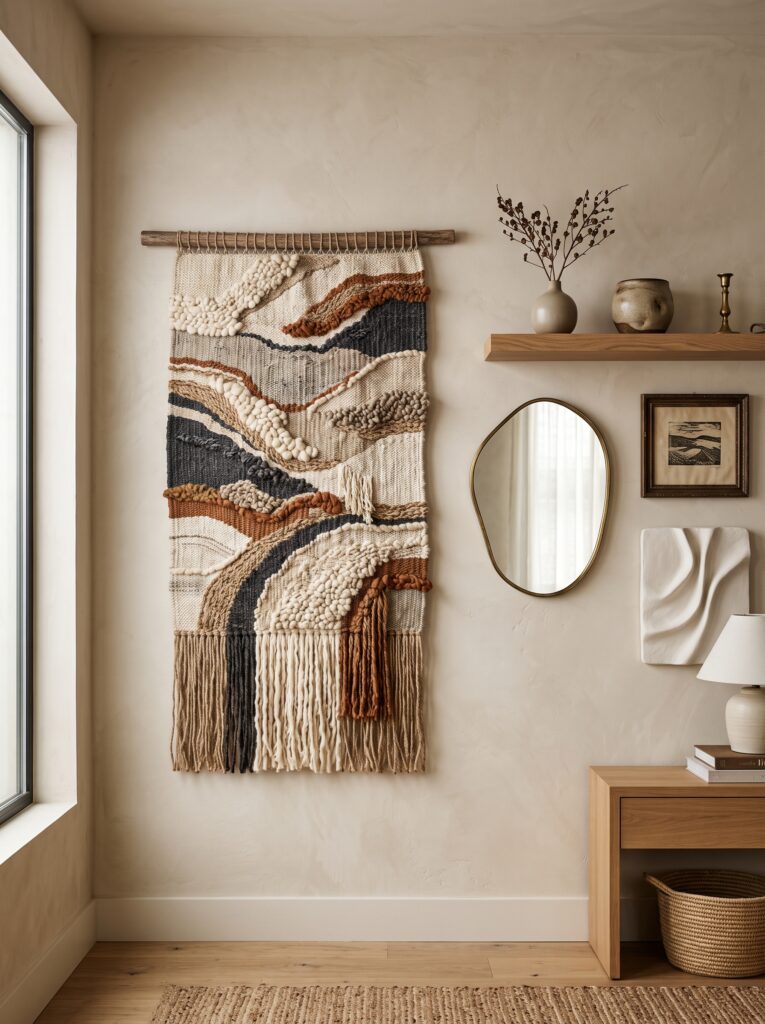
Modern home decorating is increasingly focused on texture, scale, sculptural elements, natural materials, architectural details, and statement pieces. Instead of filling a wall with several small frames, homeowners are experimenting with oversized artwork, woven wall hangings, decorative plates, floating shelves, sculptural mirrors, plaster finishes, wood paneling, and unexpected objects.
The best part is that you can choose a wall decorating approach that reflects your personal style. Whether your home is modern, organic, minimalist, traditional, eclectic, coastal, vintage-inspired, or transitional, your walls can become an important part of the overall design rather than simply a place to hang pictures.
Why Wall Decor Matters So Much
Walls occupy a large percentage of the visual space in almost every room.
When they are completely empty, a room can sometimes feel unfinished. On the other hand, when walls are filled with too many unrelated pieces, the space can feel cluttered.
The goal is balance.
Good wall decor should complement the furniture and architecture already present in the room.
Instead of asking, “What can I put on this wall?” consider asking:
“What does this wall need to make the entire room feel complete?”
Sometimes the answer is one oversized artwork.
Sometimes it is texture.
Sometimes it is a mirror.
And sometimes the best choice is to leave part of the wall intentionally empty.
1. Try Oversized Artwork Instead of Multiple Small Frames
One large artwork can create more impact than an entire collection of small frames.
Oversized artwork works especially well above:
- Sofas
- Beds
- Dining tables
- Consoles
- Sideboards
- Entryway furniture
The large scale creates a strong focal point.
For a sophisticated look, choose artwork that complements your existing palette rather than competing with it.
Abstract paintings, oversized landscapes, botanical artwork, minimalist line drawings, and textured canvas pieces can all work beautifully.
The artwork does not have to match your furniture exactly.
Instead, look for a visual relationship between the colors and textures.
2. Create a Textured Textile Wall
Textile art is an excellent alternative to traditional framed artwork.
A large woven wall hanging can introduce softness and dimension into a room.
Look for materials such as:
- Linen
- Wool
- Cotton
- Jute
- Woven fibers
- Macramé
- Handcrafted textiles
Textile wall decor can work beautifully in bedrooms, reading spaces, living rooms, and home offices.
The softness is particularly useful in rooms containing many hard surfaces such as wood, metal, glass, or stone.
A large textile piece can visually soften the architecture while creating a warm, handmade atmosphere.
3. Use Decorative Plates as Wall Art
Decorative plates are no longer limited to traditional dining-room displays.
A carefully arranged collection can create a beautiful statement wall.
You can use:
- Vintage plates
- Handmade ceramic plates
- Neutral stoneware
- Decorative porcelain
- Woven plates
- Artisan pottery
The secret is creating a visual connection between the pieces.
They can share a similar color palette while having slightly different shapes or patterns.
Instead of arranging them in a perfectly symmetrical grid, experiment with an organic composition.
This works particularly well in dining rooms, kitchens, breakfast areas, and breakfast nooks.
4. Add a Sculptural Wall Piece
Three-dimensional wall art can make a room feel much more artistic.
Look for sculptural pieces made from:
- Plaster
- Wood
- Metal
- Ceramic
- Stone
- Woven materials
A sculptural piece creates shadows and highlights as natural light moves through the room.
This can make a wall feel more dynamic than a completely flat artwork.
For minimalist interiors, one large sculptural object may be enough.
There is no need to cover the entire wall.
5. Use an Oversized Mirror as a Statement
A mirror can serve as both decoration and a functional design element.
Large mirrors can reflect light and create the visual impression of additional space.
Consider unusual silhouettes such as:
- Arched mirrors
- Organic-shaped mirrors
- Oversized round mirrors
- Full-height mirrors
- Sculptural irregular mirrors
An oversized mirror can work particularly well in:
- Entryways
- Dining rooms
- Bedrooms
- Living rooms
- Narrow hallways
Instead of using several small decorative mirrors, consider making one substantial mirror the main feature.
6. Create a Wood Accent Wall
If you want to make a major architectural statement, consider incorporating wood into the wall design.
Wood can be used through:
- Vertical slats
- Thin paneling
- Decorative molding
- Reclaimed wood
- Fluted panels
- Warm oak details
A wood accent wall can add warmth and architectural interest without requiring a room full of decorative accessories.
For a modern home, simple vertical lines can create a clean appearance.
For a warmer organic interior, natural wood with visible grain can create a more relaxed atmosphere.
7. Experiment With Limewash or Plaster Finishes
Paint is not the only way to change the appearance of a wall.
Limewash-inspired and plaster-style finishes can introduce subtle movement and texture.
Unlike perfectly flat painted walls, these finishes can create variations in tone that change depending on the light.
They can work especially well with:
- Organic modern interiors
- Mediterranean-inspired homes
- Japandi spaces
- Minimalist rooms
- European-inspired interiors
Soft beige, warm white, clay, taupe, and muted earthy tones can create a calm backdrop for furniture and artwork.
If you are renting, look for removable wallpaper or temporary finishes that can provide a similar visual effect without making permanent changes.
8. Install Floating Shelves
Floating shelves are a practical way to decorate an empty wall while creating useful storage.
However, the key is styling them carefully.
Instead of filling every inch, use a combination of:
- Books
- Small ceramics
- Framed artwork
- Plants
- Candles
- Sculptural objects
- Decorative boxes
Vary the height of the objects.
Place some pieces vertically and others horizontally.
Leave intentional empty space between groups.
This prevents shelves from looking crowded.
9. Frame Fabric or Wallpaper
If you love patterns but don’t want to commit to covering an entire wall, consider framing a beautiful textile or wallpaper sample.
This can create artwork that feels highly customized.
You could frame:
- Botanical fabric
- Vintage textile
- Handmade paper
- Wallpaper
- Decorative wrapping paper
- Traditional textile patterns
Large frames can make relatively inexpensive materials feel substantial.
This is also a great way to introduce pattern without purchasing expensive original artwork.
10. Create a Statement With Architectural Molding
Decorative wall molding can make an ordinary room feel more architectural.
Depending on the home’s style, you can experiment with:
- Picture-frame molding
- Board-and-batten
- Simple trim
- Vertical paneling
- Geometric molding
Molding can work particularly well in dining rooms, bedrooms, hallways, and home offices.
For a subtle appearance, paint the molding the same color as the wall.
This creates texture without introducing another color.
For stronger contrast, use two related shades.
11. Turn a Large Map Into Wall Art
Maps can be a beautiful alternative to conventional artwork.
A large vintage-style map can introduce personality into an office, study, hallway, or living space.
You could choose:
- World maps
- City maps
- Topographic maps
- Coastal maps
- Vintage travel maps
Choose a map that has visual value as well as personal meaning.
A place connected to your travels or family history can make the decor more meaningful.
12. Use a Picture Ledge Instead of Traditional Hanging
Picture ledges provide a more flexible way to display artwork.
Instead of permanently arranging each piece, lean artwork against the wall.
Layer:
- Large artwork
- Smaller frames
- Books
- Small objects
- Decorative ceramics
This allows you to change the arrangement whenever you want.
Picture ledges are particularly useful for people who enjoy changing their decor seasonally.
They also work well in rentals because fewer holes may be required compared with a large gallery wall.
13. Bring Nature Onto the Walls
Natural elements can make a room feel more alive.
Instead of relying only on framed artwork, consider incorporating:
- Botanical prints
- Dried grasses
- Pressed flowers
- Woven natural fibers
- Branch arrangements
- Hanging plants
A vertical botanical display can create a calming focal point.
For a minimalist home, one large botanical print may be enough.
For a more eclectic interior, combine several natural elements.
14. Create a Dedicated Reading Wall
If you have a reading nook or home library, use the wall to reinforce the purpose of the space.
Install simple shelving and display books alongside artwork and small objects.
You could also add a picture ledge above a comfortable reading chair.
Use warm lighting nearby to create a cozy atmosphere.
The wall should feel functional as well as decorative.
15. Use the Wall Behind Your Dining Table
The wall behind a dining table can become one of the strongest focal points in the home.
Instead of automatically hanging a standard artwork, consider:
- An oversized mirror
- Large-scale artwork
- Decorative plate collection
- Textured wall treatment
- Sculptural wall installation
- Floating shelves
The choice should reflect the overall dining-room aesthetic.
For a formal dining space, oversized artwork can feel elegant.
For an organic dining room, woven materials or natural wood can create warmth.
16. Make a Bedroom Wall Feel Like a Boutique Hotel
The wall behind the bed offers an opportunity to create a dramatic focal point.
Instead of using multiple small pictures, consider:
- Oversized artwork
- Upholstered wall panels
- Wood paneling
- Textured wallpaper
- A large decorative mirror
- Architectural molding
A simple upholstered or textured wall can make the bed feel more substantial.
For a calm bedroom, use neutral colors and tactile materials.
For a more dramatic look, use a deeper shade behind the bed.
17. Decorate Narrow Hallways Creatively
Hallways are often forgotten when decorating a home.
Because they tend to be narrow, large furniture may not be practical.
This makes walls particularly important.
Consider:
- Slim picture ledges
- Long horizontal artwork
- Small sculptural pieces
- Mirrors
- Wall sconces
- Textured wallpaper
A hallway can become a visual transition between different rooms.
Use artwork or color to create continuity.
18. Don’t Ignore Small Walls
Not every wall needs a major statement.
A small wall can be enhanced with one carefully selected element.
For example:
- A small mirror
- One piece of artwork
- A narrow shelf
- A wall sconce
- A small textile
- A sculptural object
The goal is to work with the scale of the wall.
Oversized decor can sometimes make a tiny wall feel crowded.
19. Match Wall Decor to the Scale of the Furniture
Scale is one of the most important principles in interior design.
A tiny artwork above a large sofa can look disconnected.
Similarly, an enormous mirror above a tiny console can overwhelm the furniture.
When choosing wall decor, consider the furniture below it.
Large furniture generally benefits from substantial wall decor.
Smaller furniture can work with smaller or more delicate pieces.
The relationship between the objects is more important than the exact measurements.
20. Create Balance Without Perfect Symmetry
Symmetry can create a formal and organized appearance, but perfect symmetry is not always necessary.
You can create balance through visual weight.
For example, one large artwork on one side of a console might be balanced by a mirror and smaller objects on the other.
This creates an organic composition.
The result can feel more relaxed and collected than a perfectly symmetrical arrangement.
21. Use Lighting as Wall Decor
Lighting can become part of the wall design itself.
Wall sconces are especially useful because they provide both function and decoration.
Consider:
- Sculptural sconces
- Picture lights
- Plug-in wall lights
- Swing-arm sconces
- Decorative lantern-style fixtures
A pair of wall sconces can frame artwork, a mirror, or a bed.
Warm lighting can also create beautiful shadows across textured walls.
This makes the wall look different during the evening than it does during the day.
22. Create a Minimalist Statement Wall
Minimalism does not mean leaving every wall completely empty.
Instead, choose one strong element.
This might be:
- One oversized artwork
- A large mirror
- A sculptural installation
- A textured wall
- Architectural molding
Then allow the surrounding space to remain relatively quiet.
This creates impact through restraint.
23. Layer Different Wall Materials
If you want a more sophisticated interior, think beyond color.
Combine different materials.
For example:
Wood + plaster + textile
or
Stone + artwork + metal
or
Wallpaper + molding + lighting
Layering materials creates visual depth.
The result feels more intentional because the room contains several different surfaces interacting with one another.
24. How to Avoid Overdecorating Your Walls
The easiest way to make wall decor look sophisticated is to edit.
Before adding another object, step back and look at the entire room.
Ask:
- Does this wall already have a focal point?
- Is the artwork large enough?
- Are there too many competing elements?
- Does the color palette feel cohesive?
- Is there enough empty space?
- Does the wall decor support the furniture?
Sometimes removing one object can improve the entire composition.
Beautiful interiors are not necessarily the ones with the most decoration.
They are the ones where every element feels intentional.
25. Choose Wall Decor That Reflects Your Personality
Your home should not look like a catalog.
Wall decor is an opportunity to show what you actually love.
Display artwork connected to places you enjoy.
Choose handmade objects from artists you appreciate.
Use photographs that have personal meaning.
Show books that reflect your interests.
Choose materials that make you feel comfortable.
A home becomes more beautiful when the design reflects the people living inside it.
How to Create a Designer-Looking Wall Without a Large Budget
You do not need expensive artwork to create an elevated wall.
Focus on:
Scale: Choose fewer, larger pieces instead of many tiny objects.
Texture: Add woven materials, wood, ceramics, or plaster-like finishes.
Consistency: Repeat colors and materials already present in the room.
Negative space: Give your statement pieces room to breathe.
Lighting: Use warm, layered lighting to highlight artwork and architectural details.
Quality over quantity: Buy fewer pieces that you genuinely love.
These principles can make affordable wall decor feel much more intentional.
Renter-Friendly Wall Decor Ideas
Renters can still create beautiful walls without making permanent changes.
Consider:
- Removable wallpaper
- Peel-and-stick molding
- Picture ledges
- Lightweight textile art
- Leaning oversized artwork
- Command-style hanging systems where appropriate
- Freestanding mirrors
- Removable hooks
Always check your lease and the manufacturer’s weight and surface requirements before installing anything.
The goal is to make the room feel personalized while preserving the flexibility to change the space later.
Conclusion
A beautiful wall does not require a traditional gallery wall. The most interesting interiors often use unexpected combinations of scale, texture, materials, artwork, lighting, and architectural details to create walls that feel personal and sophisticated.
An oversized canvas can become a dramatic focal point. A woven textile can soften a bedroom. A sculptural object can transform a minimalist interior. A large mirror can brighten an entryway. Floating shelves can combine storage with styling. Wood paneling can add architectural warmth, while decorative plates or vintage-inspired maps can introduce personality.
The key is to avoid decorating simply because a wall looks empty. Instead, think about how the wall can support the room’s furniture, color palette, lighting, and overall atmosphere.
Whether you are decorating a large suburban home, a city apartment, a condo, or a rental, there is no shortage of creative ways to make your walls feel finished.
Think beyond the gallery wall, choose pieces with intention, and let your walls become part of the story your home tells.
- Afrohemian Dining Room Ideas for a Warm, Collected and Sophisticated Home
- Warm Wood and Black Kitchen Ideas for a Timeless Designer Look
- Small Reading Nook Ideas That Turn Forgotten Corners Into a Cozy Luxury Retreat
- Curated Trinket Shelf Ideas: How to Create a Collected and Personal Home
- Neo Deco Entryway Ideas That Make Your Home Feel Instantly Expensive