
Your home’s entryway is much more than a simple passage leading indoors. It sets the tone for the entire house, creating the very first impression for guests while welcoming you home every single day. Interior designers often describe the entryway as the home’s introduction. A thoughtfully designed entrance immediately communicates style, warmth, and personality before visitors even step into the living room.
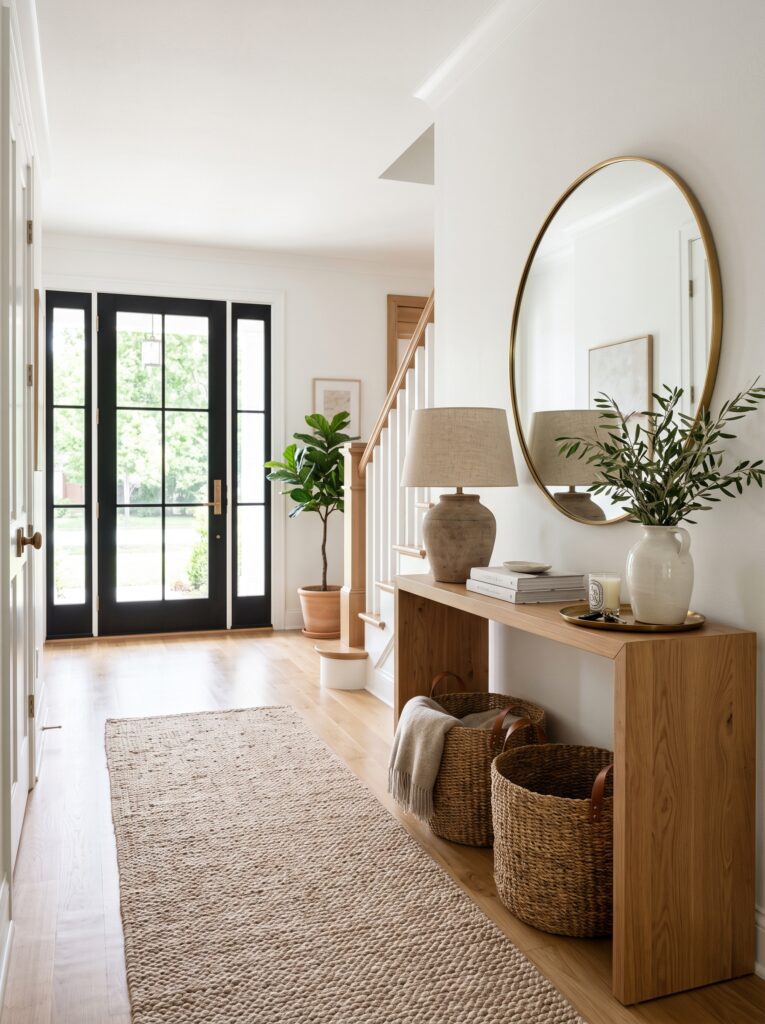
Across the United States, homeowners are embracing sophisticated entryway designs that blend functionality with timeless elegance. Whether you live in a spacious suburban home, a cozy townhouse, a modern apartment, or a charming farmhouse, creating a luxurious-looking entryway doesn’t require a massive renovation or an unlimited decorating budget. Instead, it’s about selecting the right pieces, layering textures, incorporating warm lighting, and maintaining a clean, intentional design.
If you’ve ever admired beautifully styled homes in magazines or on Pinterest, you’ll notice that designer entryways often share common characteristics: neutral color palettes, natural materials, oversized mirrors, elegant lighting, thoughtfully chosen accessories, and practical storage solutions. These elements work together to create an inviting space that feels polished and expensive.
This guide explores designer-approved entryway ideas that instantly elevate your home’s appearance while remaining practical for everyday life.
Why Your Entryway Matters
The entrance to your home creates an emotional connection. A cluttered or neglected entryway can make even the most beautifully decorated house feel unfinished. On the other hand, a clean, organized, and stylish foyer instantly creates a sense of calm and sophistication.
A well-designed entryway offers several benefits:
- Creates a welcoming atmosphere.
- Improves everyday organization.
- Makes small spaces appear larger.
- Adds value to your home’s interior design.
- Provides a functional drop zone for keys, shoes, bags, and coats.
- Establishes a consistent design style throughout the house.
Professional interior designers often begin decorating projects with the entryway because it influences how every other room feels.
Start with a Neutral Color Palette
Neutral colors continue to dominate American interior design trends because they create timeless elegance and flexibility. Soft whites, warm beige, creamy ivory, greige, taupe, and light oak tones help brighten the entrance while making the space feel larger.
Instead of using bold wall colors, consider layering different neutral shades through furniture, rugs, artwork, baskets, and decorative accessories. This creates depth without overwhelming the room.
Popular designer-approved neutral combinations include:
- Warm white and oak
- Beige and black accents
- Cream with natural stone
- Soft gray and walnut wood
- Ivory with brushed brass finishes
These combinations remain stylish throughout every season and coordinate beautifully with modern, transitional, Scandinavian, organic modern, and quiet luxury interiors.
Invest in a Beautiful Console Table
A console table serves as the centerpiece of almost every professionally designed entryway.
Choose a table that complements your home’s architecture and overall design style. Natural oak, walnut, travertine, marble, fluted wood, and slim metal frames remain among the most popular options in luxury homes across the United States.
The console should provide enough surface area for decorative styling without making the hallway feel crowded.
When styling your console table, think in layers rather than symmetry. Designers often combine varying heights, textures, and shapes to create visual interest.
A simple arrangement may include:
- A ceramic vase filled with olive branches.
- A stack of coffee table books.
- A scented candle.
- A small decorative bowl for keys.
- Sculptural objects.
- A framed family photograph.
- Fresh greenery.
The goal is to make the space feel curated rather than cluttered.
Add an Oversized Mirror
One of the easiest ways to create the illusion of a larger and brighter entryway is by hanging an oversized mirror above the console table.
Mirrors reflect natural light, making even compact foyers feel open and inviting. Round mirrors remain especially popular because they soften architectural lines and create balance.
Trending mirror styles include:
- Large black metal frames
- Natural wood frames
- Thin brass frames
- Organic irregular shapes
- Arched mirrors
Choose a mirror that occupies approximately two-thirds the width of your console table for the most balanced appearance.
Layer Lighting for a Luxurious Feel
Lighting dramatically affects how expensive a home feels.
Instead of relying solely on ceiling lights, layer multiple light sources to create warmth.
Designer favorites include:
- Table lamps
- Wall sconces
- Pendant lights
- Small chandeliers
- Lantern-style fixtures
Warm white bulbs around 2700K provide a soft glow that enhances neutral interiors and makes the home feel cozy rather than sterile.
Lighting also highlights decorative objects, artwork, and architectural details.
Incorporate Natural Materials
Luxury interiors rarely rely on synthetic finishes. Instead, they celebrate authentic textures.
Natural materials instantly add warmth and character.
Popular materials include:
- Solid wood
- Linen
- Woven baskets
- Marble
- Travertine
- Stone
- Rattan
- Ceramic
- Jute rugs
Combining these materials creates visual richness while maintaining a calm, minimalist appearance.
For example, a wooden console paired with a marble lamp, woven baskets, linen lampshade, and ceramic vase creates an effortlessly elegant composition.
Create Functional Storage
Beautiful homes are also practical.
An organized entryway helps reduce clutter throughout the entire house.
Storage ideas include:
- Decorative woven baskets.
- Floating shelves.
- Built-in cabinetry.
- Storage benches.
- Coat hooks.
- Hidden shoe cabinets.
- Drawer organizers.
Keeping everyday essentials out of sight contributes significantly to the clean, luxurious appearance seen in designer homes.
Style with Greenery
Nothing makes an entryway feel more alive than plants.
Even a single olive tree, fiddle leaf fig, or eucalyptus arrangement can dramatically transform the space.
If natural plants aren’t practical, high-quality faux greenery provides the same visual impact with almost no maintenance.
Popular entryway plants include:
- Olive tree
- Snake plant
- Rubber plant
- Fiddle leaf fig
- ZZ plant
- Monstera
Greenery introduces organic shapes while balancing neutral interiors.
Add Texture Through Rugs
Entry rugs should be both durable and beautiful.
Natural fiber rugs remain among the most popular choices for American homes because they combine practicality with timeless style.
Look for:
- Jute runners
- Wool rugs
- Vintage-inspired washable rugs
- Neutral geometric patterns
- Soft textured runners
Layering a runner beneath the console anchors the furniture while adding warmth underfoot.
Choose Statement Artwork
Artwork personalizes the space while reinforcing your home’s design style.
Large-scale artwork often creates more impact than several small frames.
Popular styles include:
- Abstract neutral paintings
- Landscape photography
- Black-and-white photography
- Botanical prints
- Textured canvas art
Keep frames consistent for a clean, cohesive look.
Keep Accessories Minimal
One of the biggest differences between amateur decorating and designer styling is restraint.
Luxury homes rarely display excessive accessories.
Instead, they focus on fewer, higher-quality decorative pieces.
Allow negative space to remain visible.
An uncluttered surface communicates sophistication and makes each object feel intentional.
Seasonal Updates Without Redecorating
You don’t need to redesign your entryway every season.
Simple updates keep the space feeling fresh.
Spring:
- Fresh tulips
- Light linens
- Greenery
Summer:
- Coastal textures
- Woven accessories
- Bright botanical stems
Fall:
- Pampas grass
- Wooden accents
- Warm candles
Winter:
- Evergreen branches
- Cozy throws
- Brass candle holders
Small seasonal touches maintain visual interest while preserving the timeless foundation of your design.
Common Decorating Mistakes to Avoid
Even expensive furniture can’t compensate for poor styling.
Avoid these common mistakes:
- Using furniture that’s too large.
- Overcrowding surfaces.
- Ignoring lighting.
- Choosing tiny artwork.
- Mixing too many colors.
- Leaving shoes and bags visible.
- Forgetting storage.
- Hanging mirrors too high.
- Using harsh white lighting.
- Filling every empty space with décor.
Remember, luxury often comes from simplicity.
Conclusion
Creating a designer-inspired entryway isn’t about spending thousands of dollars on luxury furniture. It’s about making intentional choices that combine beauty with functionality. A neutral color palette, an elegant console table, layered lighting, natural textures, oversized mirrors, and carefully selected accessories can completely transform the entrance to your home.
Whether you’re decorating a modern apartment in New York, a suburban home in Texas, or a cozy farmhouse in the Midwest, these timeless ideas create a welcoming first impression that feels both luxurious and inviting. By focusing on quality over quantity and embracing clean, uncluttered styling, your entryway can become one of the most beautiful spaces in your home.
The best part is that many of these updates are affordable and easy to implement, proving that a high-end designer look is achievable for every homeowner. Start with one improvement at a time, and you’ll be surprised how quickly your home’s entrance begins to feel polished, elegant, and effortlessly expensive.
- Kitchen Styling Tricks That Make Your Counters Look Magazine Worthy
- The Quiet Luxury Home Trend Americans Can’t Stop Saving
- Hidden Home Upgrades That Make Any Space Feel Custom Built
- The Cozy Reading Corner Everyone Is Saving Right Now
- Designer Entryway Ideas That Make Your Home Look Instantly Expensive