
The garage is one of the most useful spaces in an American home, but it can also become one of the most neglected. Boxes, sports equipment, gardening tools, seasonal decorations, cleaning supplies, automotive products, and miscellaneous household items can quickly take over every available corner.
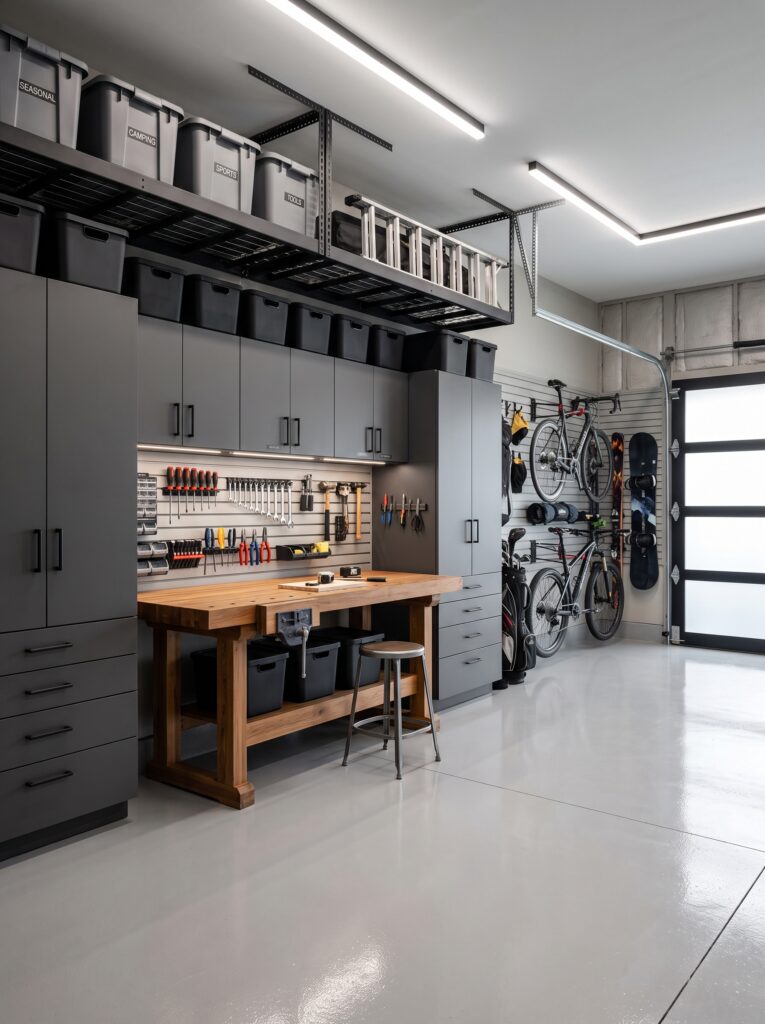
A well-organized garage changes all of that.
With the right combination of garage storage ideas, wall organization, cabinets, shelving, overhead storage, and smart zoning, even a cluttered garage can become clean, functional, and surprisingly attractive. You don’t need an enormous garage or an unlimited renovation budget to create an organized space. The key is to make every section work for a specific purpose.
Whether you have a two-car garage, a compact one-car garage, or a garage that doubles as a workshop and storage area, these garage organization ideas can help you maximize space while creating a polished, practical environment.
Why Garage Organization Matters
Garage organization is about more than making the space look clean.
A well-planned garage can make everyday life easier because you can quickly find what you need instead of searching through piles of boxes and equipment.
An organized garage can provide dedicated areas for:
- Tools
- Gardening supplies
- Sports equipment
- Holiday decorations
- Automotive supplies
- Cleaning products
- Outdoor equipment
- Household storage
- Recycling
- DIY projects
- Seasonal items
When everything has a designated location, putting things away becomes much easier.
The biggest advantage is that organization also protects your usable floor space.
Instead of stacking everything against the walls or placing boxes in the center of the garage, you can use vertical and overhead areas that would otherwise remain empty.
1. Start by Decluttering Your Garage
Before purchasing storage products, begin with decluttering.
This is one of the most important steps because adding more storage does not solve the problem if you are storing items you no longer need.
Take everything out of the garage in sections if possible.
Create categories such as:
Keep:
Items you use regularly or genuinely need.
Donate:
Useful items that you no longer use but someone else could enjoy.
Sell:
Higher-value items that are still in good condition.
Recycle:
Materials that can be responsibly recycled.
Dispose:
Broken or unusable items that should not be stored.
Avoid keeping things simply because you might use them someday.
A garage becomes easier to organize when the number of items is manageable.
2. Create Zones for Different Categories
One of the smartest garage organization techniques is zoning.
Instead of randomly placing items wherever there is space, create dedicated areas.
For example:
Tool Zone
Keep hand tools, power tools, screws, nails, measuring equipment, and hardware together.
Gardening Zone
Store hoses, gardening gloves, pots, soil, pruning tools, and outdoor supplies in one area.
Sports Zone
Create a dedicated section for bicycles, balls, helmets, golf equipment, and seasonal sports gear.
Automotive Zone
Keep car-care products, cleaning supplies, tire equipment, and automotive tools together.
Seasonal Storage Zone
Use higher shelves or overhead storage for holiday decorations and items you only use a few times each year.
Zoning prevents categories from mixing together and makes the entire garage easier to navigate.
3. Use the Walls for Storage
Garage walls are valuable real estate.
Instead of allowing tools and equipment to occupy the floor, move them onto the walls.
Wall-mounted storage can include:
- Pegboards
- Slatwall systems
- Hooks
- Rails
- Shelves
- Magnetic strips
- Tool organizers
- Bins
- Bike mounts
A wall organization system also makes frequently used tools easy to see and access.
For homeowners who use their garage as a workshop, a dedicated tool wall can become one of the most functional features in the space.
4. Install Tall Garage Cabinets
Tall cabinets are excellent for storing items that you want hidden.
Closed cabinets create a cleaner visual appearance than open shelving because they conceal clutter.
Use cabinets for:
- Cleaning products
- Automotive supplies
- Paint supplies
- Power tools
- Hardware
- Household chemicals
- Spare materials
Tall cabinets are especially useful because they take advantage of vertical space.
For a more sophisticated garage, choose cabinets with a consistent finish rather than mixing several unrelated storage units.
5. Add Open Shelving
Not everything needs to be hidden.
Open shelves are ideal for items you use frequently.
Place everyday supplies in clearly labeled bins or baskets so they remain easy to access.
Open shelving works particularly well for:
- Gardening supplies
- Sports equipment
- Storage bins
- Car-cleaning supplies
- Household tools
- Frequently used equipment
For a cleaner appearance, use matching containers whenever possible.
6. Take Advantage of Overhead Storage
One of the most overlooked garage storage opportunities is the ceiling.
Overhead racks can be used for items that are needed only occasionally.
Good candidates include:
- Holiday decorations
- Camping equipment
- Seasonal clothing
- Empty luggage
- Storage bins
- Outdoor cushions
- Rarely used household items
However, overhead storage should be installed carefully and should never interfere with the garage door mechanism, lighting, or vehicle clearance.
Heavy items should also be stored only on systems designed to support their weight.
7. Create a Dedicated Sports Equipment Area
Sports equipment can quickly make a garage look chaotic.
Bicycles, basketballs, baseball equipment, scooters, helmets, golf clubs, and outdoor games all require different types of storage.
Create one dedicated sports zone.
Use vertical bike racks, ball baskets, wall hooks, and narrow shelving to keep equipment contained.
The goal is to make every item easy to grab and easy to return.
If children use the equipment, store frequently used items at accessible heights.
8. Organize Garden Tools Vertically
Long-handled tools consume a surprising amount of floor space.
Shovels, rakes, brooms, garden forks, and similar tools can be stored vertically on wall-mounted racks.
Keep the gardening zone near the garage entrance if possible, especially if the garage provides direct access to the yard.
Use a small cabinet or shelving unit nearby for:
- Gloves
- Plant pots
- Garden ties
- Pruning tools
- Soil accessories
- Seeds
- Watering supplies
This creates a compact gardening station rather than scattering garden equipment throughout the garage.
9. Build a Practical Workbench
If you use your garage for DIY projects, a workbench can dramatically improve functionality.
Choose a durable surface that can withstand regular use.
The workbench can be used for:
- Repairs
- Woodworking
- Craft projects
- Small home-improvement tasks
- Tool maintenance
Add drawers underneath for small equipment and hardware.
A pegboard or wall-mounted tool system above the workbench keeps frequently used tools within reach.
Even a narrow workbench can provide a valuable workspace in a small garage.
10. Organize Small Hardware
Tiny items can become one of the biggest sources of garage clutter.
Screws, nails, bolts, washers, hooks, drill bits, and other hardware should have dedicated containers.
Use small transparent bins or drawer organizers so you can see what you have.
Label each container clearly.
A good system might include separate sections for:
- Screws
- Nails
- Anchors
- Nuts
- Bolts
- Washers
- Hooks
- Electrical supplies
This saves time when completing DIY projects.
11. Use Clear Storage Bins
Clear bins are especially useful for garage organization because you can see their contents without opening them.
They work well for seasonal and miscellaneous items.
For example, create separate bins for:
- Christmas decorations
- Halloween decorations
- Camping supplies
- Pool accessories
- Paint supplies
- Kids’ outdoor activities
Add large labels even when the containers are transparent.
The label makes the system easier to scan quickly.
12. Label Everything
Labels may seem like a small detail, but they can transform an organization system.
A label tells everyone where an item belongs.
Use simple categories rather than overly specific descriptions.
For example:
SPORTS
GARDEN
TOOLS
HOLIDAY
AUTO
PAINT
CLEANING
This makes the garage easier for the entire household to maintain.
13. Create a Recycling Station
If your local recycling system allows it, create a designated area for recycling.
Use separate bins for different materials according to your local requirements.
Keeping recycling in one location prevents cardboard, bottles, cans, and other materials from spreading across the garage.
Make sure bins remain accessible and do not block vehicle movement.
14. Make the Garage Floor Easier to Maintain
The garage floor receives a lot of wear.
Cars bring in dirt, water, mud, and road debris, while tools and equipment can create additional mess.
A durable floor surface can make cleaning easier.
Common approaches include:
- Epoxy-style coatings
- Interlocking garage tiles
- Durable concrete finishes
- Heavy-duty mats
Choose a solution based on your budget, climate, garage use, and maintenance preferences.
A clean floor can dramatically improve the appearance of the entire space.
15. Improve Garage Lighting
Good lighting is essential for an organized garage.
Dark corners make it difficult to find items and can make even a clean garage appear cluttered.
Consider layering lighting with:
- Ceiling fixtures
- Bright task lighting
- Workbench lighting
- Cabinet lighting
- Motion-activated lights
If you regularly work on projects in the garage, task lighting above the workbench can be especially helpful.
16. Use Matching Storage Containers
Matching containers can make a garage look much more cohesive.
You don’t necessarily need expensive designer storage products.
Choose a consistent style of bins and baskets for categories that are visible.
This reduces visual noise and creates the impression of a professionally organized space.
Black, gray, white, clear, or neutral containers can all work depending on the overall design.
17. Create a Seasonal Storage System
American households often accumulate seasonal equipment throughout the year.
Holiday decorations, winter gear, summer outdoor accessories, camping equipment, and sports items can all compete for storage space.
Instead of mixing everything together, rotate seasonal items.
Store current-season items at accessible heights.
Move off-season items to higher shelves or overhead storage.
For example, winter gear can be moved to less accessible storage during summer.
This makes everyday items easier to reach.
18. Make Use of Narrow Spaces
Even small gaps can become useful storage areas.
Consider the spaces:
- Between cabinets
- Beside the garage door
- Behind doors
- Along narrow wall sections
- Between shelving units
Slim rolling carts can be useful for narrow gaps.
Wall-mounted hooks can also turn otherwise useless sections into storage.
In a small garage, every few inches can make a difference.
19. Organize the Area Around the Garage Door
The garage entrance is usually one of the busiest zones.
Items that are used when leaving the house should be easy to access.
Consider creating a small launch station for:
- Reusable bags
- Outdoor shoes
- Umbrellas
- Dog-walking supplies
- Sports equipment
- Frequently used tools
A small bench or narrow cabinet can help keep this area organized.
20. Make Garage Storage Look Intentional
A functional garage can still look attractive.
Instead of purchasing random storage solutions over time, choose a consistent system.
Use similar finishes, matching containers, and clearly defined zones.
Keep frequently used items accessible but avoid allowing them to spread across the floor.
The goal is to make the garage feel like a designed space rather than a collection of storage products.
21. Garage Organization Ideas for Small Garages
Small garages require careful planning because vehicle clearance is limited.
Prioritize vertical storage.
Use:
- Tall cabinets
- Wall-mounted shelves
- Ceiling racks
- Pegboards
- Slim storage towers
- Fold-down workbenches
- Wall-mounted bikes
Avoid bulky furniture that permanently consumes floor space.
If you park a vehicle inside the garage, measure clearance before installing storage.
22. Garage Organization on a Budget
You don’t have to completely renovate the garage to make a noticeable improvement.
Start with affordable changes.
Try:
- Repurposing sturdy shelves
- Adding labeled bins
- Installing basic wall hooks
- Using inexpensive pegboards
- Grouping similar items
- Building simple shelves
- Reusing containers
- Decluttering before buying anything
Often, the biggest improvement comes from reducing unnecessary items rather than purchasing more storage.
23. Create a Garage Drop Zone
If your garage connects directly to the house, a drop zone can help prevent household clutter.
A small section can include hooks, a bench, baskets, and closed storage.
Use it for things that frequently enter and leave the house.
For example:
- Backpacks
- Sports bags
- Outdoor jackets
- Shoes
- Pet supplies
- Shopping bags
This can be particularly helpful for busy households.
24. Keep Frequently Used Items at Eye Level
Storage should reflect how often you use something.
Items you use every day should be easy to reach.
Items you use once or twice a year can go into higher storage.
This simple principle prevents you from constantly moving boxes and equipment around.
Think about frequency rather than simply grouping everything by category.
25. Safety Should Come Before Appearance
A beautiful garage is not useful if it is difficult or unsafe to move through.
Keep walkways clear.
Store heavy objects on stable shelving.
Secure tall cabinets and shelving appropriately.
Keep potentially hazardous products stored safely and according to their labels and local requirements.
Do not block:
- Garage doors
- Electrical panels
- Water shutoffs
- HVAC equipment
- Emergency exits
- Important utility access points
Organization should improve safety, not create new obstacles.
26. How to Make Your Garage Feel Like a Luxury Workshop
If you want a premium appearance, think about consistency.
A high-end garage usually looks intentional because the storage system has been planned as a whole.
Consider combining:
- Matching cabinets
- Consistent storage bins
- Professional-style lighting
- A durable floor finish
- Organized tool walls
- Clean work surfaces
- Minimal visual clutter
You can also add a few decorative details, such as a simple clock, framed automotive artwork, or a small plant, but keep the emphasis on functionality.
Conclusion
A garage doesn’t have to be a forgotten storage area. With thoughtful planning, it can become one of the most functional and organized spaces in your home.
Start by decluttering, then create zones based on how your household actually uses the garage. Take advantage of walls and ceilings, install practical cabinets and shelving, organize small items into labeled containers, and keep frequently used equipment within easy reach.
If you’re working with a limited budget, don’t feel pressured to renovate everything at once. Start with one zone, complete it, and then move to the next.
The best garage organization ideas are the ones that make everyday life easier. When every tool, box, piece of equipment, and seasonal item has a logical home, maintaining the space becomes much simpler.
A well-organized garage can give you more usable space, reduce daily frustration, protect your belongings, and even make your home feel more polished. With a combination of smart storage and intentional design, your garage can become a clean, efficient, and attractive extension of your home rather than a place where clutter disappears.
- Afrohemian Dining Room Ideas for a Warm, Collected and Sophisticated Home
- Warm Wood and Black Kitchen Ideas for a Timeless Designer Look
- Small Reading Nook Ideas That Turn Forgotten Corners Into a Cozy Luxury Retreat
- Curated Trinket Shelf Ideas: How to Create a Collected and Personal Home
- Neo Deco Entryway Ideas That Make Your Home Feel Instantly Expensive