
There is something timeless about having a dedicated space for books. A home library can make a house feel warmer, more personal, and more thoughtfully designed. Whether you have an entire room available or only a small wall that can accommodate built-in shelves, creating a home library gives you an opportunity to combine beautiful design with one of the most meaningful forms of decoration: the things you actually love.
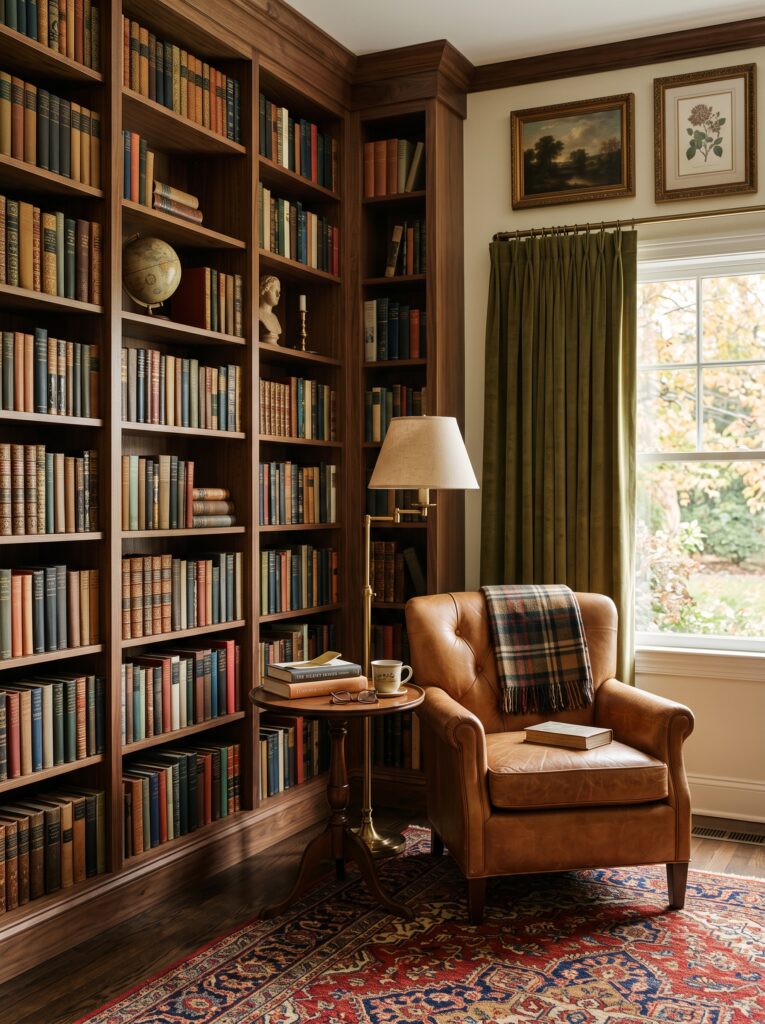
Modern home libraries are no longer limited to large traditional houses with dark wood paneling and floor-to-ceiling collections. Today, homeowners are creating everything from cozy reading rooms and sophisticated library offices to compact book corners and elegant built-in shelving. The best designs balance practical storage with comfortable seating, warm lighting, architectural details, and personal objects.
If you are searching for home library ideas, home library design inspiration, bookshelf ideas, cozy reading room ideas, or ways to create a library at home, these ideas can help you design a space that feels sophisticated without becoming overly formal.
Why Create a Home Library?
A home library does much more than store books. It creates a dedicated environment for slowing down, reading, studying, writing, relaxing, or simply enjoying a quieter part of your home.
In busy American households, rooms often have multiple purposes. A dining area becomes a workspace, a bedroom becomes a television room, and a kitchen becomes the center of family activity. A home library offers something different: a space intentionally designed for calm.
Even if you do not read every day, a thoughtfully designed library can add personality to your home. Books introduce color, texture, history, and visual interest. Shelves also give you space to display artwork, ceramics, photographs, plants, and objects collected over time.
The result is a room that feels personal instead of looking like a showroom.
1. Choose the Right Location for Your Home Library
You do not necessarily need a spare bedroom to create a library.
Look around your home for areas that are currently underused. An empty wall in a hallway, an unused section of a home office, a landing at the top of a staircase, or a quiet corner near a window can all become library spaces.
For homeowners with more room, a dedicated library can be created from:
- A spare bedroom
- A home office
- A formal sitting room
- A large hallway
- A loft
- An unused den
- A section of a primary bedroom
- A finished basement
The location should ideally provide enough quiet for reading and enough wall space for bookshelves.
Natural light is also valuable, but direct sunlight should not constantly hit your books because prolonged exposure can damage covers and pages. If the room receives strong sunlight, consider sheer curtains, shades, or strategically positioned shelving.
2. Install Floor-to-Ceiling Bookshelves
One of the most impressive ways to create a home library is with floor-to-ceiling shelving.
Tall bookshelves draw the eye upward and make a room feel architecturally intentional. They also maximize vertical storage, which is especially useful in smaller homes.
Built-in shelving can be designed around the dimensions of your room instead of forcing standard furniture into an awkward space.
For a sophisticated appearance, consider:
- Warm walnut shelving
- White built-in cabinetry
- Natural oak shelves
- Dark painted bookcases
- Mixed open and closed storage
- Adjustable shelving
- Integrated lighting
- Lower cabinets for hidden storage
If you are renovating, consider adding shelving around doors or windows. This can make the architecture feel custom-designed.
3. Mix Books With Decorative Objects
A common mistake is filling every shelf entirely with books.
While a large collection can look beautiful, leaving some negative space makes the overall arrangement feel more sophisticated.
Mix books with:
- Ceramic vessels
- Small sculptures
- Framed photographs
- Artwork
- Vintage objects
- Decorative boxes
- Small plants
- Candlesticks
- Collected souvenirs
Arrange some books vertically and others horizontally. A small stack of books can create a platform for a decorative object, while taller books can create visual height.
The goal is not perfection. A home library should look collected and lived in.
4. Create a Comfortable Reading Chair
A library is incomplete without somewhere comfortable to sit.
Choose a chair based on how you intend to use the room. If the primary purpose is reading, prioritize comfort over appearance alone.
Excellent options include:
- Upholstered lounge chairs
- Leather reading chairs
- Deep armchairs
- Wingback chairs
- Bouclé chairs
- Traditional club chairs
- Compact accent chairs
Position the chair near a window when possible, but avoid placing it where direct sunlight makes reading uncomfortable.
Add a soft throw blanket and a small pillow for extra comfort. A nearby side table provides space for a book, cup of coffee, reading glasses, or lamp.
5. Add a Dedicated Reading Light
Beautiful ambient lighting is important, but reading requires focused illumination.
A floor lamp positioned beside the chair is one of the easiest solutions. You can also use a table lamp on a side table or a wall-mounted reading light.
For a more architectural look, consider installing sconces directly into the shelving design.
Layering multiple types of lighting creates a much more sophisticated atmosphere:
Ambient lighting:
Provides general illumination throughout the room.
Task lighting:
Helps with reading, writing, or studying.
Accent lighting:
Highlights bookshelves, artwork, architectural features, or decorative objects.
Warm lighting generally creates a more relaxing evening atmosphere than harsh overhead lighting.
6. Choose a Sophisticated Color Palette
The color scheme can completely change the personality of a library.
For a traditional look, consider deep green, navy, chocolate brown, charcoal, or burgundy.
For a lighter contemporary library, use:
- Warm white
- Cream
- Beige
- Soft taupe
- Natural wood
- Muted gray
- Warm tan
If you want a dramatic space, consider painting the walls and built-ins in the same deep color. This creates a cocoon-like atmosphere that works particularly well in reading rooms.
For a more timeless American interior, combine painted cabinetry with natural wood furniture.
7. Use Natural Wood for Warmth
Wood is particularly effective in home libraries because it introduces warmth and visual texture.
Walnut, oak, maple, and other wood finishes can create very different moods.
Dark walnut can produce a traditional, sophisticated appearance, while light oak creates a brighter modern atmosphere.
If your shelving is painted, introduce wood through:
- A writing desk
- Side tables
- A chair frame
- Decorative boxes
- Flooring
- Picture frames
This prevents the room from feeling flat.
8. Add a Desk for a Library Office
If you want your library to perform double duty, add a compact desk.
A library office can become an excellent place for:
- Reading
- Writing
- Journaling
- Studying
- Paying bills
- Working from home
- Creative hobbies
Choose a desk that complements the shelving rather than competing with it.
A substantial wood desk creates a traditional atmosphere, while a slim writing desk works better in smaller rooms.
Keep the desktop relatively clear so the space remains visually calming.
9. Consider a Library Ladder
A rolling library ladder is one of the most recognizable features of traditional libraries.
It can be especially useful when shelving extends close to the ceiling.
However, a ladder should be considered primarily when it serves a practical purpose. If your shelves are not tall enough to require one, a decorative ladder may create unnecessary visual clutter.
For a genuine floor-to-ceiling library, a slim wood or metal ladder can become an architectural feature.
10. Create a Small Library in an Apartment
Apartment dwellers can still enjoy the look and functionality of a home library.
Instead of trying to create an entire room, dedicate one wall to books.
Use:
- Tall narrow bookcases
- Floating shelves
- Wall-mounted lighting
- One comfortable chair
- A small side table
- A compact rug
Another option is to create a library wall behind a sofa or along a hallway.
The key is using vertical space efficiently.
11. Make a Home Library Feel Cozy
A library should feel inviting rather than sterile.
Texture is one of the easiest ways to achieve this.
Layer:
- A textured rug
- Linen curtains
- Upholstered furniture
- Knitted throws
- Wood finishes
- Ceramic accessories
- Soft lighting
Avoid using too many hard surfaces without balancing them with fabric.
A room filled with bookshelves, wood, and hard flooring can become visually heavy. Soft textiles help create a comfortable atmosphere.
12. Add Artwork to Your Bookshelves
Bookshelves do not have to be entirely about books.
Artwork can make the shelves feel more curated.
Try placing a framed print behind a small group of books or leaning artwork against the back of a shelf.
You can also use the wall above a desk or reading chair for a larger statement piece.
Choose artwork that reflects your personality rather than simply matching the room.
13. Bring in Greenery
Plants can soften a library filled with books and wood.
You do not need dozens of plants. One or two thoughtfully positioned plants can be enough.
Good locations include:
- Beside a reading chair
- On a lower shelf
- Near a window
- On a desk
- In an empty corner
Choose plants based on the amount of natural light available in the room.
For a traditional library, a large leafy plant in a ceramic planter can add a beautiful organic contrast to dark shelving.
14. Use a Statement Rug
A rug helps define the library as a separate zone.
In a dedicated library, choose a rug large enough to sit beneath the main furniture arrangement.
For smaller library corners, even a compact rug beneath the chair and side table can visually establish the reading area.
Vintage-inspired patterns work beautifully with traditional libraries, while simple textured rugs are ideal for modern interiors.
15. Style the Shelves Without Making Them Look Perfect
Perfectly symmetrical shelving can sometimes feel too artificial.
Instead, create controlled variation.
For example:
- Stack three books horizontally.
- Place a ceramic bowl beside them.
- Leave an empty section.
- Arrange several books vertically nearby.
- Add a small framed photo.
- Repeat the arrangement with slight variations.
This creates rhythm without making the shelves look identical.
A little imperfection is what makes a library feel like someone’s real collection.
16. Design a Moody Library
If you love dramatic interiors, a moody library can be especially beautiful.
Consider:
- Deep green walls
- Dark walnut shelves
- A leather chair
- Antique brass lighting
- Vintage artwork
- Patterned rugs
- Warm lamps
The combination creates a sophisticated atmosphere that works particularly well in rooms with limited natural light.
Instead of fighting a darker room, embrace it.
17. Create a Bright Modern Library
Not every library needs dark colors.
For a bright modern approach, combine:
- White walls
- Light oak shelving
- Cream upholstery
- Soft beige textiles
- Minimal artwork
- Natural plants
- Warm lighting
This style is especially suitable for contemporary American homes and apartments.
The result is airy, peaceful, and much less formal.
18. Make the Library Personal
The most beautiful libraries usually contain more than professionally styled objects.
Display things that have meaning.
You might include:
- Family photographs
- Travel souvenirs
- Heirloom objects
- Favorite artwork
- Handcrafted ceramics
- Vintage finds
- Children’s books
- Books from your own collection
These details transform the room from a decorative project into part of your home’s story.
19. Don’t Forget Hidden Storage
Open shelves are beautiful, but not everything needs to be visible.
If possible, include drawers or closed cabinets beneath the bookshelves.
Use hidden storage for:
- Office supplies
- Electronics
- Documents
- Chargers
- Games
- Craft materials
- Extra blankets
This allows the visible shelves to remain attractive while practical items stay organized.
20. Budget-Friendly Ways to Create a Home Library
A beautiful library does not necessarily require custom construction.
If a full built-in renovation is outside your budget, start with freestanding bookcases.
Paint several matching bookcases the same color and arrange them together to create a more cohesive appearance.
Other affordable upgrades include:
- Replacing cabinet hardware
- Adding peel-and-stick wallpaper behind shelves
- Installing inexpensive picture lights
- Adding a secondhand reading chair
- Using vintage books as decor
- Adding a large area rug
- Styling shelves with thrifted ceramics
- Using framed artwork you already own
The most important factor is creating a cohesive visual story.
21. Home Library Ideas for Small Spaces
Small spaces require thoughtful planning.
Instead of trying to fit oversized furniture, choose pieces with a smaller footprint.
A narrow bookshelf, compact chair, wall-mounted sconce, and small round table can create an effective reading corner.
Another clever solution is using an awkward corner between rooms.
Even a space measuring only a few feet can become a recognizable reading area if you define it with lighting, a rug, and comfortable seating.
22. Create a Library That Works for Your Lifestyle
Before decorating, think about how you will actually use the room.
If you primarily read novels, prioritize comfortable seating and good lighting.
If you work from home, include a desk.
If you have children, create lower shelves where books can be reached easily.
If you collect art books or large coffee-table books, use wider shelving.
The best home library is not the one that looks most impressive online. It is the one that works beautifully for the people living in the home.
23. Common Home Library Design Mistakes
Avoid filling every wall with furniture.
Too many shelves, chairs, tables, lamps, and accessories can make the room feel crowded.
Another common mistake is using only overhead lighting. A library needs layered illumination to feel comfortable.
Avoid choosing furniture based entirely on appearance. A beautiful reading chair that is uncomfortable will quickly become unused.
Finally, do not try to copy another home’s library exactly. Use inspiration as a starting point and adapt the concept to your own architecture, collection, and lifestyle.
24. How to Make Your Home Library Look Expensive
You do not need a huge budget to create an elevated appearance.
Focus on a few high-impact details:
Choose cohesive materials.
Wood, brass, stone, linen, and ceramics work beautifully together.
Use fewer but better accessories.
A handful of beautiful objects often looks more sophisticated than dozens of small decorations.
Install good lighting.
Lighting can dramatically improve the perceived quality of a room.
Keep the shelves organized.
A thoughtful arrangement makes inexpensive furniture look more intentional.
Add architectural details.
Molding, built-ins, paneling, and trim can give the room a custom appearance.
Prioritize comfort.
A beautiful library should invite you to stay.
Conclusion
A home library is one of those design features that can make a home feel genuinely personal. It does not need to be enormous, traditional, or expensive. A single bookshelf wall, comfortable chair, warm lamp, and carefully chosen collection can be enough to create a meaningful retreat.
For a more luxurious look, focus on floor-to-ceiling shelving, natural wood, layered lighting, sophisticated textiles, and a comfortable reading chair. For smaller homes, concentrate on vertical storage and create a compact reading corner instead.
Most importantly, let the library reflect the people who live there. Display the books you actually love, incorporate objects with personal meaning, and create an environment that makes you want to slow down.
A thoughtfully designed home library isn’t simply a room filled with books—it is a quiet expression of personality, comfort, curiosity, and everyday luxury.
- Afrohemian Dining Room Ideas for a Warm, Collected and Sophisticated Home
- Warm Wood and Black Kitchen Ideas for a Timeless Designer Look
- Small Reading Nook Ideas That Turn Forgotten Corners Into a Cozy Luxury Retreat
- Curated Trinket Shelf Ideas: How to Create a Collected and Personal Home
- Neo Deco Entryway Ideas That Make Your Home Feel Instantly Expensive