
A well-designed closet can completely change the way you experience your home. Instead of being a space where clothes, shoes, handbags, and accessories are simply stored, your closet can become an organized and beautiful dressing space that feels more like a private boutique.
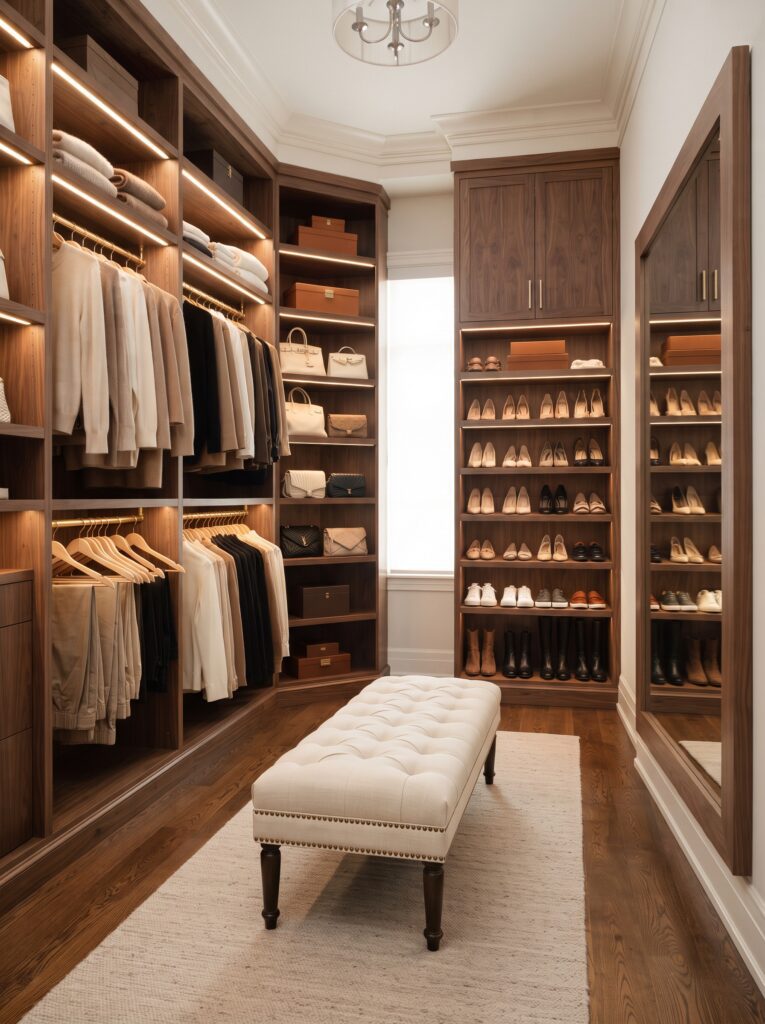
The best part is that creating a boutique-inspired closet does not necessarily require a huge walk-in wardrobe or an unlimited decorating budget. With thoughtful organization, coordinated storage, warm lighting, attractive materials, and a few carefully selected decorative details, even an ordinary closet can feel elevated.
For homeowners in the United States who love elegant interiors, luxury-inspired organization, and sophisticated home decor, a boutique-style closet offers the perfect combination of beauty and practicality.
Whether you have a spacious walk-in closet, a compact reach-in closet, or a small dressing area, these closet design ideas can help you create a space that feels polished, organized, and personal.
What Makes a Closet Feel Like a Boutique?
Walk into a well-designed clothing boutique and you will probably notice something immediately: everything has a place.
Clothing is organized, accessories are displayed intentionally, lighting highlights important areas, and unnecessary visual clutter is minimized.
You can bring the same principles into your home.
A boutique-inspired closet typically combines:
- Coordinated clothing organization
- Matching or visually consistent hangers
- Open and closed storage
- Thoughtful lighting
- Attractive hardware
- Displayed accessories
- Organized shoes
- Dedicated handbag storage
- Comfortable seating when space allows
- A cohesive color palette
The result should feel organized rather than overly decorated.
Start With a Closet Decluttering Session
Before buying organizers or decorating the space, start with what you already own.
Take everything out of the areas you plan to reorganize and separate your belongings into categories.
For example:
Keep: Items you wear regularly and genuinely love.
Donate: Good-condition pieces you no longer use.
Repair: Items that need alterations or repairs.
Seasonal: Pieces that are used only during certain times of the year.
Relocate: Items that do not belong in the closet.
This process gives you a clearer understanding of the storage you actually need.
There is little benefit in designing a beautiful organizational system around clothing and accessories you never wear.
Organize Clothing by Category
Once unnecessary items are removed, organize clothing into logical groups.
You might separate:
- Tops
- Blouses
- Shirts
- Sweaters
- Pants
- Jeans
- Skirts
- Dresses
- Jackets
- Coats
- Workout clothing
- Special-occasion clothing
The exact categories should reflect your wardrobe.
The goal is simple: you should be able to find what you need without searching through every section.
Try Organizing by Color
Color organization can make a closet look surprisingly polished.
Instead of arranging clothing randomly, group similar shades together.
For example, you could gradually move from:
White → Cream → Beige → Brown → Gray → Black
Then organize brighter colors separately.
This approach creates a visually calm appearance and makes it easier to identify pieces quickly.
You do not have to follow a strict rainbow system.
A neutral wardrobe may look especially sophisticated when organized through subtle tonal transitions.
Use Matching Hangers
One of the easiest closet upgrades is replacing mismatched hangers with a coordinated set.
Different colors, materials, and shapes can create unnecessary visual noise.
A consistent hanger style makes clothing appear more organized.
Slim hangers can also help maximize hanging space, although the appropriate hanger depends on the garment.
For heavier jackets and coats, sturdier hangers are generally more practical.
The goal is both visual consistency and proper support for your clothing.
Create Open and Closed Storage
A boutique-style closet works particularly well when storage includes both display areas and concealed compartments.
Open shelving is useful for:
- Shoes
- Handbags
- Folded sweaters
- Hats
- Decorative boxes
Closed cabinets can hide:
- Less attractive storage items
- Extra accessories
- Seasonal belongings
- Personal items
- Clothing that does not need to be displayed
This balance keeps the closet visually interesting while preventing it from becoming overwhelming.
Display Your Favorite Handbags
Handbags can become part of the decor when displayed thoughtfully.
Instead of stacking them randomly, consider dedicating one shelf or section to your favorite bags.
Keep enough space between pieces so they remain visible.
If you own handbags in different colors, grouping them by shade can create an attractive visual arrangement.
For expensive or delicate bags, follow the manufacturer’s storage recommendations and avoid placing them where they could be damaged by excessive sunlight or moisture.
Organize Shoes Like a Boutique
Shoes can quickly become one of the messiest parts of a closet.
A dedicated shoe system can make a dramatic difference.
Depending on your space, options include:
- Adjustable shelves
- Pull-out shoe racks
- Cubby storage
- Clear boxes
- Slanted shelving
- Built-in shoe cabinets
Arrange frequently worn shoes where they are easiest to reach.
Special-occasion shoes can be stored higher or farther back.
If using open shelving, arrange shoes consistently to create a clean visual line.
Add a Closet Island if Space Allows
A central island can transform a large walk-in closet into a luxurious dressing space.
It provides:
- Additional drawers
- Folding space
- Accessory storage
- A surface for temporary organization
- A visual centerpiece
A closet island does not need to be enormous.
Even a relatively compact island can provide valuable storage if the room has enough clearance around it.
Choose a design that complements the existing cabinetry.
A walnut or painted island can create a strong focal point while adding practical storage.
Add a Comfortable Bench
If you have enough space, a small upholstered bench can make the closet much more functional.
It gives you a place to sit while putting on shoes or planning an outfit.
For an elegant look, consider:
- Cream upholstery
- Linen
- Bouclé
- Velvet
- Leather
- Textured neutral fabric
Choose a durable material if the bench will be used frequently.
The bench can also become a decorative focal point in the center of a larger walk-in closet.
Use Warm Lighting
Lighting is essential in a dressing space.
A poorly lit closet can make colors difficult to distinguish and make the room feel less inviting.
Consider combining:
- Ceiling lighting
- Cabinet lighting
- Shelf lighting
- Mirror lighting
- Accent lighting
Warm lighting can create a more comfortable boutique-like atmosphere.
However, make sure the lighting is appropriate for dressing and accurately illuminates clothing colors.
Add Lighting Inside Cabinets
Integrated lighting can make cabinetry feel significantly more sophisticated.
LED strip lighting or small cabinet lights can illuminate dark areas and make it easier to find accessories.
Lighting inside glass-front cabinets can also create an attractive display effect.
This is particularly useful for handbags, shoes, jewelry, and other items you want to highlight.
Choose Elegant Hardware
Hardware is a small detail that can influence the entire appearance of a closet.
Consider finishes such as:
- Brushed brass
- Aged brass
- Matte black
- Polished nickel
- Chrome
Choose one main finish and repeat it throughout the space.
Matching or coordinated hardware on drawers, cabinets, and doors creates visual continuity.
Add a Full-Length Mirror
A full-length mirror is one of the most practical additions to a dressing space.
It allows you to see an outfit from head to toe and can also make the closet feel more spacious.
Depending on the layout, you could install the mirror:
- On a wall
- Inside a cabinet door
- At the end of a wardrobe
- Beside a closet island
- On a freestanding frame
A decorative frame can turn the mirror into a design feature.
Use a Neutral Color Palette
A neutral closet can create a sophisticated boutique atmosphere.
Consider:
- Warm white
- Cream
- Beige
- Taupe
- Walnut
- Soft gray
- Charcoal
- Black accents
Neutral colors also allow your clothing and accessories to become the visual focus.
Instead of using multiple bold cabinet colors, you can introduce personality through hardware, artwork, textiles, or accessories.
Bring in Natural Materials
Natural materials can make a closet feel less clinical.
Wood cabinetry, woven baskets, ceramic containers, leather details, and natural textiles can introduce warmth.
A walnut closet with cream upholstery and brass hardware, for example, can create a sophisticated transitional aesthetic.
Even if your existing closet is primarily white, adding a wooden stool or woven storage basket can soften the space.
Use Decorative Boxes for Small Accessories
Small accessories are often responsible for closet clutter.
Decorative boxes can help organize:
- Belts
- Scarves
- Hair accessories
- Small handbags
- Sunglasses
- Seasonal items
Labeling boxes can make organization even easier.
If the boxes are visible, choose a coordinated color or material.
Create a Jewelry Organization Area
Jewelry deserves its own storage system.
Depending on your collection, consider:
- Drawer organizers
- Velvet-lined trays
- Wall-mounted displays
- Small jewelry cabinets
- Divided compartments
Keep valuable pieces secure and protected.
A jewelry drawer with organized compartments can also make getting ready much faster.
Organize Accessories by Frequency
Not everything needs to be equally accessible.
Keep everyday accessories at eye level.
Place less frequently used items in higher or lower storage.
For example:
Everyday: Easily accessible drawers or shelves.
Occasional: Secondary storage.
Seasonal: Higher shelves or labeled containers.
This simple approach makes the closet easier to maintain.
Make Use of Vertical Space
One of the biggest opportunities in many closets is vertical space.
Look upward.
The area above standard hanging sections can often store:
- Luggage
- Seasonal clothing
- Storage boxes
- Blankets
- Special-occasion accessories
If you are redesigning a closet, consider extending cabinetry closer to the ceiling.
This maximizes storage while creating a more custom appearance.
Design a Small Closet Like a Boutique
You do not need a large walk-in closet to achieve this aesthetic.
For a smaller closet, prioritize:
- Consistent hangers
- Clear categories
- Slim storage
- Coordinated colors
- Good lighting
- One attractive decorative element
Avoid filling every available surface.
A small closet can actually feel more luxurious when it is edited carefully.
Create a Closet in a Spare Room
If you have a spare room that is rarely used, it can potentially become a dedicated dressing room.
Depending on the size, you could include:
- Full-height wardrobes
- Central island
- Vanity
- Full-length mirror
- Upholstered bench
- Shoe storage
- Accessory displays
The room can be designed around your wardrobe rather than adapting a standard closet system.
Turn an Awkward Closet Into a Feature
Awkward spaces do not necessarily need to be hidden.
Sloped ceilings, narrow corners, and unusual wall dimensions can sometimes become opportunities for custom storage.
Use cabinetry that follows the shape of the room.
Built-in solutions can make irregular spaces feel intentional.
Make Everyday Organization Easier
A closet system only works if you can maintain it.
Do not create an organization system that requires excessive effort every day.
For example, if you frequently wear a certain group of clothes, keep them at a convenient height.
If you rarely use formal clothing, store it separately.
The best system reflects your actual habits.
Refresh Your Closet Seasonally
Seasonal closet organization can make getting dressed easier.
At the beginning of each season, review your wardrobe.
Move frequently used clothing into the easiest-to-reach areas.
Store heavy winter clothing during warmer months if your space is limited.
Likewise, move lightweight summer pieces into more accessible areas when temperatures rise.
Use labeled containers for items that are being stored.
Add a Small Seating Area
If your closet is large enough, a small chair can make the space feel more like a dressing room.
A chair can provide a comfortable place to sit while choosing outfits or organizing accessories.
Choose a silhouette that complements the rest of the room.
A simple upholstered chair can provide softness against built-in cabinetry.
Add Subtle Decor
Although a closet is primarily functional, a few decorative pieces can make it feel more personal.
Consider:
- Small artwork
- A ceramic vase
- A decorative tray
- A small plant
- A framed photograph
- A sculptural object
Keep decorative items limited.
The clothing should remain the primary visual element.
Create a Luxury Closet on a Budget
A complete custom closet renovation can be expensive, but you can create a luxury-inspired appearance without rebuilding the entire room.
Start with inexpensive visual upgrades.
Replace mismatched hangers.
Add coordinated storage boxes.
Improve lighting.
Organize clothing by category and color.
Add one attractive mirror.
Introduce a small rug or bench if space allows.
Update cabinet hardware.
These changes can make a noticeable difference without requiring major construction.
Closet Organization Mistakes to Avoid
Overcrowding
If clothing is packed too tightly, organization becomes difficult.
Ignoring Accessibility
Frequently used items should be easy to reach.
Too Many Open Shelves
Open storage can look beautiful but requires regular maintenance.
Poor Lighting
Dark areas make dressing and organization harder.
Buying Organizers Before Decluttering
Storage should be based on what you actually own.
Using Too Many Different Materials
A cohesive palette creates a more sophisticated appearance.
Sacrificing Function for Aesthetics
A beautiful closet still needs to work for your everyday routine.
How to Make a Closet Feel More Expensive
The expensive look usually comes from consistency.
Use similar hangers.
Coordinate storage containers.
Repeat one hardware finish.
Keep the color palette restrained.
Use warm lighting.
Display accessories intentionally.
Leave some negative space.
You can create a polished appearance even when individual items are not expensive.
The overall composition matters more than the price of every object.
How to Style a Closet for Different Aesthetics
Modern Closet
Use clean cabinetry, minimal hardware, integrated lighting, and simple accessories.
Traditional Closet
Consider paneled cabinetry, brass hardware, classic lighting, and elegant textiles.
Transitional Closet
Combine warm wood, neutral upholstery, classic hardware, and modern storage.
Organic Modern Closet
Use natural wood, woven baskets, stone, cream textiles, and greenery.
Minimalist Closet
Focus on concealed storage, a limited wardrobe, clean lines, and minimal decoration.
Pinterest-Friendly Closet Ideas
Closet organization performs particularly well visually because viewers can immediately understand the transformation.
When creating Pinterest content, focus on concepts that solve a specific problem.
Examples include:
- Small closet organization
- Walk-in closet ideas
- Boutique closet design
- Luxury closet organization
- Shoe storage ideas
- Handbag organization
- Neutral closet design
- Closet lighting ideas
- Built-in closet inspiration
- Dressing room ideas
A strong image should show both the aesthetic and the practical benefit.
For example, a beautifully organized handbag wall communicates inspiration while also showing viewers exactly how the storage works.
Conclusion
A boutique-inspired closet is ultimately about creating a space where organization and beauty work together. You do not need a massive walk-in wardrobe to achieve the look. Start by decluttering, organize clothing logically, use consistent hangers, maximize vertical space, and create dedicated areas for shoes, handbags, and accessories.
Then introduce the decorative elements that make the space feel special. Warm lighting, natural wood, elegant hardware, a full-length mirror, neutral colors, and a comfortable bench can transform a basic closet into a sophisticated dressing environment.
The most important principle is to design around your real lifestyle. Keep everyday items accessible, store seasonal belongings efficiently, and avoid creating an organization system that is difficult to maintain.
When everything has a logical place and the surrounding design feels intentional, your closet can become one of the most satisfying spaces in your home—a practical dressing area that also feels polished, calm, and beautifully curated.
- The Indoor Plant Corner That Makes a Home Feel Instantly More Elevated
- How to Turn Your Closet Into a Boutique-Inspired Dressing Space
- A Calm Home Office That Makes Working From Home Feel Beautiful
- How to Style a Coffee Table Like a Luxury Interior Designer
- Elegant Fall Wedding Welcome Table Ideas for a Beautiful First Impression