
An outdoor kitchen can completely transform the way you use your backyard. Instead of preparing food indoors while guests gather outside, an outdoor kitchen allows cooking, dining, relaxing, and entertaining to happen in one connected space. With the right layout and materials, even a modest backyard can feel like a comfortable outdoor retreat designed for weekend gatherings, summer dinners, and relaxed family meals.
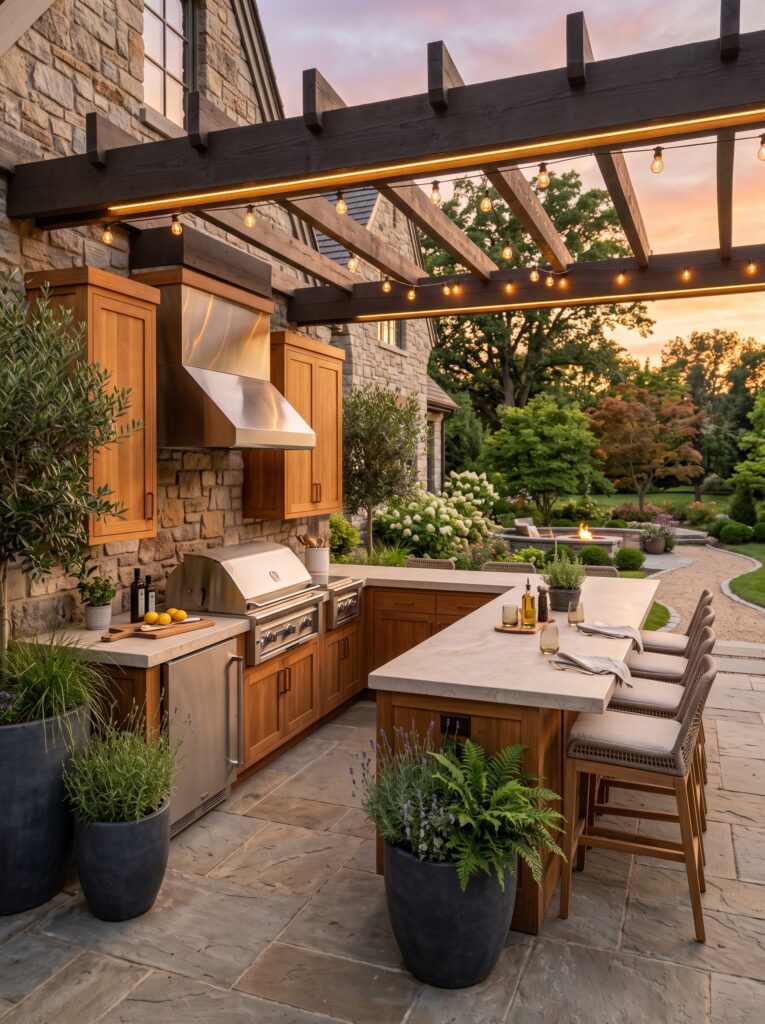
Today’s outdoor kitchens are no longer limited to a simple grill placed beside a patio. Homeowners are creating sophisticated outdoor cooking areas with built-in appliances, weather-resistant cabinetry, durable countertops, comfortable seating, integrated lighting, and beautiful landscaping. The goal is to create an outdoor space that feels like a natural extension of the home.
Whether you are planning a complete backyard renovation or looking for simple ways to upgrade an existing outdoor cooking area, these outdoor kitchen ideas can help you create a functional, stylish, and inviting space.
Why Outdoor Kitchens Are So Popular
Outdoor kitchens combine several popular home design priorities into one space: outdoor living, entertaining, functionality, and connection with nature.
For many American homeowners, the backyard becomes especially important during warmer months. An outdoor kitchen makes it easier to host friends and family without constantly moving between the indoor kitchen and the backyard.
It can also create a more relaxed entertaining experience. Guests can sit nearby while food is prepared, children can continue playing outdoors, and meals can transition naturally into evening conversations.
The most successful outdoor kitchens balance beauty with practicality. Every material and appliance should be selected with outdoor conditions in mind while still complementing the home’s architecture.
1. Start With the Right Outdoor Kitchen Layout
The layout should be your first consideration.
Before choosing countertops, appliances, or decorative features, determine how people will move through the space.
Think about where you will:
- Prepare food
- Cook
- Serve meals
- Store supplies
- Wash dishes
- Sit and eat
- Entertain guests
Avoid creating a layout that forces people to cross through the cooking area constantly.
If the backyard is large, you can create separate zones for cooking, dining, and lounging.
For smaller spaces, combining functions may be more practical.
2. Choose a Location Close to the House
An outdoor kitchen is generally more convenient when it is relatively close to the main house.
A location near the kitchen or back door can reduce the distance you need to travel when carrying food, dishes, and supplies.
However, the exact placement should consider your home’s structure, utilities, local requirements, prevailing weather conditions, and safe appliance installation.
A location beneath an existing covered area can also provide protection from intense sun and weather.
3. Create a Built-In Grill Station
The grill is often the central feature of an outdoor kitchen.
A built-in grill can create a more integrated appearance than a freestanding unit.
Surround the cooking area with durable countertop space so you have room for preparation and serving.
Consider placing storage drawers or cabinets nearby for cooking tools and accessories.
The grill area should also have sufficient clearance and ventilation appropriate for the equipment and installation.
4. Add Weather-Resistant Cabinetry
Outdoor cabinetry needs to withstand changing temperatures, humidity, sunlight, and moisture.
Choose materials specifically designed for outdoor environments.
Common options include:
- Powder-coated metal
- Marine-grade materials
- Exterior-rated composites
- Stone-based structures
- Weather-resistant wood products
Avoid treating an indoor cabinet as an outdoor cabinet simply because it looks attractive.
Outdoor storage should be selected based on durability as well as appearance.
5. Choose Durable Countertops
The countertop is one of the most visible parts of an outdoor kitchen.
It also receives constant exposure to food, moisture, heat, and outdoor conditions.
Choose a material that is appropriate for your climate and intended use.
Possible options include:
- Natural stone
- Porcelain
- Concrete
- Outdoor-rated solid surfaces
- Other manufacturer-approved exterior materials
A neutral stone countertop can create a sophisticated appearance while blending naturally with surrounding landscaping.
6. Include a Small Outdoor Sink
If your setup and plumbing allow it, an outdoor sink can make the kitchen much more functional.
It can be used for:
- Washing produce
- Rinsing dishes
- Cleaning cooking tools
- Filling containers
- Washing hands
A sink can reduce trips back into the house and make outdoor entertaining easier.
Before adding one, plan the water supply, drainage, winterization requirements, and local plumbing considerations.
7. Add a Beverage and Serving Station
A dedicated serving area can make entertaining much easier.
Instead of placing everything directly on the cooking countertop, create a separate surface for serving dishes, glasses, plates, napkins, and other essentials.
This keeps the cooking area organized while allowing guests to help themselves.
A small beverage station can also work well in larger outdoor kitchens.
8. Incorporate Comfortable Bar Seating
Bar seating can create a social connection between the cook and guests.
A raised counter with comfortable stools allows people to sit nearby while food is being prepared.
Choose outdoor furniture designed for the climate.
For a sophisticated appearance, coordinate the seating materials with the cabinetry and surrounding patio furniture.
Natural wood, woven textures, neutral upholstery, and metal details can create an elevated outdoor aesthetic.
9. Create a Separate Dining Area
If space allows, position a dining table near the outdoor kitchen.
This creates a natural flow from preparation to serving to dining.
A large outdoor dining table can become the centerpiece for:
- Family dinners
- Weekend brunches
- Summer gatherings
- Birthday celebrations
- Casual entertaining
Choose weather-appropriate furniture and textiles that can handle outdoor conditions.
10. Add a Covered Outdoor Kitchen
A covered outdoor kitchen can extend the amount of time you can comfortably use the space.
A roof, pergola, covered patio, or other appropriate structure can provide shade and protection from certain weather conditions.
It can also make the outdoor kitchen feel more like an outdoor room.
Add lighting underneath the covering so the space remains functional after sunset.
Any permanent structure should be planned according to applicable local building requirements.
11. Use Warm Lighting
Outdoor lighting can completely change the atmosphere after dark.
Instead of relying on one bright overhead fixture, layer several types of lighting.
Consider:
- Under-counter lighting
- Pendant fixtures
- Wall sconces
- Path lighting
- Landscape lighting
- Table lighting
Task lighting should illuminate cooking and preparation areas, while softer accent lighting can create a relaxing evening atmosphere.
Warm-toned lighting often works beautifully with wood, stone, and natural landscaping.
12. Bring Natural Materials Into the Design
Natural materials can make an outdoor kitchen feel integrated with its surroundings.
Consider combining:
- Stone
- Wood
- Concrete
- Brick
- Metal
- Natural textiles
- Ceramic accents
Avoid using too many competing materials.
A restrained palette usually feels more sophisticated.
For example, warm wood cabinetry combined with pale stone and dark metal accents can create a timeless modern outdoor kitchen.
13. Connect the Kitchen With Landscaping
An outdoor kitchen should not feel disconnected from the garden.
Use landscaping to soften hard architectural surfaces.
Large planters, trees, shrubs, ornamental grasses, and appropriate outdoor plants can create a more natural transition.
If possible, position the kitchen so it has a beautiful view of the surrounding landscape.
This can make the entire backyard feel more intentional.
14. Design an Outdoor Kitchen for Small Backyards
You do not need a huge backyard to create an outdoor cooking area.
A compact setup can include:
- Built-in grill
- Small countertop
- Storage cabinet
- Compact sink where practical
- Two or three stools
Use vertical space carefully and avoid oversized furniture.
A narrow outdoor kitchen can work particularly well against an exterior wall.
15. Create an Outdoor Kitchen for Entertaining
If entertaining is your main priority, design around your guests.
Think about where people naturally gather.
You may want the kitchen to face the dining table or seating area rather than being positioned in an isolated corner.
Provide enough countertop space for serving and enough seating for the people you regularly host.
The best entertaining spaces make conversation easy.
16. Add a Pizza Oven Area
For homeowners who enjoy outdoor cooking, a pizza oven can become a fun feature.
A dedicated pizza station can include preparation space, storage for accessories, and a nearby serving surface.
Make sure the equipment is installed according to the manufacturer’s requirements and appropriate local safety standards.
A pizza-focused outdoor kitchen can also become a memorable feature for casual gatherings.
17. Include Storage for Outdoor Cooking Equipment
An outdoor kitchen should have enough storage for the tools you actually use.
Consider dedicated spaces for:
- Grilling tools
- Serving trays
- Outdoor dishes
- Cooking utensils
- Table linens
- Cleaning supplies
- Food storage
- Outdoor cookware
Closed cabinets help keep the kitchen visually clean.
Frequently used items should remain easy to access.
18. Add a Refrigerator If It Fits Your Needs
A properly rated outdoor refrigerator can reduce trips between the house and backyard.
It can be useful for storing beverages, ingredients, and food before serving.
However, outdoor appliances should be specifically designed or rated for outdoor use and installed according to manufacturer requirements.
Do not assume that an indoor refrigerator is automatically suitable for an outdoor environment.
19. Use a Cohesive Color Palette
The outdoor kitchen should complement your home’s exterior.
Popular sophisticated combinations include:
- Warm wood and cream
- Charcoal and natural stone
- Black and light oak
- Beige and limestone
- White and warm gray
- Terracotta and natural wood
Instead of following every outdoor trend, choose colors that will continue to look attractive as the landscape changes.
20. Create a Resort-Inspired Atmosphere
If you want your backyard to feel luxurious, focus on atmosphere rather than simply adding expensive features.
Comfortable seating, layered lighting, greenery, natural textures, and carefully chosen accessories can make a major difference.
Add:
- Large planters
- Textured cushions
- Outdoor rugs
- Lanterns
- Sculptural side tables
- Soft lighting
The objective is to create a space where people genuinely want to spend time.
21. Make the Outdoor Kitchen Work at Night
An outdoor kitchen should not become unusable when the sun goes down.
Plan lighting during the initial design stage.
Cooking surfaces require functional illumination.
Dining and lounging areas can use softer ambient lighting.
Landscape lighting can connect the kitchen visually with the rest of the backyard.
A well-lit outdoor kitchen can become an evening destination rather than simply a daytime feature.
22. Plan for Weather and Seasonal Changes
Outdoor kitchens are exposed to the elements, so climate should influence every design decision.
Consider:
- Rain
- Snow
- Humidity
- Strong sunlight
- Freezing temperatures
- Wind
Choose outdoor-rated materials and appliances.
In colder regions, plumbing systems may require seasonal winterization.
Furniture and accessories may also need appropriate storage during severe weather.
Planning for your local climate can significantly increase the longevity of the space.
23. Don’t Forget Counter Space
One of the biggest practical mistakes is installing a large grill while leaving almost no preparation surface.
You need space for:
- Cutting ingredients
- Setting down hot cookware
- Preparing food
- Serving dishes
- Organizing utensils
Counter space can be just as important as the cooking appliance itself.
If your outdoor kitchen is small, prioritize usable countertop area before adding too many extras.
24. Add a Small Herb Garden
A compact herb garden can be both attractive and practical.
Depending on your climate and available sunlight, consider growing suitable herbs in containers or dedicated garden beds.
Place the garden near the cooking area if practical.
Fresh herbs can also introduce greenery and natural texture into an otherwise hard-surfaced outdoor kitchen.
25. Make the Design Flow With Your Home
An outdoor kitchen should feel like part of the house rather than a completely unrelated structure.
Repeat one or two materials or colors from the home’s exterior.
For example, if your home has warm wood details, introduce similar tones outdoors.
If your home’s architecture features natural stone, use complementary stone in the outdoor kitchen.
This creates visual continuity.
26. Create a Multi-Functional Backyard
The outdoor kitchen can be the center of a larger outdoor living arrangement.
Surround it with zones for different activities.
You might include:
- Outdoor dining
- Lounge seating
- Fire feature
- Garden area
- Poolside seating
- Children’s play area
- Open lawn
The kitchen does not need to occupy the entire backyard.
Instead, it can serve as one part of a carefully planned outdoor lifestyle space.
27. Outdoor Kitchen Ideas on a Budget
A complete outdoor kitchen can be expensive, but you don’t have to build everything at once.
Start with the features you will use most.
For example, begin with a quality cooking station and countertop.
Later, add storage, lighting, seating, or landscaping.
You can also refresh an existing outdoor kitchen with:
- New outdoor cushions
- Updated lighting
- Fresh planters
- A new outdoor rug
- Reorganized storage
- Decorative accessories
Small improvements can change the appearance dramatically.
28. Common Outdoor Kitchen Design Mistakes
One common mistake is prioritizing appearance over functionality.
A beautiful kitchen becomes frustrating if there is nowhere to prepare food or store tools.
Another mistake is using indoor-rated products outdoors.
Always verify that appliances, cabinets, lighting, and materials are suitable for exterior environments.
Poor lighting is another issue.
An outdoor kitchen should be enjoyable both during the day and after sunset.
Finally, avoid overcrowding the area. Leave enough space for people to move comfortably around the cooking and dining zones.
29. How to Make an Outdoor Kitchen Look Expensive
Luxury is often created through consistency rather than excessive decoration.
Choose a limited material palette and repeat it throughout the space.
For example, warm wood, natural stone, black metal, and neutral upholstery can create a sophisticated visual language.
Investing in comfortable furniture and thoughtful lighting can have more impact than filling the kitchen with unnecessary accessories.
Keep countertops relatively uncluttered.
Use attractive containers and trays where practical.
Most importantly, design the outdoor kitchen around how you actually entertain.
30. Design an Outdoor Kitchen You’ll Actually Use
Before finalizing your design, think about your normal routine.
Ask yourself:
Where will groceries enter the space?
Where will dirty dishes go?
Where will guests sit?
Where will children move around?
Where will cooking tools be stored?
Where will outdoor furniture be stored during severe weather?
How will the area be cleaned?
Answering these questions early can prevent expensive changes later.
A beautiful outdoor kitchen should make outdoor living easier, not more complicated.
Conclusion
An outdoor kitchen can become one of the most enjoyable features of an American home when it is designed around real life. The best outdoor kitchens are not simply collections of expensive appliances. They are carefully planned environments where cooking, dining, conversation, and relaxation naturally happen together.
Whether you have a large backyard or a compact patio, start by thinking about how you want to use the space. A small built-in grill with practical counter space may be more valuable to you than a large kitchen filled with features you rarely use. If you regularly entertain friends and family, comfortable seating, good lighting, and an easy connection between cooking and dining areas should become priorities.
Material selection is equally important. Outdoor kitchens need to withstand sunlight, moisture, temperature changes, and regular use, so choosing appropriate exterior-rated materials and appliances is essential. Natural stone, durable cabinetry, warm wood tones, and carefully selected metal accents can create a sophisticated appearance while complementing the surrounding landscape.
Lighting can take the entire experience to another level. Task lighting makes cooking easier, while warm ambient and landscape lighting can transform the backyard after sunset. When combined with comfortable furniture, greenery, outdoor textiles, and thoughtful accessories, the space can feel more like a private retreat than a basic cooking area.
You also do not need to complete everything at once. If your budget is limited, start with the essentials and gradually build the space over time. A well-designed grill station can eventually become a complete outdoor kitchen with storage, seating, lighting, and additional features as your needs change.
Ultimately, the most successful outdoor kitchen design is one that feels natural to use. It should make entertaining easier, encourage people to spend more time outdoors, and connect beautifully with the architecture and landscape of your home. With thoughtful planning and a focus on comfort, functionality, and timeless materials, your backyard can become an inviting destination for everyday meals, summer gatherings, and memorable evenings at home.
- Afrohemian Dining Room Ideas for a Warm, Collected and Sophisticated Home
- Warm Wood and Black Kitchen Ideas for a Timeless Designer Look
- Small Reading Nook Ideas That Turn Forgotten Corners Into a Cozy Luxury Retreat
- Curated Trinket Shelf Ideas: How to Create a Collected and Personal Home
- Neo Deco Entryway Ideas That Make Your Home Feel Instantly Expensive