
Almost every home has one.
It might be the empty corner beside a hallway, the unused space at the end of a dining room, a strange nook next to a window, or an awkward area that seems too small for a full-size piece of furniture but too noticeable to leave completely empty.
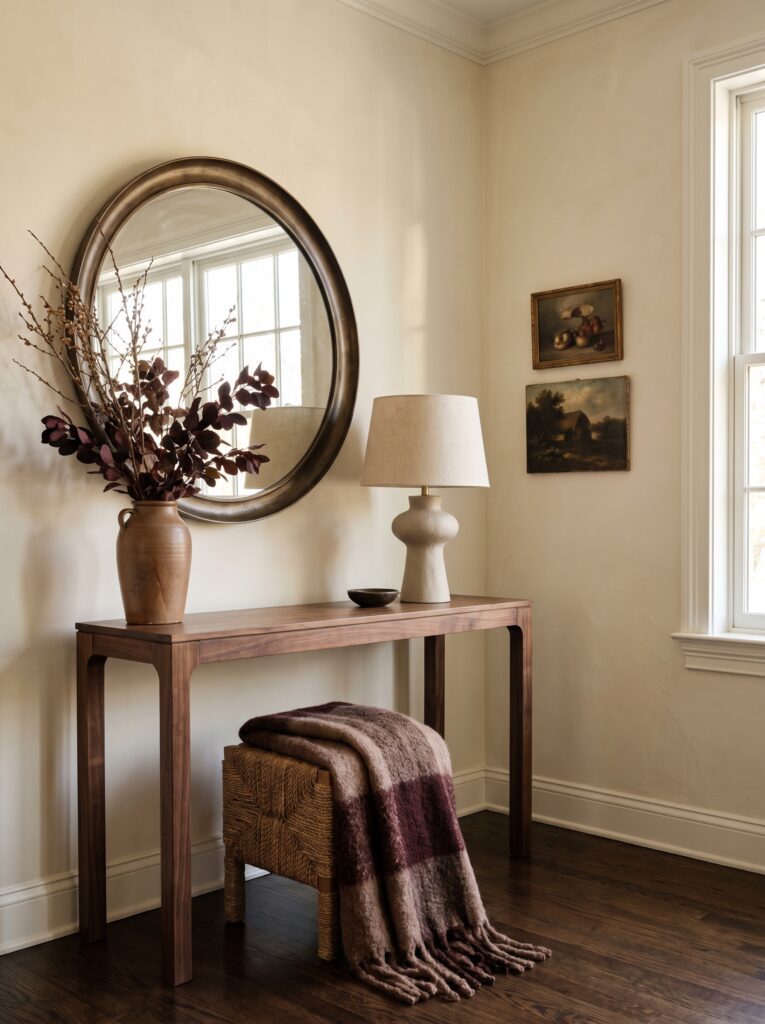
These spaces can be surprisingly difficult to decorate.
A large piece of furniture may make the area feel cramped, while leaving it untouched can make the entire room appear unfinished. The solution isn’t always to find a piece of furniture that perfectly fills the space. Instead, the most successful awkward corner decorating ideas focus on creating a small, intentional composition.
A narrow console, oversized artwork, sculptural lamp, mirror, tall branches, vintage chair, or carefully selected decorative object can turn an overlooked corner into a beautiful focal point.
And the best part? You don’t necessarily need a major renovation.
Sometimes, a small styling change can make a surprisingly large difference.
Why Awkward Corners Are So Difficult to Decorate
Corners are often challenging because they don’t have the same dimensions as the main areas of a room.
A standard console may be too wide.
A chair may interfere with traffic flow.
A cabinet may make the room feel crowded.
A large decorative arrangement might overwhelm the architecture.
This is why proportion and scale are more important than simply finding something attractive.
The goal is to create a composition that fits the space naturally.
Instead of asking:
“What furniture can I put here?”
Ask:
“What purpose can this corner serve?”
That small change in thinking can lead to much better decorating decisions.
1. Start With a Single Focal Point
One of the easiest ways to style an awkward corner is to choose one strong focal point.
This could be:
- A large artwork
- An oversized mirror
- A sculptural chair
- A tall floor lamp
- A statement plant
- A narrow console
- A dramatic vase
Once you’ve selected the focal point, keep the surrounding accessories relatively restrained.
This prevents the corner from becoming visually chaotic.
For example, an oversized artwork paired with a small console and one lamp can be much more sophisticated than ten small decorative objects.
2. Use a Narrow Console Table
A slim console can be an excellent solution for corners that are visible from hallways or living areas.
Choose a piece that doesn’t project too far into the room.
A narrow wood console can provide both function and visual structure.
Style it with:
- One table lamp
- A ceramic vessel
- A small stack of books
- A decorative tray
- A single branch arrangement
The key is restraint.
Leave some empty surface area instead of filling the entire console.
3. Make an Oversized Mirror the Star
Mirrors are particularly useful in awkward corners because they provide height and reflection.
A large mirror can make a small area feel more intentional while reflecting nearby light.
Consider:
- Antique-style mirrors
- Aged-brass mirrors
- Arched mirrors
- Organic-shaped mirrors
- Dark wood frames
If the corner is near a window, position the mirror so it reflects natural light whenever possible.
This can make the surrounding room feel brighter and more spacious.
4. Create a Small Gallery Moment
Not every gallery wall needs to cover an entire wall.
A small collection of artwork can turn an empty corner into a curated display.
For a sophisticated appearance, choose artwork that shares at least one visual connection.
This could be:
- Similar colors
- Similar framing
- A common artistic style
- A consistent subject
- A shared vintage quality
Don’t feel obligated to fill the wall completely.
A little negative space can make the display feel more expensive and intentional.
5. Add a Sculptural Chair
Sometimes the simplest solution is a beautiful chair.
A vintage-inspired accent chair can occupy a corner without making it feel crowded.
Choose a chair with a strong silhouette.
Curved wood, woven materials, boucle upholstery, leather, or textured fabric can all create visual interest.
Add one small side table if space allows.
Then stop.
You don’t need to turn every corner into a complete seating arrangement.
6. Use a Tall Floor Lamp
Vertical elements are particularly effective in awkward corners.
A tall floor lamp can draw the eye upward, creating the impression that the space was intentionally designed.
Look for:
- Sculptural silhouettes
- Linen shades
- Aged brass finishes
- Dark metal
- Natural wood
- Oversized shades
A floor lamp is especially useful when the corner feels visually empty at night.
Its glow can create a warm secondary lighting zone.
7. Bring in a Large Plant
A tall plant can soften a hard architectural corner.
Plants work particularly well when the room already contains natural materials.
Try a large leafy plant in a substantial ceramic or woven planter.
For homes with limited natural light, choose a plant appropriate for the available conditions or consider a high-quality artificial alternative.
The planter is just as important as the plant itself.
A beautiful planter can become part of the overall composition.
8. Create a Corner Vignette
A vignette is essentially a small group of objects arranged intentionally.
A simple corner vignette might include:
Tall element: mirror or artwork
Medium element: lamp or vase
Low element: console or small stool
This creates visual hierarchy.
The eye naturally moves between different heights instead of seeing one flat arrangement.
This technique can make even a small corner feel thoughtfully designed.
9. Use an Antique Piece for Character
If your home feels too new or predictable, an antique or vintage-inspired piece can instantly introduce character.
A small wooden cabinet, vintage chair, pedestal table, or old-fashioned mirror can give an otherwise ordinary corner a sense of history.
You don’t need to decorate the entire room in vintage style.
One distinctive piece can be enough.
Pair it with contemporary artwork or lighting to create contrast.
10. Turn an Empty Corner Into a Plant Display
Instead of using one large plant, you can create a small botanical arrangement.
Use plants with different heights and leaf shapes.
For example:
- One tall plant
- One medium plant
- One small plant
Place them in planters with related finishes.
Avoid making the arrangement too symmetrical.
A slightly organic composition generally feels more natural.
11. Use a Pedestal
A pedestal is an underrated decorating tool.
It can elevate a sculpture, vase, ceramic object, or artwork.
This is particularly effective in a corner where floor space is limited.
A simple stone, wood, or plaster pedestal can create architectural interest without requiring a large piece of furniture.
The object placed on top should have enough visual weight to balance the pedestal.
12. Add Architectural Wall Paneling
If you’re willing to make a more permanent change, wall paneling can transform an awkward corner.
Consider:
- Vertical wall molding
- Picture-frame molding
- Wood slats
- Textured plaster
- Limewash-style finishes
The treatment can visually define the area and make it feel like an intentional architectural feature.
This works particularly well in hallways and transitional spaces.
13. Use Wallpaper in a Small Corner
Wallpaper can be especially effective in small areas because you don’t need a huge amount of material.
A botanical, geometric, textured, or vintage-inspired pattern can give a neglected corner a completely different personality.
If the rest of the room is neutral, this can become a small moment of visual drama.
For a sophisticated look, repeat one of the wallpaper colors elsewhere in the room.
14. Create a Reading Corner
If the corner has enough room, consider turning it into a small reading retreat.
You don’t need a complete library.
A comfortable chair, small table, floor lamp, and a few books can be enough.
The most important element is comfort.
Choose upholstery that makes you want to sit down.
Then use warm lighting to create a relaxing atmosphere.
15. Turn the Corner Into a Mini Bar
An awkward corner near a dining room or kitchen can sometimes become a stylish entertaining station.
A narrow bar cabinet can hold glassware and serving pieces while keeping the area visually tidy.
Add one decorative lamp or artwork above it.
For a more sophisticated appearance, consider:
- Walnut
- Aged brass
- Dark green
- Deep brown
- Marble-inspired surfaces
Keep bottles and accessories organized rather than displaying everything at once.
16. Use a Corner Cabinet
A small cabinet can solve two problems at once: decoration and storage.
Choose a cabinet with doors if you want to hide clutter.
Inside, store items such as:
- Table linens
- Serving pieces
- Board games
- Seasonal accessories
- Extra candles
The exterior can be styled with one or two decorative objects.
This makes the corner useful without making it look like a storage zone.
17. Try a Floating Shelf
If floor space is extremely limited, move the storage upward.
One or two floating shelves can provide enough room for artwork, books, ceramics, or small plants.
Keep the shelves relatively sparse.
The negative space will make the arrangement feel cleaner.
Floating shelves can be particularly useful in apartments and smaller homes.
18. Add a Small Table Lamp
A table lamp is one of the easiest ways to make a corner feel alive in the evening.
Place it on a console, cabinet, or small side table.
Choose a warm bulb and a shade that complements the surrounding decor.
At night, turn off some of the overhead lighting and allow the lamp to create a softer atmosphere.
This simple change can make an ordinary corner feel much more inviting.
19. Use One Oversized Decorative Branch
You don’t always need fresh flowers.
A large ceramic vessel filled with branches can provide height and movement.
For autumn, consider dried branches in warm neutral tones.
During spring, fresh flowering branches can create a lighter atmosphere.
The arrangement should be tall enough to interact with the surrounding architecture without touching the ceiling.
20. Make the Corner Seasonal
Awkward corners are perfect for subtle seasonal decorating because they can be refreshed without changing the whole room.
For fall, introduce:
- Burgundy
- Chocolate brown
- Dried branches
- Warm ceramics
- Brass
For winter:
- Evergreen
- Cream
- Wood
- Soft lighting
For spring:
- Greenery
- Fresh branches
- Pale ceramics
- Light textiles
For summer:
- Natural fibers
- Fresh greenery
- Light wood
- Airy accessories
Keep the major furniture pieces timeless.
Change only the smaller details.
21. Make an Entryway Corner More Functional
An awkward corner near the front door can become part of your entryway design.
A narrow console can hold keys and everyday essentials.
A mirror can provide a final check before leaving.
A basket can contain small items.
A lamp can provide warm evening light.
This transforms an unused corner into a functional arrival and departure zone.
22. Use the Corner to Balance a Large Room
Sometimes an empty corner is not actually a problem.
Large rooms need visual balance.
If one side contains a substantial sofa or cabinet while the opposite corner is completely empty, the room can feel visually uneven.
A tall plant, floor lamp, artwork, or narrow cabinet can provide enough weight to balance the room.
You don’t necessarily need furniture.
You need visual equilibrium.
23. Decorate Around Windows
Corners near windows can be tricky because furniture may interfere with curtains or natural light.
Instead of placing bulky furniture there, consider:
- A plant
- Small pedestal
- Slim chair
- Floor lamp
- Decorative basket
Allow the window to remain the primary feature.
The corner should support the architecture rather than compete with it.
24. Create a Small Memory Display
If you have meaningful photographs, travel objects, books, or inherited pieces, an awkward corner can become a personal display.
Use one small cabinet or shelf to showcase them.
The space becomes more than decoration.
It becomes a visual story about the people and experiences that make your home yours.
25. Use Negative Space as Part of the Design
One of the most important decorating lessons is that empty space isn’t automatically a problem.
You don’t have to fill every corner.
Sometimes a beautiful lamp and a small chair are enough.
Sometimes one large artwork is enough.
Sometimes the best choice is to leave the area mostly empty and let the architecture speak.
The objective is not maximum decoration.
It is intentional decoration.
How to Style an Awkward Corner Like an Interior Designer
If you aren’t sure where to start, use this simple formula.
Step 1: Identify the purpose
Decide whether the corner should provide:
- Storage
- Seating
- Lighting
- Display
- Organization
- Purely decorative interest
Step 2: Choose one hero piece
This is the item that should immediately attract attention.
Step 3: Add one supporting element
For example:
Mirror + console
Chair + lamp
Artwork + cabinet
Plant + pedestal
Step 4: Add only a few accessories
Three thoughtfully chosen objects will usually look better than ten random ones.
Step 5: Step back
Look at the arrangement from the doorway and from the main seating area.
If the corner feels crowded, remove something.
Best Color Combinations for an Elegant Corner
If you want your corner to feel sophisticated, consider these combinations.
Warm White + Walnut + Brass
Classic and refined.
Cream + Chocolate Brown + Burgundy
Perfect for fall.
Taupe + Black + Natural Wood
Modern and architectural.
Olive + Beige + Aged Brass
Earthy and elegant.
Terracotta + Ivory + Dark Wood
Warm and artistic.
The most important thing is to connect the corner to the colors already present elsewhere in the room.
How to Make a Small Corner Look More Expensive
You don’t need expensive accessories.
Instead, focus on:
Scale: One substantial piece can look more luxurious than many tiny objects.
Lighting: Warm illumination instantly improves atmosphere.
Texture: Wood, linen, ceramic, stone, and woven materials add depth.
Restraint: Avoid filling every available surface.
Consistency: Repeat colors and materials from the surrounding room.
Artwork: One meaningful statement piece can create enormous visual impact.
Common Awkward-Corner Decorating Mistakes
Buying furniture before measuring
Always measure the space first.
Using pieces that are too small
Tiny furniture can make a large corner look accidental.
Overcrowding the area
A corner doesn’t need to contain an entire furniture collection.
Ignoring traffic flow
Make sure people can comfortably move around the area.
Using too many unrelated colors
Keep the palette connected to the surrounding interior.
Forgetting lighting
A corner that looks beautiful during the day can disappear completely at night without proper illumination.
Budget-Friendly Awkward Corner Makeover
If you’re decorating on a budget, start with what you already own.
Move an existing chair.
Reposition artwork.
Use a lamp from another room.
Place a plant in the corner.
Add a basket.
Restyle a console.
Change the wall color.
Sometimes rearranging existing pieces can reveal a completely new solution.
If you do need to purchase something, prioritize the largest visual improvement first.
For example, an oversized mirror may transform the entire corner more effectively than buying several small accessories.
Conclusion
An awkward corner doesn’t have to remain the forgotten part of your home. With thoughtful styling, even an unusually shaped or seemingly useless space can become a beautiful design feature.
The best awkward corner decorating ideas aren’t necessarily complicated. A narrow console, oversized mirror, sculptural chair, tall plant, statement artwork, or warm floor lamp can completely change the atmosphere of an otherwise empty area.
The secret is to focus on proportion, purpose, lighting, and restraint.
Instead of trying to fill every inch, create a composition that feels intentional. Choose one focal point, support it with a few complementary elements, and leave enough negative space for the arrangement to breathe.
Whether you’re decorating a suburban American home, a city apartment, a townhouse, or a smaller space, these ideas can help you turn forgotten corners into areas that feel polished and personal.
Sometimes the most beautiful part of a room isn’t the main furniture arrangement at all.
It is the little corner you finally decided to design.
- Afrohemian Dining Room Ideas for a Warm, Collected and Sophisticated Home
- Warm Wood and Black Kitchen Ideas for a Timeless Designer Look
- Small Reading Nook Ideas That Turn Forgotten Corners Into a Cozy Luxury Retreat
- Curated Trinket Shelf Ideas: How to Create a Collected and Personal Home
- Neo Deco Entryway Ideas That Make Your Home Feel Instantly Expensive