
You don’t need an entire room to create a beautiful reading retreat. An unused closet, awkward alcove, empty hallway corner, or small window-side space can become a cozy reading nook with a little creativity and thoughtful planning.
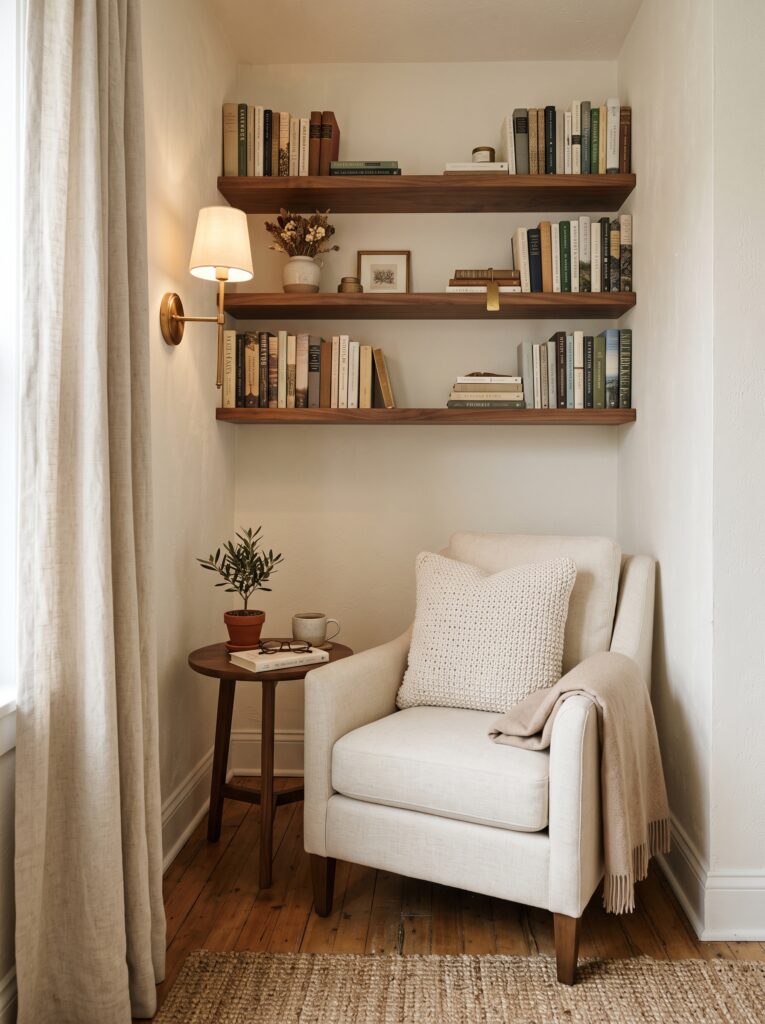
For homeowners and apartment dwellers across the United States, making the most of limited square footage has become an important part of decorating. Instead of letting small or awkward areas go unused, a small reading nook can turn an overlooked corner into one of the most relaxing spaces in the home.
A comfortable chair, a warm reading light, a few bookshelves, soft textiles, and a small side table can be enough to create a private retreat. The secret is choosing furniture and decor that fit the scale of the space without making it feel crowded.
Whether you’re working with a tiny closet, a bedroom corner, an under-stair area, or a narrow apartment nook, these small reading nook ideas can help you create a cozy space that feels intentional, stylish, and comfortable.
What Is a Small Reading Nook?
A reading nook is a dedicated space designed for reading, relaxing, journaling, or simply taking a quiet break from the rest of the home.
Unlike a traditional home library, a reading nook doesn’t require rows of bookshelves or an entire room.
It can be as simple as:
- One comfortable chair
- A small table
- A reading lamp
- A bookshelf
- A soft throw
- A few favorite books
The best reading nooks are designed around comfort rather than size.
Even a space that’s only a few feet wide can become useful when every element is carefully selected.
1. Turn an Unused Closet Into a Reading Nook
An unused closet can be surprisingly perfect for a reading retreat.
If the closet is no longer needed for storage, remove unnecessary shelving and create a simple seating area.
Depending on the dimensions, you could use:
- A compact armchair
- Built-in bench
- Floor cushion
- Small upholstered seat
- Custom reading bench
Add a wall-mounted light instead of a floor lamp if floor space is limited.
Floating shelves can hold books without taking up valuable space.
The result can feel almost like a private little library hidden inside the home.
2. Create a Built-In Window Reading Nook
A window is one of the best features for a reading nook.
Natural light makes the area feel bright during the day, while the view provides a relaxing backdrop.
If you have a wide window ledge or unused bay window, consider creating a built-in bench with cushions.
Layer the seat with:
- Comfortable cushion
- Two or three pillows
- Soft throw blanket
- Small reading light
During the day, the nook can become a sunny place for reading. In the evening, warm lighting can transform it into a cozy retreat.
3. Choose a Chair That Fits the Space
The chair is usually the most important piece of furniture in a reading nook.
A beautiful chair isn’t useful if you can’t sit comfortably in it.
For small spaces, consider:
- Compact lounge chairs
- Small upholstered armchairs
- Slipper chairs
- Armless chairs
- Petite accent chairs
Before purchasing anything, measure the available space.
Remember to account for clearance around the chair so drawers, doors, or nearby furniture can still function properly.
Comfort should always come before appearance.
4. Use a Wall-Mounted Reading Light
Traditional floor lamps can take up valuable floor space.
A wall-mounted sconce is often a better option for tiny reading corners.
Place the light beside or slightly above the chair so it provides focused illumination without creating harsh glare.
Warm lighting can make the space feel particularly cozy in the evening.
If you’re renting, look for options designed around removable installation or consider a rechargeable lamp that doesn’t require permanent wiring.
5. Install Floating Bookshelves
Floating shelves are ideal for tiny reading nooks.
They provide storage while keeping the floor clear.
You can install one long shelf above the chair or several smaller shelves vertically.
Arrange books alongside a few decorative objects such as:
- Small ceramic vase
- Framed photograph
- Tiny plant
- Decorative object
- Candle
- Small artwork
Don’t fill every inch of the shelf.
Leaving some empty space makes the nook feel more spacious.
6. Add a Small Side Table
A side table doesn’t need to be large.
You only need enough surface area for essentials.
A small round table can hold:
- Book
- Coffee cup
- Reading glasses
- Small lamp
- Phone
Round tables can be particularly useful in tight corners because they don’t create sharp edges that interfere with movement.
A small wooden table can also reinforce a warm, natural aesthetic.
7. Create an Under-Stair Reading Nook
The space beneath a staircase is often difficult to decorate.
Instead of leaving it empty, consider turning it into a reading nook.
Depending on the height and depth, you could install:
- Built-in bench
- Small chair
- Wall shelves
- Reading light
- Cushions
- Storage drawers
A custom bench can make the area feel intentional and provide hidden storage underneath.
This is particularly useful in family homes where additional storage is always valuable.
8. Make a Bedroom Reading Corner
You don’t need to create a separate room.
An unused bedroom corner can become a comfortable reading area.
Place a chair near a window or empty wall.
Add:
- Small table
- Floor lamp
- Soft rug
- Throw blanket
- Artwork
- Small bookshelf
Keep the color palette connected to the rest of the bedroom so the nook feels integrated rather than randomly placed.
9. Use Vertical Space
When floor space is limited, look upward.
Tall shelving can provide significant storage without requiring a large footprint.
Instead of spreading books across multiple pieces of furniture, use vertical shelving to maximize available space.
A narrow bookshelf beside the chair can hold dozens of books while occupying only a small amount of floor area.
You can also install floating shelves above eye level for books you don’t access as frequently.
10. Create a Cozy Corner With a Floor Cushion
Not every reading nook needs a chair.
A large floor cushion can work beautifully in a relaxed space.
This is especially useful for:
- Kids’ reading corners
- Small bedrooms
- Bohemian interiors
- Casual apartment spaces
- Low-ceiling areas
Add a back cushion and soft throw for additional comfort.
A nearby basket can hold books and blankets.
This creates a flexible reading area that can also be used for meditation, journaling, or relaxing.
11. Add a Soft Rug
A rug can visually define the reading area.
This is especially useful when the nook shares space with another room.
For example, a small rug underneath the chair and side table can visually separate the reading area from the rest of the bedroom or living room.
Choose a rug with a comfortable texture.
Neutral colors can make the space feel larger, while subtle patterns can add personality.
12. Use Curtains to Create a Private Retreat
If your reading nook is inside a closet or alcove, curtains can make it feel more private.
Lightweight curtains can be pulled closed when you want a quiet moment.
Linen or cotton-style curtains can provide softness without making the space feel heavy.
For a whimsical or cozy look, consider subtle stripes, small-scale florals, or warm neutral colors.
13. Create a Tiny Personal Library
Even a small reading nook can have a strong library feel.
You don’t need hundreds of books.
Display your favorite books on a few shelves and organize them in a visually appealing way.
You can arrange books:
- Vertically
- Horizontally
- By color
- By size
- By subject
Mixing a few decorative objects with books can create a more styled appearance.
14. Add a Magazine Rack
If you don’t have room for a bookshelf, a magazine rack can provide compact storage.
A slim rack beside the chair can hold:
- Books
- Magazines
- Journals
- Newspapers
It also keeps reading material within reach.
Choose a design that complements your furniture rather than competing with it.
15. Create a Reading Nook in a Small Apartment
Apartment living often requires creative use of every square foot.
A reading nook can fit beside a sofa, near a bedroom window, in a hallway corner, or next to a bookcase.
Choose furniture that can serve multiple purposes.
For example, an ottoman can provide seating and storage.
A small stool can function as both a side table and extra seating.
A narrow bookshelf can provide storage while visually defining the nook.
16. Use a Warm Neutral Color Palette
Light colors can help small spaces feel more open.
Consider:
- Warm white
- Cream
- Beige
- Oatmeal
- Soft taupe
- Light wood
However, don’t be afraid of darker colors.
A small reading nook can actually benefit from a deeper accent color because it creates an intimate atmosphere.
Deep green, navy, chocolate brown, or muted burgundy can work beautifully when balanced with warm lighting and lighter textiles.
17. Add Personal Artwork
Artwork can make a tiny space feel much more personal.
Choose one meaningful piece rather than filling every available wall.
A small abstract print, botanical illustration, landscape painting, or framed photograph can provide a focal point.
For a bookish atmosphere, consider vintage literary prints or typography-inspired artwork.
18. Add a Small Plant
A small plant can bring life into a reading nook.
Place it on a shelf, side table, or floor beside the chair.
If the nook has natural light, choose a plant appropriate for those conditions.
If there’s very little natural light, consider low-light-friendly plants or a high-quality artificial option.
A small plant is enough.
You don’t need to turn the reading nook into a jungle.
19. Make the Seating Extra Comfortable
Comfort is what separates a beautiful reading nook from one that you never actually use.
Consider adding:
- Lumbar cushion
- Soft throw
- Seat cushion
- Footstool
- Small ottoman
A footrest can make a compact chair much more comfortable for longer reading sessions.
Choose washable or durable textiles if the nook will receive frequent use.
20. Add a Small Footstool
A footstool is one of the simplest upgrades you can make.
It allows you to change your sitting position and relax more comfortably.
Choose a compact upholstered stool or ottoman that fits beneath the side table when it’s not being used.
This helps preserve floor space.
21. Create a Reading Nook for Kids
A small reading nook can also encourage children to spend more time with books.
Create a low-accessible bookshelf so children can easily choose their own books.
Add:
- Soft floor cushion
- Small rug
- Comfortable beanbag or chair
- Low shelves
- Warm but safe lighting
- A few favorite books
Use durable materials that are easy to clean.
A playful wall color or simple artwork can make the area feel inviting.
22. Design a Sophisticated Adult Reading Nook
Adult reading spaces don’t have to look overly themed.
Instead, focus on elegant materials.
A cream chair, walnut side table, brass lamp, textured rug, and a stack of books can create a sophisticated atmosphere.
Keep accessories minimal.
One beautiful vase or piece of artwork may be enough.
23. Create a Dark and Moody Reading Nook
If you prefer a more dramatic aesthetic, embrace deeper colors.
Try:
- Deep green
- Navy
- Chocolate brown
- Charcoal
- Burgundy
Combine darker walls with warm wood and soft lighting.
The small size of the nook can actually make the deeper palette feel intentional and cozy rather than overwhelming.
24. Try a Japandi Reading Nook
For a minimalist reading corner, consider a Japandi-inspired approach.
Use:
- Natural wood
- Neutral textiles
- Simple furniture
- Minimal accessories
- Soft lighting
- Organic shapes
Avoid visual clutter.
The result should feel calm, warm, and understated.
25. Create a Bohemian Reading Corner
For a more relaxed look, layer:
- Patterned rug
- Floor cushion
- Woven basket
- Textured throw
- Small wooden table
- Plants
- Handmade-looking ceramics
This creates a casual reading space with plenty of personality.
26. Add Hidden Storage
Storage is especially important in small spaces.
A bench with drawers underneath can store:
- Extra blankets
- Books
- Pillows
- Journals
- Reading accessories
An ottoman with hidden storage can also provide seating and organization.
The less clutter visible in the nook, the more relaxing it will feel.
27. Create a Coffee-and-Book Corner
If you enjoy reading with coffee or tea, create a tiny beverage station nearby.
A small tray can hold:
- Favorite mug
- Coffee or tea
- Small spoon
- Coaster
Don’t place drinks somewhere they could easily spill onto books or upholstery.
A stable side table with a coaster is a simple solution.
28. Use Mirrors in Tiny Reading Nooks
A small mirror can help reflect light and make a compact space feel more open.
Choose an organic or rounded shape for a softer look.
Avoid using an oversized mirror if the space is extremely narrow.
The objective is to reflect light without making the area visually crowded.
29. Keep the Nook Visually Simple
A reading nook should feel peaceful.
Avoid adding too many competing elements.
Start with the essentials:
- Comfortable seating
- Good lighting
- Books
- Small surface
- Soft textile
Then add decorative elements only where needed.
This approach prevents the nook from becoming another cluttered corner of the home.
30. Make It a Multi-Purpose Retreat
Your reading nook doesn’t have to be used exclusively for reading.
It can also become a place for:
- Journaling
- Listening to music
- Drinking coffee
- Meditation
- Studying
- Relaxing
- Writing
- Enjoying a quiet morning
Design the area around the activities you genuinely enjoy.
Small Reading Nook Ideas for Renters
Renters can create beautiful reading corners without making permanent changes.
Try:
- Freestanding bookshelves
- Removable wall hooks
- Portable lamps
- Small rugs
- Lightweight furniture
- Decorative baskets
- Artwork that doesn’t require permanent installation
Choose pieces that can move with you when your lease ends.
A beautiful chair, lamp, rug, and bookshelf can be reused in another room later.
How to Make a Small Reading Nook Look Expensive
You don’t need expensive furniture to create a sophisticated reading corner.
Focus on presentation.
Choose a cohesive color palette.
Use natural materials.
Avoid excessive small accessories.
Invest in good lighting.
Keep bookshelves organized.
Add one statement piece.
For example:
Cream chair + walnut table + brass lamp + textured rug + curated books + ceramic vase
This simple combination can look significantly more elevated than a space filled with random decorative objects.
Common Small Reading Nook Mistakes
Choosing Furniture That’s Too Large
Always measure before buying.
A beautiful oversized chair can make a tiny nook impossible to use comfortably.
Ignoring Lighting
Natural light is great during the day, but you still need dedicated lighting for evening reading.
Filling Every Shelf
Empty space makes small areas feel more breathable.
Using Too Many Colors
A limited palette usually creates a more sophisticated appearance.
Prioritizing Style Over Comfort
A reading nook should actually be comfortable enough to use.
Small Reading Nook Color Ideas
Warm Minimalist
Cream + beige + light oak
Cozy Cottage
Sage green + cream + warm wood
Moody
Deep green + walnut + brass
Modern
Warm white + charcoal + natural oak
Bohemian
Terracotta + cream + brown + muted indigo
Choose the palette based on the mood you want to create.
A Simple Formula for Designing a Tiny Reading Nook
If you’re unsure where to start, use this simple formula:
Comfortable seat + focused lighting + vertical storage + soft texture + personal detail.
For example:
A compact cream armchair
- brass wall sconce
- floating wooden shelves
- textured rug
- soft throw
- favorite books
- small ceramic vase
You don’t need more than that.
Conclusion
A small reading nook proves that you don’t need a large home to create a beautiful personal retreat. An unused closet, empty bedroom corner, awkward alcove, window seat, or space beneath the stairs can become a cozy destination with just a few thoughtful additions.
Start by identifying an overlooked area in your home. Measure it carefully, choose comfortable seating, add appropriate lighting, and use vertical storage to keep the floor open. Then introduce soft textiles, books, artwork, greenery, and one or two personal details.
The most successful reading nooks aren’t necessarily the largest or most expensive. They’re the spaces that make you want to sit down, slow down, and stay for a while.
Whether you live in a spacious suburban home, a city apartment, a rental, or a small house, these cozy reading nook ideas for small spaces can help you transform an unused corner into one of the most loved areas of your home.
Save this guide to Pinterest before your next home decorating project and use these ideas to create a reading retreat that feels cozy, practical, and completely your own.
- Afrohemian Dining Room Ideas for a Warm, Collected and Sophisticated Home
- Warm Wood and Black Kitchen Ideas for a Timeless Designer Look
- Small Reading Nook Ideas That Turn Forgotten Corners Into a Cozy Luxury Retreat
- Curated Trinket Shelf Ideas: How to Create a Collected and Personal Home
- Neo Deco Entryway Ideas That Make Your Home Feel Instantly Expensive