
For years, bright white kitchens dominated American home design. White cabinets, white countertops, white subway tile, and cool gray finishes became a familiar formula for creating a clean and modern kitchen. While this classic look is still beautiful, homeowners are increasingly looking for something warmer, more natural, and more personal.
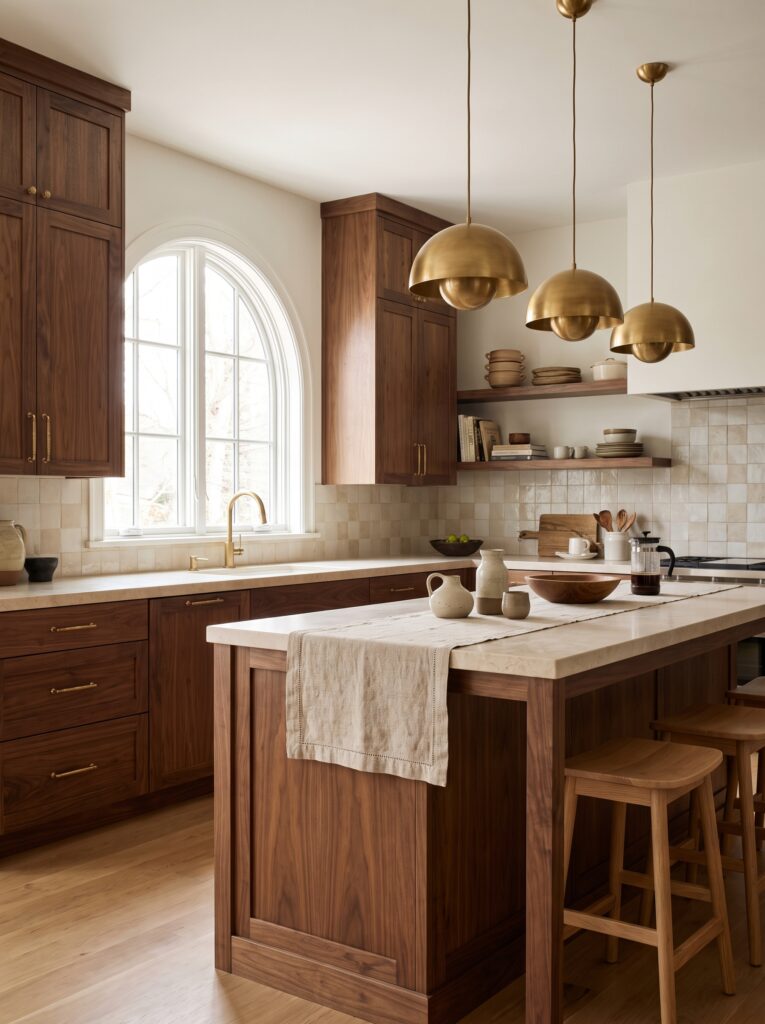
Warm wood kitchens offer exactly that.
With rich walnut cabinetry, natural oak details, creamy stone surfaces, aged metal hardware, soft lighting, and organic accessories, a kitchen can feel sophisticated without becoming overly formal. The beauty of this design direction is that it combines the timeless character of natural materials with the functionality modern homeowners expect from a contemporary kitchen.
Whether you’re planning a complete kitchen remodel or simply want to make your existing kitchen feel warmer, there are plenty of ways to introduce wood and natural textures without replacing everything.
The key is creating balance.
Too much wood can make a room feel visually heavy, while too little may not create the warmth you’re looking for. The most successful warm kitchens combine wood with stone, plaster-like finishes, metal, glass, ceramic, and soft neutral colors.
Why Warm Wood Kitchens Are So Popular
The kitchen has gradually become much more than a place to prepare meals.
For many American homes, it is where people eat breakfast, work from home, help children with homework, entertain friends, prepare coffee, and gather at the end of the day.
Because of this, homeowners increasingly want kitchens that feel comfortable rather than purely functional.
Warm wood helps create that atmosphere.
Unlike extremely cool whites and grays, natural wood introduces variation through its grain, tone, and texture. Even a minimalist kitchen can feel inviting when warm wood is incorporated thoughtfully.
Popular wood tones include:
- Walnut
- Natural oak
- White oak
- Medium oak
- Chestnut
- Warm maple
- Rich brown wood
Instead of choosing a perfectly uniform finish, many homeowners are embracing the natural character of wood.
1. Choose Walnut Cabinets for a Luxurious Look
Walnut cabinetry is one of the easiest ways to create an elevated kitchen.
Its naturally deep brown color gives the room visual richness without requiring bold decorative colors.
Walnut works particularly well with:
- Cream countertops
- Limestone
- Marble
- Brass hardware
- Warm white walls
- Natural oak
- Black accents
If you’re designing a large kitchen, full walnut cabinetry can create a dramatic effect.
For smaller kitchens, consider using walnut only on the lower cabinets or island while keeping the upper cabinets lighter.
This creates contrast and prevents the room from feeling too dark.
2. Try White Oak for a Lighter Warm Kitchen
If dark wood isn’t your style, white oak is an excellent alternative.
White oak provides the warmth of natural wood while maintaining a lighter, airier appearance.
It works especially well in:
- Organic modern kitchens
- Scandinavian-inspired kitchens
- Transitional homes
- Coastal interiors
- Contemporary kitchens
- Minimalist homes
Pair white oak with warm white walls, creamy stone, woven accessories, and soft brass hardware for an elegant neutral kitchen.
3. Make the Kitchen Island the Main Feature
The kitchen island is often the visual centerpiece of an open-concept kitchen.
Instead of matching the island exactly to the surrounding cabinets, consider making it a contrasting material.
For example:
Cream cabinets + walnut island
or
White oak cabinets + darker wood island
This creates architectural interest without requiring complicated decoration.
A wood island can also make an otherwise minimalist kitchen feel more welcoming.
4. Pair Wood With Natural Stone
Wood and stone are a natural combination.
The warmth of wood balances the cool, solid appearance of stone.
Consider materials such as:
- Marble
- Limestone
- Travertine
- Quartzite
- Soapstone
- Honed granite
For a sophisticated kitchen, choose stone with subtle movement rather than extremely dramatic patterns.
Creamy or warm-toned stone works particularly well with walnut and oak.
The combination of natural grain and natural stone creates depth without relying on excessive color.
5. Choose Cream Instead of Stark White
You don’t have to completely abandon light colors.
Instead of cool bright white, consider warmer shades.
Think:
- Warm ivory
- Cream
- Soft beige
- Alabaster
- Oatmeal
- Mushroom
- Light taupe
These colors complement natural wood beautifully.
They also make the kitchen feel softer and more welcoming.
If your existing kitchen has white cabinets, simply changing the wall color or backsplash to a warmer tone can make a noticeable difference.
6. Add Aged Brass Hardware
Hardware may be a small detail, but it can significantly influence the overall character of a kitchen.
Aged brass works especially well with warm wood because both materials have a naturally warm appearance.
Consider brass for:
- Cabinet pulls
- Drawer handles
- Faucets
- Pot fillers
- Pendant lights
Avoid making every metallic surface identical.
A subtle combination of brass and black, for example, can create a more layered and sophisticated appearance.
7. Use Open Shelving Carefully
Open shelving can make a kitchen feel more relaxed and personalized.
However, too many open shelves can quickly create visual clutter.
Instead, consider one or two carefully placed shelves.
Style them with:
- Handmade ceramics
- Wooden bowls
- Cookbooks
- Glassware
- Small plants
- Neutral pottery
Leave some empty space between objects.
The goal is to make the shelves feel collected rather than crowded.
8. Bring in Handmade Ceramics
Warm wood kitchens benefit from accessories with visible craftsmanship.
Handmade-looking ceramics can add subtle imperfections and character.
Use:
- Ceramic pitchers
- Stoneware bowls
- Sculptural vases
- Handmade mugs
- Decorative plates
Choose a limited palette such as cream, beige, brown, olive, or muted gray.
The slight variation in shape and texture can make a kitchen feel much more personal.
9. Choose Statement Pendant Lighting
Kitchen lighting should be functional, but it can also act as architectural decoration.
Pendant lights above an island are an excellent opportunity to introduce personality.
Consider:
- Aged brass pendants
- Opal glass globes
- Sculptural ceramic fixtures
- Natural woven shades
- Dark metal pendants
- Oversized glass lights
If your kitchen has a simple color palette, an interesting light fixture can become the focal point.
For a more timeless look, choose a shape that is visually interesting without being overly trendy.
10. Use Warm Lighting
Even the most beautiful kitchen can feel cold under harsh lighting.
Choose warm-toned bulbs wherever possible.
Use multiple layers of lighting instead of depending on one ceiling fixture.
A well-designed kitchen may include:
- Ceiling lighting
- Under-cabinet lighting
- Pendant lighting
- Interior cabinet lighting
- Wall sconces
Under-cabinet lighting is especially useful because it provides practical task lighting while creating a soft evening glow.
11. Add Wood Accents Without Remodeling
If a complete kitchen renovation isn’t realistic, you can still achieve the warm wood kitchen look.
Introduce smaller wooden elements such as:
- Cutting boards
- Serving trays
- Stools
- Shelves
- Bar carts
- Wooden bowls
- Picture frames
- Decorative boxes
These small additions can soften an all-white kitchen.
You can also replace a few cool accessories with warm natural materials.
12. Create a Coffee Station With Warm Materials
A coffee station can become a beautiful functional feature in the kitchen.
Use a small section of counter space for:
- Coffee machine
- Ceramic mugs
- Wooden tray
- Coffee canister
- Small artwork
- Ceramic vase
- Glass storage jars
If possible, place the coffee station against a warm wood backsplash or beside wooden shelving.
Keep the area organized so it feels intentional rather than cluttered.
13. Use Natural Textiles
Textiles may not be the first thing people consider in kitchen design, but they can make the room feel softer.
Try:
- Linen tea towels
- Cotton runners
- Woven seat cushions
- Natural fiber rugs
- Soft neutral curtains
A washable runner can also add warmth to a kitchen with hard flooring.
Choose colors that complement the wood instead of competing with it.
14. Add a Vintage Piece
A kitchen doesn’t need to look brand new to feel luxurious.
A vintage or antique-inspired element can introduce personality.
Consider:
- Vintage artwork
- An antique cutting board
- A traditional stool
- Old-style pottery
- Vintage brass accessories
- A reclaimed wood shelf
One unexpected older piece can make a modern kitchen feel more collected.
15. Create a Layered Backsplash
The backsplash is another opportunity to introduce warmth.
Instead of glossy white subway tile, consider:
- Handmade ceramic tile
- Cream zellige-inspired tile
- Natural stone
- Limestone
- Warm beige tile
- Textured neutral tile
Subtle variations in texture can create interest without overwhelming the room.
For a more luxurious appearance, continue natural stone from the countertop up the backsplash.
16. Consider a Stone Range Hood
A statement range hood can give the kitchen architectural character.
A plaster-style, stone, or warm neutral hood can become a beautiful focal point.
Pair it with wood cabinetry for contrast.
For example:
Walnut cabinets + creamy plaster hood + natural stone countertops
creates a warm, sophisticated composition.
17. Use Glass to Keep the Kitchen Light
If your kitchen contains a lot of wood, glass can help keep the room visually light.
Consider:
- Glass cabinet doors
- Glass pendant lights
- Glass storage containers
- Decorative glassware
Glass creates transparency and prevents the cabinetry from appearing too heavy.
18. Add Greenery
Plants can make a warm kitchen feel more alive.
You don’t need a large collection.
One or two plants may be enough.
Try:
- Olive trees
- Herbs
- Eucalyptus
- Trailing plants
- Small potted greenery
Place plants near windows or on open shelves where they can receive appropriate light.
For a minimalist kitchen, a single olive branch in a ceramic vase can create a beautiful organic accent.
19. Style Countertops With Restraint
One of the easiest ways to make a kitchen look expensive is to reduce countertop clutter.
Instead of displaying every appliance and accessory, choose a few useful and beautiful objects.
For example:
- Wooden cutting board
- Ceramic vase
- Olive oil bottle
- Stone bowl
- Coffee accessories
Group similar items together.
Leave generous areas of countertop empty.
The contrast between decorated and empty space creates a more refined appearance.
20. Use a Large Wooden Cutting Board
A large wooden cutting board is one of the simplest accessories for a warm kitchen.
Lean it against the backsplash or place it near the stove.
The wood grain introduces texture and reinforces the overall design.
Choose a board that is beautiful enough to remain visible.
It can function as both a practical kitchen tool and a decorative object.
21. Introduce Deep Brown Accents
If your kitchen uses lighter oak or cream cabinetry, deeper brown accessories can add contrast.
Use brown through:
- Leather bar stools
- Wooden accessories
- Dark pottery
- Woven baskets
- Small furniture pieces
Brown creates a connection between lighter wood and darker accents.
22. Try Two-Tone Cabinetry
Two-tone kitchens are an excellent option for homeowners who want more visual depth.
Examples include:
Warm white upper cabinets + walnut lower cabinets
Cream cabinetry + dark wood island
White oak cabinets + painted pantry cabinets
The key is choosing colors that share similar undertones.
Avoid pairing a very cool white with an extremely orange-toned wood unless the contrast is intentional.
23. Design a Small Warm Kitchen
Warm wood isn’t limited to large kitchens.
In a small kitchen, wood can actually make the space feel more welcoming.
Use lighter wood tones if the room receives limited natural light.
Keep the cabinetry relatively simple.
Use:
- Light oak
- Cream walls
- Compact pendant lights
- Open shelving
- Minimal accessories
- Reflective surfaces
A small kitchen can feel luxurious when the design is edited and intentional.
24. Create a Warm Kitchen in a Rental
Even renters can incorporate the aesthetic without making permanent changes.
Try:
- Wooden cutting boards
- Removable backsplash accents
- Woven runners
- Wooden stools
- Ceramic accessories
- Warm-toned artwork
- Brass-look hardware where permitted
- Portable kitchen carts
Focus on items that can move with you when you relocate.
25. Make a White Kitchen Feel Warmer
If you already have a white kitchen, you don’t have to renovate it.
Instead, introduce warm materials gradually.
Start with:
- A wooden cutting board
- A woven runner
- Warm ceramic accessories
- Wood stools
- Brass or bronze accents
- Warm lighting
- Natural greenery
These small changes can soften the overall appearance.
26. Combine Warm Wood With Black Accents
Black can create beautiful contrast in a wood kitchen.
Use it sparingly through:
- Window frames
- Pendant lights
- Cabinet hardware
- Faucets
- Bar stools
- Decorative accessories
The combination of black, wood, and cream is especially timeless.
It works across modern, transitional, farmhouse, and contemporary interiors.
27. Create an Organic Modern Kitchen
The organic modern aesthetic works particularly well with warm wood.
Combine:
- Natural wood
- Cream
- Stone
- Linen
- Ceramics
- Organic shapes
- Minimal decoration
Avoid excessive glossy finishes.
The goal is to create a space that feels connected to natural materials.
28. Create a Transitional Warm Kitchen
For a transitional home, combine traditional architectural details with modern materials.
Consider:
- Shaker-style cabinets
- Warm walnut island
- Marble or quartzite counters
- Brass hardware
- Traditional pendant lighting
- Neutral walls
This approach feels classic without appearing dated.
29. Make the Kitchen Feel More Expensive
A luxury-looking kitchen is not necessarily about expensive finishes.
It is often about proportion and consistency.
Use larger, more substantial elements instead of many tiny accessories.
For example:
A pair of beautiful pendant lights can have more visual impact than ten small decorations.
A large wood island can create more character than multiple decorative shelves.
A carefully selected stone backsplash can make the entire kitchen feel elevated.
30. Avoid Overdecorating
Warm kitchens are beautiful partly because the materials are already visually interesting.
Natural wood has grain.
Stone has variation.
Ceramics have texture.
Metal reflects light.
You don’t need excessive accessories.
Allow these materials to be the decoration.
31. Use Seasonal Styling Without Changing the Kitchen
Your warm wood kitchen can easily transition between seasons.
Spring
Use:
- Fresh greenery
- Light ceramics
- Soft flowers
Summer
Use:
- Lemon bowls
- Fresh herbs
- Natural linen
Fall
Use:
- Brown ceramics
- Dried branches
- Amber glass
- Warm textiles
Winter
Use:
- Evergreen branches
- Candles
- Darker ceramics
- Warm wood accents
This keeps the kitchen fresh without requiring expensive seasonal changes.
32. Make the Kitchen Feel Personal
The most beautiful kitchens don’t look copied from a showroom.
Display things that have meaning.
Perhaps you have:
- A collection of pottery
- Favorite cookbooks
- Family artwork
- Vintage kitchenware
- Handmade ceramics
- Travel souvenirs
Use these selectively.
Personal objects make the kitchen feel like a real home.
33. A Simple Warm Kitchen Formula
If you’re unsure how to combine everything, use this formula:
Warm Wood + Cream + Natural Stone + Aged Metal + Handmade Ceramics + Warm Lighting + Greenery
This combination is versatile and timeless.
You can adapt the proportions based on your home’s architecture and your personal style.
34. Budget-Friendly Warm Kitchen Updates
You can achieve the look without a full remodel.
Start with the highest-impact changes.
Replace Cold Accessories
Swap cool gray or bright white accessories for wood, cream, and brown.
Add a Runner
A natural or vintage-inspired runner can instantly soften the floor.
Upgrade Lighting
Warm bulbs and attractive pendant lights can change the atmosphere dramatically.
Add Wood
Introduce cutting boards, stools, shelves, and trays.
Reduce Clutter
Clear countertops and display only your favorite objects.
Add Natural Elements
Greenery, branches, stone, and ceramics add texture without requiring structural changes.
35. The Long-Term Appeal of Warm Wood Kitchens
One of the biggest advantages of warm wood kitchens is their longevity.
Trends change.
Cabinet colors come and go.
But natural wood, stone, cream, and classic hardware can adapt to many different decorating styles.
A warm wood kitchen can look:
- Modern
- Traditional
- Organic
- Transitional
- Scandinavian
- Mediterranean
- Contemporary
- Rustic
Simply change the accessories, lighting, textiles, and decorative elements.
This makes the style a practical long-term choice for homeowners who don’t want to redesign their kitchen every few years.
Conclusion
The shift toward warmer kitchens is about more than replacing white cabinets with wood. It reflects a broader desire for homes that feel comfortable, natural, personal, and timeless.
Warm wood introduces depth and character, while natural stone adds texture and permanence. Creamy neutrals soften the palette, aged brass provides subtle sophistication, and warm lighting creates an inviting atmosphere.
You don’t have to completely remodel your kitchen to embrace this aesthetic. Start with small changes such as wooden accessories, a natural fiber runner, warm ceramics, greenery, or warmer lighting. If you’re planning a larger renovation, consider walnut or white oak cabinetry, a contrasting wood island, natural stone countertops, and a handmade-inspired backsplash.
The most successful warm kitchens balance beauty with practicality. They aren’t filled with unnecessary decoration. Instead, they allow the natural materials to become the focal point.
Whether you live in a large suburban home, a compact apartment, or a modern townhouse, these warm kitchen ideas can help create a space that feels inviting every morning and sophisticated enough for entertaining.
A kitchen doesn’t have to be stark to feel clean, and it doesn’t have to be extravagant to feel luxurious. Sometimes the combination of warm wood, natural stone, soft neutrals, thoughtful lighting, and a few meaningful details is all you need to create a kitchen that feels timeless, elevated, and truly yours.
- Afrohemian Dining Room Ideas for a Warm, Collected and Sophisticated Home
- Warm Wood and Black Kitchen Ideas for a Timeless Designer Look
- Small Reading Nook Ideas That Turn Forgotten Corners Into a Cozy Luxury Retreat
- Curated Trinket Shelf Ideas: How to Create a Collected and Personal Home
- Neo Deco Entryway Ideas That Make Your Home Feel Instantly Expensive