
Working from home has completely changed the way many people think about their living spaces. A home office is no longer just a desk pushed into an empty corner. For many American homeowners and renters, it has become an important part of the home—a place where productivity, comfort, organization, and personal style all need to work together.
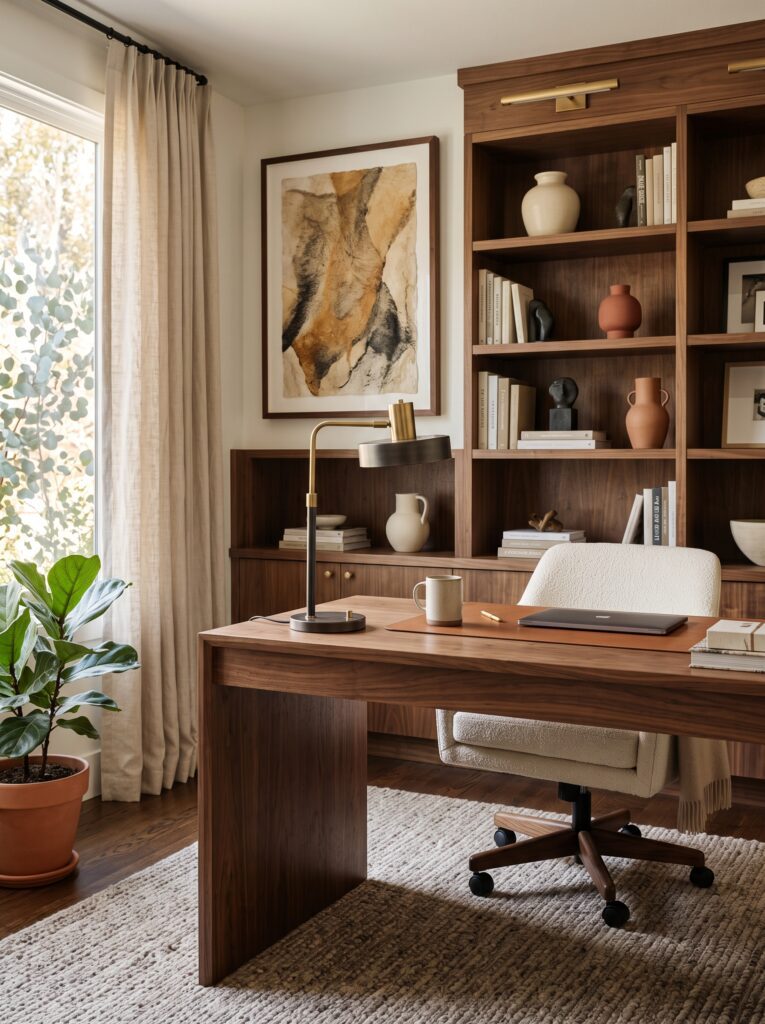
The best home office ideas don’t simply make a workspace look beautiful. They make it easier to concentrate, keep everyday essentials organized, and create an environment that feels comfortable enough for long workdays. Whether you have a dedicated office, a small spare room, or a compact corner in your bedroom, thoughtful decorating choices can make a significant difference.
If you love modern home decor, cozy interiors, neutral decorating, or sophisticated workspace design, these home office ideas can help you create a space that feels polished without becoming cold or overly corporate.
Why a Beautiful Home Office Matters
Your surroundings can influence how you experience your workday. A cluttered desk, poor lighting, uncomfortable chair, and lack of storage can make a workspace feel stressful. On the other hand, a thoughtfully designed office can feel calm, organized, and motivating.
This doesn’t mean your home office needs to look like a luxury corporate office. In fact, some of the most appealing home office designs combine professional functionality with residential comfort.
Think warm wood, soft textiles, beautiful artwork, natural light, attractive storage, and a color palette that makes you feel relaxed and focused.
The goal is to create a workspace that feels like part of your home rather than a temporary work station.
1. Start With a Desk That Fits the Space
The desk is usually the visual anchor of a home office, so choosing the right one is important.
For a larger room, a substantial wood desk can create a sophisticated focal point. Walnut, oak, and other warm wood finishes can instantly add character and make the room feel more intentional.
For a smaller workspace, choose a streamlined desk with clean lines. A narrow writing desk or wall-mounted desk can provide enough workspace without overwhelming the room.
When choosing a desk, consider:
- How much surface area you actually need
- Where your computer and accessories will sit
- Whether you need drawers
- Available cable-management options
- The amount of walking space around the desk
- How the desk works with the rest of your home’s decor
A beautiful desk is helpful, but functionality should come first.
2. Invest in a Comfortable Office Chair
A stylish chair is important, but comfort matters even more.
If you work from home regularly, look for a chair that provides appropriate back support and allows you to maintain a comfortable working position. You don’t necessarily have to choose a traditional black office chair.
Modern home offices can incorporate upholstered task chairs, contemporary ergonomic chairs, or sophisticated neutral seating that complements the room.
Cream, beige, taupe, gray, and warm brown can work especially well in neutral home offices.
If you want the room to look more like a residential interior, choose a chair that blends naturally with your furniture while still supporting comfortable work.
3. Use Natural Light Whenever Possible
Natural light can completely transform a home office.
If possible, position your desk near a window without creating uncomfortable screen glare. Natural daylight can make a small office feel more open and can highlight beautiful materials such as wood, linen, and textured walls.
Instead of completely blocking the window with heavy curtains, consider lightweight linen or woven shades that soften the sunlight while maintaining a bright atmosphere.
For a Pinterest-worthy workspace, natural light also helps create beautiful photographs with soft shadows and warm textures.
4. Layer Your Office Lighting
One overhead light is rarely enough to create a comfortable home office.
Instead, use several sources of lighting.
A practical combination can include:
- A desk lamp for focused lighting
- A ceiling fixture for general illumination
- A floor lamp for darker corners
- Wall sconces for decorative lighting
- Natural daylight during daytime hours
Layered lighting makes the office feel warmer and more sophisticated.
If your workspace is styled with neutral colors, warm-toned lighting can prevent the room from feeling too stark.
5. Add Built-In or Beautiful Open Storage
Storage is one of the most important elements of a functional home office.
If you have enough room, built-in shelves can make the space feel custom-designed. They can hold books, baskets, documents, decorative objects, framed photographs, and plants.
For smaller offices, floating shelves can provide vertical storage without taking up valuable floor space.
Closed cabinetry is particularly useful for items you don’t want visible. Keeping paperwork, electronics, office supplies, and miscellaneous items behind doors can make the room feel instantly calmer.
A useful rule is to combine approximately:
60% practical storage + 40% decorative styling.
This keeps your shelves useful without making them look like a storage closet.
6. Use Artwork to Give the Office Personality
A home office shouldn’t feel completely impersonal.
Artwork is one of the easiest ways to introduce personality.
Instead of covering every wall with small prints, consider one oversized piece of artwork above the desk or on the main wall.
Abstract art, botanical prints, photography, vintage-inspired artwork, and minimalist line drawings can all work beautifully depending on your decorating style.
For an elegant American home office, neutral artwork with subtle texture can create a sophisticated look without distracting from the workspace.
7. Bring in Natural Materials
Natural materials can make a workspace feel warmer.
Consider incorporating:
- Natural wood
- Linen
- Woven baskets
- Rattan
- Ceramic
- Stone
- Cotton
- Wool
- Greenery
These materials add visual texture while preventing a neutral office from becoming flat.
A wooden desk paired with a woven basket, linen curtains, ceramic accessories, and a textured rug can create a beautifully layered environment.
8. Create a Calm Neutral Color Palette
Neutral home offices remain popular because they create a peaceful backdrop for concentration.
Instead of using only one shade of white, layer different tones.
For example:
Warm white + beige + taupe + walnut + muted green
or
Cream + soft gray + natural oak + charcoal
or
Ivory + warm brown + muted blue + natural wood
The trick is to create contrast through texture and tone rather than relying on bright colors.
This can make the room feel sophisticated without becoming boring.
9. Don’t Forget the Floor
The floor can dramatically affect how a home office feels.
If the room has hardwood flooring, a textured area rug can make the workspace feel more comfortable and visually complete.
A rug can also help define the office zone when your workspace is located inside another room.
For example, if you have created a desk area in a bedroom, living space, or large hallway, placing a rug underneath the desk and chair can visually separate the work area from the rest of the room.
10. Hide the Cables
Nothing ruins an otherwise beautiful office faster than tangled cables.
Cable management is one of the least glamorous but most important home office upgrades.
Use:
- Under-desk cable trays
- Cable clips
- Cord sleeves
- Cable boxes
- Wireless accessories when practical
- Desk grommets
- Charging stations
Keeping technology organized allows the decorative elements of the room to stand out.
11. Add a Small Amount of Greenery
Plants can make a home office feel more alive.
You don’t need a jungle. One larger plant in an attractive planter or a few small plants placed strategically can be enough.
Consider plants with interesting shapes and textures rather than filling every available surface.
A small olive tree, snake plant, pothos, or simple leafy plant can work beautifully with warm neutral interiors.
If natural light is limited, choose plants according to the actual lighting conditions of your office rather than selecting them purely for appearance.
12. Create a Dedicated “Drop Zone”
If your home office is near the entrance of your home, consider adding a small area for everyday items.
A tray can hold keys, headphones, charging accessories, or other small essentials.
A drawer organizer can keep pens, notebooks, sticky notes, and other supplies under control.
The objective is simple: give frequently used objects a designated home.
When everything has a place, maintaining an organized office becomes much easier.
13. Make the Background Look Beautiful
If you regularly attend video meetings, don’t forget about the area behind your chair.
Your background becomes part of your professional environment.
A clean wall with artwork, attractive shelving, books, plants, or a simple architectural feature can create a polished background.
Avoid placing too many objects behind you. A few intentional pieces generally look better than an overcrowded shelf.
For video calls, also test your lighting from the camera’s perspective. A beautiful lamp isn’t helpful if your face remains poorly lit.
14. Use Books as Both Decor and Inspiration
Books can be surprisingly effective decorative elements.
Place a small selection of books on a shelf or stack a few attractive books horizontally on your desk.
Choose titles that genuinely interest you rather than buying books purely for decoration.
Books add personality and make the office feel lived-in.
They can also become an easy conversation starter during video meetings.
15. Add One Statement Element
Every beautiful office benefits from one element that immediately attracts attention.
This could be:
- A sculptural light fixture
- An oversized artwork
- A beautiful wooden desk
- A dramatic chair
- A large plant
- A statement rug
- Custom shelving
The rest of the room can remain relatively simple.
One strong focal point often creates a more sophisticated result than filling the room with numerous decorative accessories.
16. Make a Small Office Feel Bigger
Not everyone has a dedicated home office.
If you’re working with a small room or apartment, focus on visual simplicity.
Choose furniture with a slim profile, use vertical storage, keep the color palette light, and avoid unnecessary furniture.
A wall-mounted shelf above the desk can provide storage without taking up floor space.
A large mirror can also reflect light and make a compact room feel more open.
The key is to maximize function without making the space feel crowded.
17. Turn an Unused Corner Into a Workspace
An empty corner doesn’t need to remain unused.
A narrow desk, comfortable chair, wall-mounted shelf, and attractive lamp can create a functional workstation.
This can work particularly well in:
- Bedrooms
- Guest rooms
- Hallways
- Large kitchens
- Finished basements
- Upstairs landings
- Apartments
Use a rug or artwork to visually establish the area as its own zone.
18. Add Personal Details
The most beautiful home offices usually don’t look completely staged.
Include a few things that actually belong to you.
Family photographs, travel memories, favorite books, artwork, collected ceramics, or meaningful objects can make the workspace feel personal.
However, avoid covering every surface.
Choose a few meaningful pieces and give them enough space to stand out.
19. Create a Comfortable End-of-Day Routine
One advantage of a dedicated home office is being able to create boundaries between work and personal life.
At the end of the workday, spend a few minutes resetting the room.
Put away paperwork, return supplies to their storage areas, clear the desk, and prepare anything you need for the next morning.
A clean workspace can make it easier to mentally transition away from work.
20. The Best Home Office Design Is Both Beautiful and Functional
A Pinterest-worthy home office shouldn’t sacrifice practicality for appearance.
The most successful designs combine:
Comfort + organization + lighting + personality + functionality + beautiful materials.
You don’t need an enormous room or an expensive renovation to achieve that.
A thoughtfully chosen desk, comfortable chair, attractive lighting, organized storage, natural textures, artwork, and a calming color palette can completely transform an ordinary workspace.
Conclusion
Your home office should feel like a natural extension of your home—not like a temporary workstation.
Whether you’re designing a dedicated office, a small apartment workspace, or a compact desk corner, focus on creating an environment that supports the way you actually live and work.
Start with the essentials: a comfortable chair, functional desk, good lighting, practical storage, and reliable organization. Then add the decorative elements that make the room feel like yours.
Warm wood, neutral colors, textured fabrics, greenery, artwork, and carefully selected accessories can turn a basic workspace into an inspiring part of your home.
The result doesn’t have to be flashy to feel luxurious. Often, the most sophisticated home offices are the ones that feel calm, intentional, comfortable, and beautifully lived-in.
If you’re planning a home office makeover, save these ideas to your Pinterest board and use them as inspiration for creating a workspace that looks beautiful while helping you feel more focused every day.
- Outdoor Patio Ideas for a Cozy Late-Summer to Fall Transition
- Laundry Room Organization Ideas That Look Beautiful and Built-In
- Staircase Wall Decor Ideas: How to Create a Collected Gallery Look
- Library-Inspired Home Office Ideas That Make Working From Home Feel Luxurious
- Chocolate Brown Dining Table Ideas for a Warm and Elegant Fall Home