
A home office doesn’t have to look bright, sterile, or overly corporate to be productive. In fact, some of the most inviting workspaces use deeper colors, warm wood, soft lighting, vintage-inspired furniture, and layered textures to create an atmosphere that feels calm, focused, and luxurious.
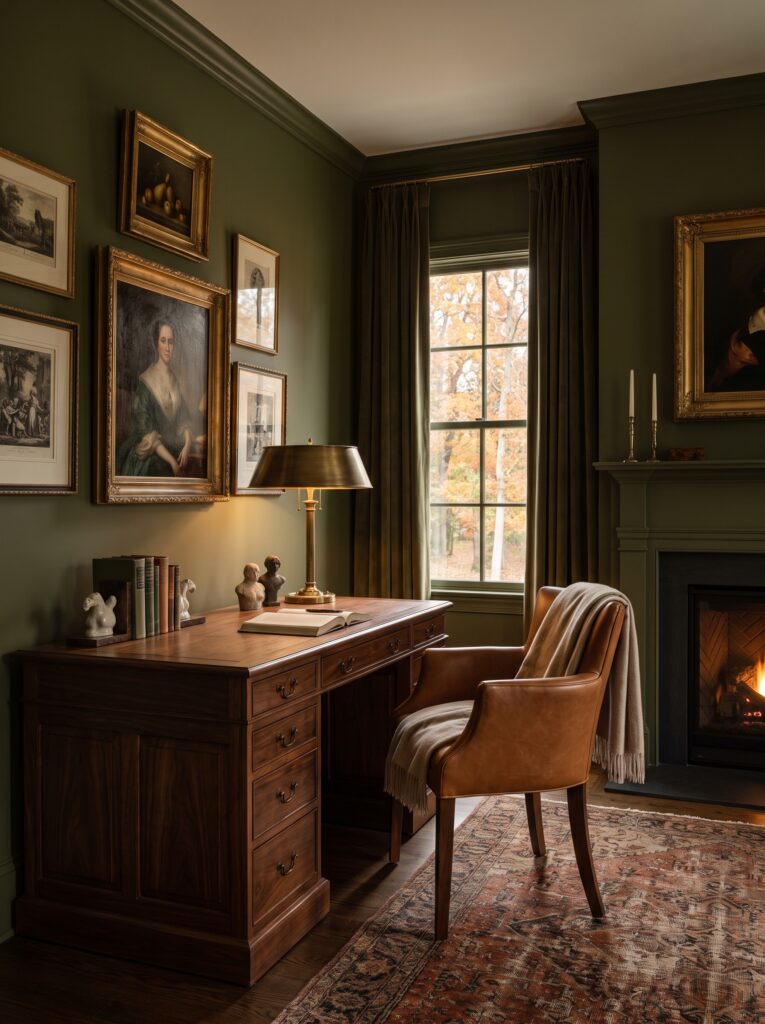
The modern home office is no longer simply a desk pushed against a wall. For many homeowners, it has become an opportunity to create a personal retreat where work, reading, planning, studying, and creative projects can happen comfortably.
A moody home office can make that space feel especially sophisticated. Deep olive green, chocolate brown, charcoal, espresso, muted navy, and warm taupe can give a room depth and personality. When combined with walnut furniture, leather, brass, books, artwork, and warm lighting, these colors can create an office that feels more like an elegant private study or boutique library than a conventional workspace.
The best part is that you don’t need a huge room or an enormous budget to achieve this look. Even a small home office can become dramatically more beautiful with the right combination of color, lighting, furniture, and accessories.
What Is a Moody Home Office?
A moody home office is a workspace built around deeper, richer colors and a warm, atmospheric design.
Instead of relying primarily on bright whites and cool grays, this style uses:
- Deep olive
- Chocolate brown
- Espresso
- Charcoal
- Muted navy
- Warm taupe
- Burgundy
- Dark wood
- Cognac leather
- Aged brass
However, “moody” does not mean gloomy.
The secret is balance.
Dark walls can be paired with warm lighting, lighter textiles, natural wood, artwork, and carefully chosen accessories. These elements prevent the space from feeling heavy while still creating the intimate atmosphere that makes a moody office so appealing.
Why Moody Home Offices Feel So Luxurious
Luxury interiors are often associated with large spaces and expensive furniture, but atmosphere plays an equally important role.
A moody workspace can feel luxurious because it creates visual depth.
Dark colors make architectural details more noticeable. Warm wood introduces natural texture. Brass reflects light. Leather adds softness and character. Artwork gives the room personality.
When these materials are layered together, the result can feel significantly more sophisticated than a room filled with basic office furniture.
Instead of trying to make your office look expensive, focus on making it feel intentional.
That is often the difference between an ordinary workspace and an elevated one.
1. Start With a Rich Wall Color
The walls establish the mood of the entire office.
If you want a dramatic workspace, consider a deep shade such as:
- Olive green
- Forest green
- Chocolate brown
- Charcoal
- Deep navy
- Warm taupe
- Muted burgundy
Deep olive is especially versatile because it has enough color to create character while still functioning almost like a neutral.
Chocolate brown creates a warm library-inspired atmosphere.
Charcoal provides a more contemporary appearance.
Deep navy can create a sophisticated traditional study.
Choose the color based on the amount of natural light in the room.
A room with large windows can usually handle darker walls more easily than a small room with limited natural light.
2. Use Warm Wood Furniture
Wood is one of the best materials for balancing darker walls.
Walnut is particularly effective because its rich brown color naturally complements moody palettes.
A walnut desk can instantly become the centerpiece of the room.
Other options include:
- Oak
- Mahogany
- Dark-stained pine
- Teak
- Reclaimed wood
Look for furniture with visible grain whenever possible.
Natural variation gives the room character and prevents the design from looking too manufactured.
3. Choose a Desk With Presence
Your desk should be functional, but it can also serve as an important design feature.
Instead of choosing the smallest possible desk, select a piece that fits comfortably within the room while providing enough surface area for everyday work.
A beautiful desk might feature:
- Solid wood
- Drawers
- Leather details
- Brass hardware
- A traditional silhouette
- Clean modern lines
For a traditional home office, a substantial executive-style desk can create a dramatic focal point.
For a smaller modern office, a simple walnut writing desk may be more appropriate.
4. Add a Comfortable Leather Chair
A desk chair can easily become the least attractive part of a home office.
Fortunately, there are many ways to choose seating that combines comfort with style.
A cognac or brown leather chair works particularly well with:
- Walnut
- Olive
- Cream
- Brass
- Dark green
- Beige
If leather isn’t your preference, choose a fabric chair in:
- Camel
- Taupe
- Cream
- Olive
- Warm gray
Comfort should always come first.
A beautiful chair that causes discomfort after thirty minutes isn’t a successful office chair.
5. Layer Warm Lighting
Lighting is one of the most important elements in a moody home office.
Dark walls need thoughtful illumination.
Instead of relying on one overhead light, create several layers.
Use:
Ambient lighting + task lighting + accent lighting
Ambient lighting provides general illumination.
A desk lamp provides focused light for reading and working.
Accent lighting highlights artwork, shelves, or architectural details.
Consider:
- Brass desk lamps
- Library-style wall sconces
- Floor lamps
- Table lamps
- Picture lights
- Small decorative lamps
Warm bulbs can create a cozy evening atmosphere while still providing enough light for practical use.
6. Install a Statement Desk Lamp
A desk lamp can become a surprisingly important decorative feature.
For a classic look, choose an aged brass or antique-inspired lamp.
For a modern office, try a sculptural metal lamp.
For a library-inspired workspace, a traditional green-shade desk lamp can create a timeless atmosphere.
The lamp should complement the overall room rather than compete with it.
7. Create a Library-Inspired Atmosphere
One of the easiest ways to make a home office feel sophisticated is to borrow elements from traditional libraries.
Consider:
- Built-in bookshelves
- Floor-to-ceiling bookcases
- Dark wood
- Leather seating
- Vintage artwork
- Brass lighting
- Decorative books
- A comfortable reading chair
You don’t need a massive collection of books.
Even a few carefully arranged books can introduce color, texture, and personality.
Organize them by size, color, or subject depending on the look you prefer.
8. Add Vintage-Inspired Artwork
Artwork can make a home office feel personal rather than generic.
Choose pieces that reflect your taste.
Ideas include:
- Landscape paintings
- Botanical prints
- Architectural drawings
- Vintage maps
- Abstract art
- Black-and-white photography
- Portrait-inspired artwork
A large piece behind the desk can create a strong focal point.
Alternatively, create a small gallery wall.
Use frames in related materials such as wood, black metal, or aged brass to maintain visual consistency.
9. Try a Gallery Wall Behind the Desk
The wall behind your desk is naturally visible during video calls, so it deserves attention.
A gallery wall can make the background feel sophisticated without becoming distracting.
Combine:
- Artwork
- Small mirrors
- Vintage prints
- Photographs
- Decorative objects
Keep the palette cohesive.
For a moody office, cream, brown, olive, black, and muted gold work beautifully together.
10. Introduce Aged Brass Details
Brass is especially effective in dark interiors because it reflects warm light.
Use it through:
- Desk lamps
- Cabinet hardware
- Picture frames
- Curtain rods
- Decorative objects
- Wall sconces
Aged brass is generally easier to incorporate into a timeless design than highly polished gold.
Its slightly imperfect appearance gives the room character.
11. Add a Small Reading Corner
If your office has enough space, create a secondary seating area.
A comfortable chair beside a small side table can become a reading corner.
Add a floor lamp nearby.
This gives the room another purpose beyond computer work.
You can use the space for:
- Reading
- Journaling
- Planning
- Taking phone calls
- Relaxing between tasks
Even a small corner can make the office feel more like a personal retreat.
12. Use a Rich Area Rug
Hard flooring can sometimes make an office feel cold.
An area rug adds softness and helps visually define the workspace.
For a moody office, consider:
- Vintage Persian-inspired rugs
- Dark patterned rugs
- Neutral geometric designs
- Traditional motifs
- Muted floral patterns
If your walls and furniture are already dark, choose a rug with some lighter tones to maintain balance.
13. Bring in Textured Curtains
Windows are another opportunity to add warmth.
Instead of thin, completely plain curtains, consider linen or textured fabric.
Good colors include:
- Cream
- Oatmeal
- Taupe
- Warm beige
- Olive
- Soft brown
Hang curtains high and wide when possible to make the windows feel larger and the room more finished.
14. Add Natural Elements
Moody rooms benefit from organic materials.
Natural elements prevent dark colors from feeling too heavy.
Try adding:
- Potted plants
- Olive branches
- Dried grasses
- Wooden bowls
- Stone accessories
- Ceramic vessels
A small plant on a bookshelf or desk can introduce freshness.
You don’t need to turn the office into a jungle.
One or two carefully positioned plants are often enough.
15. Use Ceramic Accessories
Ceramics are excellent for adding subtle texture.
Choose handmade or handmade-inspired pieces with organic shapes.
For example:
- Small vases
- Bowls
- Sculptural objects
- Pencil holders
- Decorative vessels
Cream, stone, brown, and muted green ceramics work particularly well with moody interiors.
16. Create Sophisticated Storage
Clutter can destroy the atmosphere of a beautiful home office.
Storage should therefore be both practical and attractive.
Consider:
- Closed cabinets
- Wooden drawers
- Woven baskets
- Decorative boxes
- Filing cabinets
- Built-in shelving
Use closed storage for items you don’t want visible.
Reserve open shelving for objects that contribute to the room’s aesthetic.
17. Style Your Bookshelves
If you have open shelves, avoid filling every shelf completely.
Instead, alternate books with decorative objects.
For example:
Books + ceramic vase + artwork
then
Books + small sculpture + plant
then
Decorative box + books + framed photograph
This creates rhythm.
Leaving some empty space also makes the shelves look more sophisticated.
18. Add a Desk Mat
A desk mat can visually organize the workspace.
Leather, faux leather, cork, or natural fiber options can work well.
Choose a neutral or dark tone that complements the desk.
Keep the desktop relatively clear.
A clean workspace usually feels calmer and more luxurious.
19. Use a Small Tray to Organize Essentials
Small objects can quickly accumulate on a desk.
Use a tray to organize:
- Pens
- Notebooks
- Glasses
- Keys
- Small accessories
A wooden, leather, stone, or brass tray can function as both storage and decoration.
20. Create a Beautiful Background for Video Calls
If you work from home, your office may frequently appear on camera.
Choose a background that looks polished without being distracting.
A good video-call background might include:
- Bookshelves
- Artwork
- A plant
- Warm lighting
- A clean desk
- Decorative objects
Avoid placing too many tiny objects behind you.
Large, simple shapes tend to look better on camera.
21. Design a Small Moody Home Office
You don’t need a dedicated room.
A small office can be created in:
- A hallway
- A bedroom corner
- A landing
- A closet conversion
- A living room nook
For small spaces, choose furniture with a compact footprint.
A wall-mounted desk can be useful.
Use vertical storage to save floor space.
A dark accent wall can define the workspace without requiring an entire room makeover.
22. Create a Moody Office Without Dark Walls
If you’re renting or don’t want to paint, you can still create the aesthetic.
Use darker colors through furniture and accessories.
Try:
- Walnut desk
- Brown chair
- Dark rug
- Black lamp
- Olive cushions
- Vintage artwork
- Dark bookshelves
Then balance everything with cream walls and lighter curtains.
This creates a softer interpretation of the moody office trend.
23. Try the Dark Academia Influence
Dark academia is closely connected with library-inspired interiors.
However, you don’t need to turn your office into a theatrical historical set.
Use only a few elements:
- Dark wood
- Books
- Leather
- Vintage artwork
- Brass lighting
- Deep colors
Keep the rest modern.
This creates a more sophisticated and livable interpretation.
24. Add a Vintage Clock
A classic clock can become a beautiful wall accessory.
Look for:
- Brass clocks
- Wooden clocks
- Minimal vintage-inspired designs
- Traditional wall clocks
A clock is also practical for a workspace.
25. Use Personal Objects
Your office should tell your story.
Display a few objects that have meaning to you.
These might include:
- Travel souvenirs
- Family photographs
- Favorite books
- Artwork
- Collectibles
- Handmade objects
Don’t display everything.
Choose pieces that contribute to the overall atmosphere.
26. Introduce Burgundy for Fall
If you want your home office to feel particularly appropriate for autumn, burgundy is an excellent accent.
Use it through:
- A small rug detail
- Notebook
- Artwork
- Pillow
- Desk accessory
- Decorative vase
Pair burgundy with walnut, olive, cream, and aged brass.
This creates a rich seasonal palette without making the room look overly decorated for fall.
27. Make Your Home Office Feel Like a Boutique Hotel
If you want a luxurious atmosphere, think about boutique hotels.
They often use:
- Layered lighting
- Rich textures
- Comfortable furniture
- Warm neutrals
- Artwork
- Natural materials
- Statement lighting
Bring those principles into your office.
A beautiful lamp, quality chair, textured rug, and carefully chosen artwork can have more impact than dozens of inexpensive accessories.
28. Create a Calm Productivity Zone
A home office should support concentration.
Avoid visual clutter around your primary work area.
Keep only essential items on the desk.
Use closed storage for paperwork and equipment.
Position your desk so you have a comfortable view of the room or window if possible.
Add soft lighting rather than relying entirely on bright overhead illumination.
The environment should encourage you to sit down and focus.
29. Combine Modern and Traditional Elements
You don’t have to choose between modern and traditional design.
A modern desk can work beautifully with:
- Vintage artwork
- Traditional rug
- Antique-inspired lamp
- Classic chair
Likewise, a traditional wooden desk can look contemporary when paired with modern lighting and minimal accessories.
Mixing styles often creates a more sophisticated and personal result.
30. Choose Quality Over Quantity
A common decorating mistake is buying many inexpensive office accessories because the desk feels empty.
Instead, select fewer pieces.
One beautiful lamp can be more effective than five small decorative objects.
One large artwork can create more impact than an entire wall of tiny prints.
One quality chair can improve the room more than multiple decorative cushions.
The principle is simple:
Less clutter + better proportions + stronger materials = a more elevated office.
31. Moody Home Office Color Combinations
Here are several palettes you can use.
Olive + Walnut + Cream
Warm, natural, and sophisticated.
Chocolate + Camel + Brass
Rich and luxurious.
Navy + Walnut + Ivory
Classic and timeless.
Charcoal + Oak + Cream
Modern and architectural.
Burgundy + Brown + Beige
Perfect for fall-inspired interiors.
Forest Green + Cognac + Aged Brass
Elegant and dramatic.
32. Moody Office Ideas for Fall
Fall is the perfect season for a cozy workspace.
Introduce:
- Warm candles
- Darker textiles
- Burgundy accents
- Brown ceramics
- Dried branches
- Soft throws
- Warm lighting
Keep seasonal accents subtle.
You want the room to feel naturally autumnal rather than decorated exclusively for one holiday.
33. How to Make a Home Office Look Expensive
You don’t need a designer budget.
Focus on the details that have the greatest visual impact.
Upgrade the Lighting
A beautiful desk lamp or chandelier can immediately elevate the room.
Use Large Artwork
Large-scale art creates stronger visual impact.
Choose Natural Materials
Wood, leather, stone, linen, and ceramics feel richer than excessive plastic accessories.
Keep Surfaces Clean
A tidy desk automatically feels more sophisticated.
Add Texture
Combine smooth, rough, soft, and natural materials.
Choose a Cohesive Palette
A limited color palette creates visual harmony.
34. Common Moody Office Decorating Mistakes
Avoid making the room too dark without adding sufficient lighting.
Don’t fill every shelf.
Don’t use too many competing colors.
Don’t choose an uncomfortable chair simply because it looks beautiful.
Don’t place the desk where glare makes computer work difficult.
Don’t overdecorate the desktop.
Don’t rely entirely on artificial lighting if natural light is available.
A moody office should feel atmospheric, not gloomy.
35. A Simple Moody Home Office Formula
If you’re starting from scratch, use this formula:
Deep Wall Color + Warm Wood Desk + Comfortable Chair + Statement Lamp + Vintage Artwork + Textured Rug + Books + Natural Element
You can adjust the formula depending on the size and style of your room.
For a small office, reduce the furniture.
For a traditional office, increase the use of wood and vintage details.
For a modern office, simplify the accessories and choose cleaner silhouettes.
36. How to Create the Look on a Budget
You can recreate the aesthetic gradually.
Start with the desk.
Then upgrade the lighting.
Add one large piece of artwork.
Introduce a rug.
Add a few books and ceramics.
Finally, bring in greenery and textiles.
You don’t need to purchase everything at once.
Thrift stores, vintage markets, estate sales, and secondhand furniture sources can be excellent places to find character-rich pieces.
A slightly imperfect vintage desk or old frame can actually make the office feel more authentic.
37. Keep the Office Functional
A beautiful office still needs to work.
Before buying furniture, consider:
- Where will the computer go?
- Where will paperwork be stored?
- Do you need printer storage?
- Do you need additional seating?
- How much desk space do you need?
- Where are the electrical outlets?
- How much natural light does the room receive?
Design should support your daily routine.
The prettiest office in the world won’t be successful if it doesn’t function well.
38. Create a Workspace You Actually Want to Use
Your surroundings can influence how you feel about spending time in a room.
A workspace that feels comfortable and personal can make everyday tasks feel more pleasant.
Choose colors you enjoy.
Display meaningful objects.
Invest in a comfortable chair.
Use lighting that creates a pleasant atmosphere.
Keep the space organized.
Your office doesn’t need to look like a corporate workspace.
It can feel like your own private room within the home.
Conclusion
A moody home office can transform an ordinary workspace into a sophisticated retreat for working, studying, reading, planning, and creating.
The look doesn’t depend on expensive furniture or dramatic renovations. Instead, it comes from layering rich colors, warm wood, comfortable furniture, natural materials, artwork, books, and thoughtful lighting.
Start with one strong element, such as a deep olive wall, walnut desk, or vintage-inspired rug. Then gradually build around it with complementary textures and colors.
If your office is small, focus on vertical storage, compact furniture, and carefully selected accessories. If you have a dedicated room, take advantage of the space by creating a reading corner, built-in shelving, or a comfortable seating area.
Remember that “moody” doesn’t mean dark and depressing. With warm lighting, natural wood, lighter textiles, and carefully chosen accents, a darker workspace can feel incredibly cozy and inviting.
The most successful home offices balance productivity and personality. They provide everything you need to work efficiently while still feeling like a beautiful part of your home.
Whether you love dark academia, modern interiors, traditional studies, organic modern design, or luxury-inspired spaces, you can adapt these ideas to create a home office that feels focused, comfortable, and timeless.
Ultimately, the goal isn’t simply to create a room that looks good in photographs. It’s to create a workspace that makes you want to sit down, focus, and stay awhile.
- Afrohemian Dining Room Ideas for a Warm, Collected and Sophisticated Home
- Warm Wood and Black Kitchen Ideas for a Timeless Designer Look
- Small Reading Nook Ideas That Turn Forgotten Corners Into a Cozy Luxury Retreat
- Curated Trinket Shelf Ideas: How to Create a Collected and Personal Home
- Neo Deco Entryway Ideas That Make Your Home Feel Instantly Expensive