
Working from home has changed the way many people think about their living spaces. A home office is no longer just a desk, chair, and computer tucked into an unused corner. For many homeowners, it has become an important part of the home—one that needs to support productivity while also feeling comfortable, calm, and visually appealing.
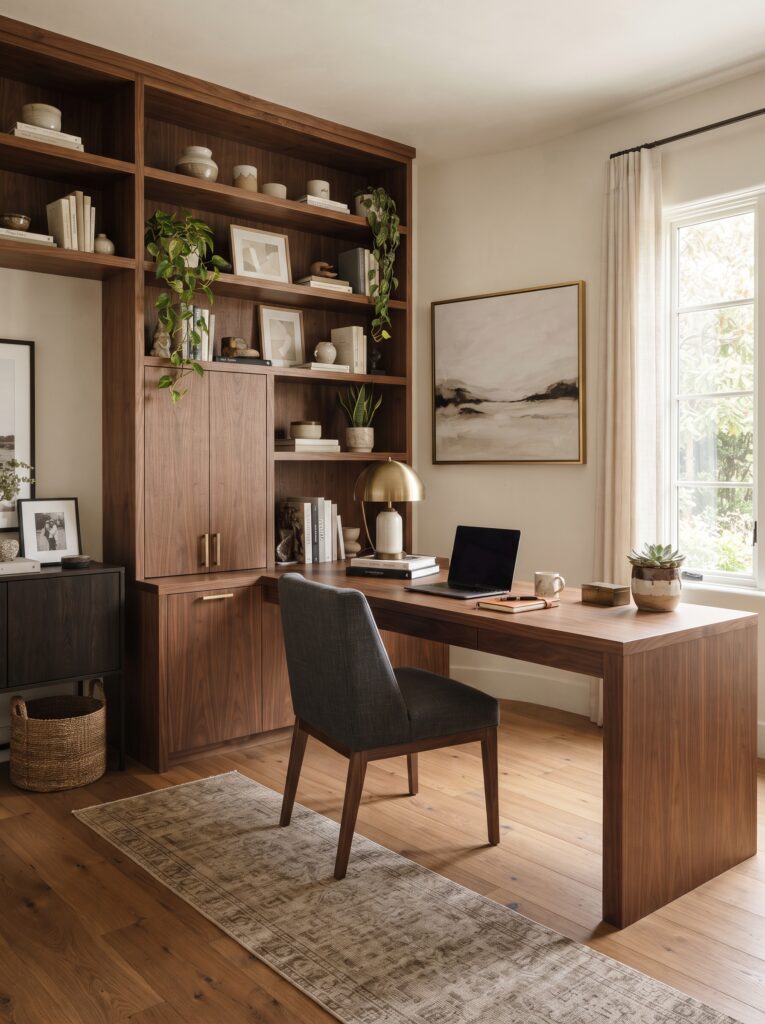
A beautifully designed home office can make everyday work feel more enjoyable. The right combination of warm wood, thoughtful storage, comfortable furniture, natural light, and personal details can turn a practical workspace into a room that feels intentional and sophisticated.
You do not need a huge room or an extravagant budget to create this atmosphere. Even a compact workspace can feel polished when every element has a purpose.
If you are looking for home office ideas that combine functionality with elegant interior design, these principles can help you create a workspace that feels productive during working hours and naturally connected to the rest of your home.
Why a Calm Home Office Can Make a Difference
A home office has to serve a practical purpose, but its surroundings can influence how the space feels throughout the day.
A cluttered desk, inadequate lighting, uncomfortable seating, and insufficient storage can make a workspace feel chaotic. In contrast, an organized environment with comfortable furniture and a restrained color palette can create a more peaceful atmosphere.
The goal is not to create a completely empty room.
A calm office can still contain books, artwork, stationery, technology, and personal objects. The difference is that everything has a designated place.
This makes organization part of the interior design rather than something separate from it.
Start With a Functional Layout
Before choosing decorative accessories, determine how you will actually use the office.
Think about:
- Where the desk will be positioned
- How much storage you need
- Where electrical outlets are located
- How natural light enters the room
- Whether video calls are part of your work
- How much desk space you require
- Whether another person occasionally uses the room
A beautiful office that is uncomfortable or inconvenient will quickly become frustrating.
Start with function and then build the aesthetic around it.
Choose a Built-In Desk for a Polished Look
Built-in furniture can make a home office look especially intentional.
A custom or semi-custom desk can fit the exact dimensions of a room and provide valuable storage underneath or above the workspace.
Warm walnut is particularly effective when you want an office to feel sophisticated without appearing overly formal.
Other materials can work beautifully as well:
- White oak
- Natural oak
- Painted cabinetry
- Veneer
- Stone
- Laminate
- Reclaimed wood
If a custom built-in is outside your budget, you can recreate a similar visual effect using modular shelving, a simple desktop, and matching storage cabinets.
Use Warm Wood to Add Character
Wood brings warmth into a home office.
If your walls, desk, and furniture are all white or gray, the space can sometimes feel cold.
Introducing walnut, oak, or another natural wood tone can create visual warmth.
You do not need to use wood everywhere.
A walnut desk paired with cream walls and neutral textiles can be enough to establish the foundation of the room.
Wood also works particularly well with brass, black, cream, beige, and muted green accents.
Create a Sophisticated Neutral Color Palette
Neutral colors are often associated with calm interiors because they create a visually cohesive background.
For a sophisticated home office, consider combining:
- Warm white
- Cream
- Beige
- Taupe
- Walnut
- Soft gray
- Muted green
- Black accents
The key is to avoid making everything exactly the same shade.
Layering different neutrals creates depth.
For example, warm white walls can be paired with a walnut desk, cream chair, beige rug, and muted green plant.
The result remains neutral while still feeling visually rich.
Make Storage Part of the Decor
Storage is essential in a functional home office.
Instead of treating storage as an afterthought, make it part of the design.
Built-in shelves can display books, artwork, ceramics, and a few decorative objects while cabinets can hide paperwork, electronics, and office supplies.
A useful combination is:
Open shelving for display + closed storage for clutter
This allows the room to remain visually interesting without exposing every everyday item.
Avoid Overfilling Open Shelves
Open shelving can quickly become messy.
Rather than filling every shelf from edge to edge, leave some empty space.
You can alternate:
- Books
- Small artwork
- Ceramics
- Plants
- Decorative boxes
- Personal objects
Try grouping several items together while leaving another section relatively empty.
This creates a more relaxed appearance.
Choose a Comfortable Desk Chair
A beautiful chair is useful, but comfort should come first.
If you work several hours a day, choose a chair that provides appropriate support and can be adjusted to your desk height.
For a home office with a refined aesthetic, you can look for a chair with:
- Neutral upholstery
- Clean lines
- Supportive cushioning
- Adjustable features
- A silhouette that complements the room
Do not sacrifice ergonomics simply to achieve a particular visual style.
The best home office combines comfort and design.
Layer the Lighting
Lighting can completely change a home office.
Do not rely on one overhead light.
Instead, consider three types of lighting:
Natural Light
Position the workspace to benefit from daylight when practical.
Task Lighting
A desk lamp can provide focused illumination for reading and paperwork.
Ambient Lighting
A floor lamp, wall sconce, or decorative lamp can create softer illumination when you are not working directly at the desk.
Layered lighting allows the room to feel more comfortable throughout the day.
Choose a Beautiful Desk Lamp
A desk lamp is both functional and decorative.
A sculptural lamp can become an attractive focal point while providing useful task lighting.
For an elegant office, materials such as:
- Brass
- Ceramic
- Black metal
- Glass
- Wood
can work beautifully.
Choose a lamp that relates to the room’s other finishes rather than selecting it in isolation.
Add Artwork Without Making the Office Distracting
Artwork can make a home office feel personal.
However, the goal is not to cover every wall.
One large artwork above the desk can create a strong focal point.
Alternatively, a small collection of coordinated pieces can add personality.
For a calm aesthetic, consider:
- Abstract neutral art
- Botanical prints
- Landscape photography
- Architectural sketches
- Vintage-inspired artwork
- Minimal line drawings
Choose pieces that you enjoy looking at.
Since you may spend many hours in the room, your artwork should create an environment you genuinely like.
Introduce Indoor Plants
Plants can soften the hard lines of desks, shelves, and cabinetry.
A single large plant in the corner can add height and create a natural focal point.
Smaller plants can be placed on shelves or near a window where appropriate.
For a sophisticated office, consider simple planters in:
- Ceramic
- Terracotta
- Stone
- Woven materials
The planter itself can become part of the decor.
Add a Rug for Warmth
A rug can help visually define the office area, particularly in a larger room.
It also introduces texture and can make the space feel more comfortable.
Neutral rugs work well with many office styles.
Consider:
- Wool
- Flatweave
- Jute
- Vintage-inspired patterns
- Subtle geometric designs
Make sure the rug is practical for the type of office chair you use. A very thick or shaggy rug may not be ideal under a rolling chair.
Keep the Desk Surface Intentional
Your desk should not become a storage area for everything you own.
Try to keep only the items you use regularly on the desktop.
A simple arrangement might include:
- Desk lamp
- Notebook
- Pen holder
- Small plant
- One decorative object
Everything else can go into drawers or cabinets.
The more intentional the surface looks, the easier it is to maintain.
Use Decorative Boxes to Hide Small Items
Small office supplies can create a lot of visual noise.
Decorative boxes can help contain them.
Use them for:
- Charging cables
- Extra stationery
- Documents
- Notebooks
- Accessories
- Miscellaneous supplies
Choose boxes that coordinate with your office palette.
Natural woven boxes can introduce texture, while simple fabric or wood boxes can create a cleaner appearance.
Create a Background for Video Calls
If you regularly participate in video meetings, consider what appears behind you.
A thoughtfully styled background can include:
- Built-in shelving
- Neutral artwork
- A plant
- Books
- Simple decorative objects
Avoid placing too many distracting items directly behind your chair.
The background should feel professional without looking sterile.
Make Technology Blend Into the Room
Computers, monitors, printers, chargers, and cables are unavoidable in most modern offices.
The goal is not to pretend technology does not exist.
Instead, organize it.
Use cable management systems, concealed outlets where possible, and storage for devices that are not being used.
If you have multiple screens, a clean desk setup can help maintain the overall visual simplicity of the room.
Create a Small Personal Corner
If space allows, add a comfortable chair or small reading area.
This can provide a place to step away from the desk during breaks.
A simple lounge chair with a side table and lamp can turn part of the office into a relaxing corner.
This is especially useful if the room is large enough to support multiple functions.
Use Natural Materials
Natural materials can make an office feel less corporate.
Consider incorporating:
- Wood
- Stone
- Ceramic
- Linen
- Woven fibers
- Wool
- Natural greenery
These materials add tactile interest while maintaining a sophisticated aesthetic.
A walnut desk paired with linen upholstery and a ceramic lamp, for example, can create a warm and refined atmosphere without requiring elaborate decoration.
How to Make a Small Home Office Feel Larger
Small offices require careful planning.
Use furniture that fits the room instead of choosing oversized pieces.
Wall-mounted shelving can free up floor space.
Light colors can help the room feel open, while mirrors can increase the sense of visual depth.
Another useful strategy is to keep the floor relatively clear.
When furniture is concentrated against the walls and the center remains visually open, the room can feel more spacious.
Home Office Ideas for a Spare Bedroom
A spare bedroom can often become an excellent home office.
Instead of filling the entire room with office furniture, create zones.
One side can contain the main desk and storage.
Another area can include a comfortable chair or small sofa.
If guests occasionally stay overnight, consider a daybed or sleeper sofa that allows the room to serve multiple purposes.
This makes the room more flexible without sacrificing style.
Home Office Ideas for an Unused Corner
You do not need a separate room.
An unused corner of a bedroom, living room, hallway, or large landing can become a functional workspace.
A narrow desk, wall shelves, comfortable chair, and task lamp may be enough.
To make the office feel connected to the rest of the home, repeat materials or colors already present in the surrounding room.
Create a Luxury Look Without a Luxury Budget
A sophisticated home office does not require every item to be expensive.
Instead, focus on visual priorities.
Spend more thoughtfully on pieces you use every day, such as the desk and chair.
For accessories, mix affordable items with a few distinctive pieces.
You can find beautiful objects at vintage stores, thrift shops, estate sales, local markets, and affordable home retailers.
The combination of old and new can create a much more personalized space.
Avoid the “Perfect Office” Trap
A home office should be lived in.
Do not worry about keeping every book perfectly aligned or every accessory perfectly positioned.
A few signs of daily use can make the room feel welcoming.
The goal is an organized environment, not a showroom.
A notebook on the desk, a coffee cup, or an open book can make a styled office feel more realistic and approachable.
Home Office Styling Mistakes to Avoid
Too Much Clutter
Too many objects can make it difficult to concentrate and maintain organization.
Poor Lighting
A beautiful room with inadequate lighting will not function well.
Uncomfortable Seating
Aesthetics should never replace proper comfort and support.
Insufficient Storage
Without enough storage, clutter will eventually move onto the desk.
Too Many Colors
A restrained palette generally creates a more cohesive environment.
Ignoring Cables
Visible cables can quickly make an otherwise polished workspace feel messy.
Oversized Furniture
Furniture should be proportional to the room.
A Simple Home Office Styling Formula
If you are unsure where to start, use this simple formula:
Desk + Comfortable Chair + Storage + Task Lighting + Artwork + Greenery + Personal Detail
You can then build upon it according to your needs.
For example:
A warm walnut desk provides the foundation.
A comfortable upholstered chair adds softness.
Built-in shelving creates storage.
A brass or ceramic lamp provides task lighting.
Neutral artwork creates a focal point.
A plant introduces natural texture.
Finally, one personal object gives the room character.
The result is simple but complete.
How to Keep Your Home Office Organized
Good design becomes much easier to maintain when the organization system is simple.
At the end of the workday, spend a few minutes returning items to their designated places.
Keep documents together.
Store cables in one location.
Use drawers for small supplies.
Clear unnecessary objects from the desk.
This small daily routine can prevent clutter from building up.
How to Refresh a Home Office Seasonally
You do not need to redesign your office every season.
Small changes can create a fresh feeling.
Spring
Add fresh greenery, lighter artwork, and natural textures.
Summer
Use lighter fabrics and brighter natural elements.
Fall
Introduce warm wood, muted brown tones, textured ceramics, and subtle seasonal branches.
Winter
Add cozy textiles, warm lighting, candles where appropriate, and deeper neutral accents.
The underlying furniture can remain exactly the same.
How to Create a Home Office That Feels Like Part of Your Home
One of the most important design principles is continuity.
Your office should not feel like a completely separate environment.
If your home uses warm wood throughout, bring that material into the office.
If your living spaces feature cream and beige, repeat those colors.
If your home has brass lighting, consider using a brass accent in the office.
Repeating a few materials and colors creates a natural visual connection between rooms.
Pinterest-Friendly Home Office Design Ideas
For anyone looking for home office inspiration on Pinterest, several design approaches work particularly well visually.
A warm walnut built-in office with neutral styling creates a strong architectural image.
A small desk tucked into a beautifully designed corner offers practical inspiration for people without a dedicated office.
A home office with floor-to-ceiling shelving can provide both storage and aesthetic appeal.
A calm neutral workspace with natural materials can appeal to people searching for minimalist and sophisticated office ideas.
The strongest images usually communicate the idea immediately: viewers should be able to understand the design concept within seconds.
Conclusion
A beautiful home office should make working from home feel more comfortable, organized, and intentional. The most successful designs balance practical needs with visual warmth. Start with a functional layout, choose furniture that supports your daily routine, and then introduce the elements that make the space feel personal.
Warm wood, neutral colors, layered lighting, thoughtful storage, natural materials, artwork, and greenery can work together to create an office that feels sophisticated without becoming overly formal. You do not need a massive room or an unlimited decorating budget. A small, carefully planned workspace can be just as beautiful as a large dedicated office.
Most importantly, design the room around how you actually work. When functionality comes first and decoration supports it, your home office can become more than a place to answer emails or finish projects. It can become a calm, beautiful part of your home that you genuinely enjoy spending time in.
- The Indoor Plant Corner That Makes a Home Feel Instantly More Elevated
- How to Turn Your Closet Into a Boutique-Inspired Dressing Space
- A Calm Home Office That Makes Working From Home Feel Beautiful
- How to Style a Coffee Table Like a Luxury Interior Designer
- Elegant Fall Wedding Welcome Table Ideas for a Beautiful First Impression