
A mudroom may be one of the most practical spaces in an American home, but that doesn’t mean it has to look purely functional.
In fact, when thoughtfully designed, a mudroom can become one of the most attractive and useful areas of the house. It is the place where shoes come off, coats are dropped, bags are stored, keys are forgotten, groceries temporarily land, and everyone enters and leaves throughout the day.
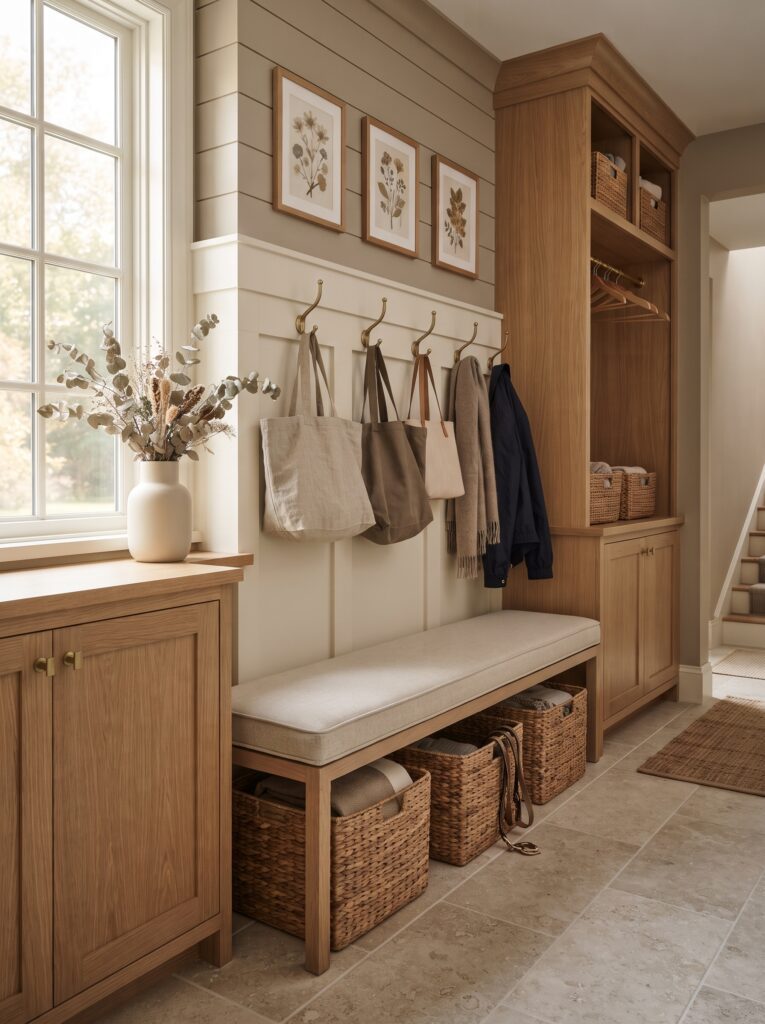
Because of that constant activity, a well-designed mudroom needs to do more than simply look beautiful. It needs to work beautifully.
The best modern mudroom ideas combine smart storage with warm materials, comfortable seating, durable surfaces, and carefully chosen decorative details. Instead of feeling like a utility area hidden away from the rest of the home, an elegant mudroom can feel like a natural extension of your home’s interior design.
Whether you have a large dedicated mudroom, a narrow hallway, a small entry area, or simply an unused corner near the back door, there are plenty of ways to create an organized drop zone that feels polished and intentional.
What Is a Mudroom?
A mudroom is a transitional space between the outdoors and the main living areas of a home.
Traditionally, mudrooms were designed to protect the rest of the house from dirt, wet shoes, coats, and outdoor mess. Today, their role has expanded.
A modern mudroom may also provide storage for:
- Shoes
- Jackets
- Handbags
- Backpacks
- Umbrellas
- Dog accessories
- Sports equipment
- Seasonal clothing
- Grocery bags
- Keys and everyday essentials
For busy American households, this makes the mudroom particularly valuable.
But functionality doesn’t mean the room has to feel cold or utilitarian.
With the right materials and layout, you can create a space that feels organized, comfortable, and sophisticated.
Why Mudroom Organization Matters
An entry area is often the first place where clutter begins.
Someone walks through the door and puts down a handbag.
A child drops a backpack.
Shoes remain near the entrance.
A jacket gets thrown over a chair.
Keys disappear.
Before long, a space that was meant to welcome you home starts creating visual stress.
Good mudroom organization solves this problem by giving frequently used items a designated home.
Instead of asking everyone to remember where things should go, the room itself makes organization easy.
Hooks tell you where coats belong.
Baskets provide a place for accessories.
A bench creates a natural shoe-changing area.
Closed cabinets hide items that don’t need to remain visible.
That combination is what makes a thoughtfully designed mudroom so effective.
1. Start With a Clear Storage Strategy
Before choosing paint colors or decorative accessories, think about what the room actually needs to store.
Make a list of the items that regularly enter through this door.
For example:
Daily essentials
- Shoes
- Coats
- Keys
- Bags
- Wallets
Seasonal items
- Boots
- Gloves
- Hats
- Scarves
- Rain jackets
Family items
- Backpacks
- Sports bags
- Children’s shoes
- Outdoor equipment
Once you understand what needs to be stored, you can create the appropriate combination of open and closed storage.
This prevents a common design mistake: creating a beautiful mudroom that doesn’t actually have enough storage.
2. Install Practical Wall Hooks
Hooks are one of the most useful features in a mudroom.
They make frequently worn coats and bags immediately accessible without requiring everyone to open a cabinet.
For a more sophisticated look, consider using:
- Aged brass hooks
- Antique brass hooks
- Matte black hooks
- Wooden pegs
- Vintage-inspired metal hardware
Instead of installing one long row of identical hooks without any visual structure, consider creating a balanced arrangement.
If multiple people use the mudroom, give each person a designated hook or section.
This simple change can make everyday organization much easier.
3. Add a Comfortable Bench
A bench is one of the features that makes a mudroom feel complete.
It gives you somewhere to sit while putting on or removing shoes and provides another opportunity for storage.
A built-in bench can include drawers or cabinets underneath.
Alternatively, a freestanding wooden bench can create a more relaxed, furniture-like appearance.
For an elegant look, choose materials such as:
- Warm oak
- Walnut
- Painted wood
- Natural rattan
- Upholstered linen
If the room is used heavily, select a durable upholstery fabric that can handle everyday life.
The bench should feel comfortable, but it doesn’t need to become the visual centerpiece.
4. Use Baskets to Hide Everyday Clutter
Woven baskets are especially useful in mudrooms because they provide hidden storage while adding texture.
Use them for smaller items such as:
- Gloves
- Hats
- Dog leashes
- Scarves
- Reusable shopping bags
- Outdoor accessories
Baskets also help soften the appearance of built-in cabinetry.
A room made entirely from painted cabinetry can sometimes feel visually hard. Natural woven materials introduce warmth.
Choose baskets in:
- Natural seagrass
- Woven rattan
- Water hyacinth
- Neutral fabric
- Natural rope
Try to keep the overall basket collection relatively consistent.
A few coordinated baskets usually look more sophisticated than many different styles competing for attention.
5. Mix Open and Closed Storage
One of the best mudroom storage ideas is to combine visible storage with hidden storage.
Open storage works well for items that are used every day.
Closed cabinets are better for things you want to keep out of sight.
For example:
Open:
Hooks + bench + everyday shoes
Closed:
Cleaning supplies + seasonal accessories + extra bags
This combination allows the room to remain functional without constantly looking messy.
It also gives you more freedom when decorating because the visible areas can remain carefully styled.
6. Choose Durable Flooring
A beautiful mudroom needs flooring that can withstand real life.
This is particularly important because the space sits between the outdoors and the rest of the home.
Depending on your home’s style and budget, consider:
- Porcelain tile
- Natural stone
- Slate-inspired tile
- Brick-look flooring
- Durable patterned tile
- Waterproof luxury vinyl
Natural-looking materials can create a high-end appearance while still providing practical durability.
For a transitional American home, warm stone tones, soft gray, cream, taupe, or earthy brown can work beautifully.
7. Create a Cohesive Color Palette
You don’t need bright colors to make a mudroom interesting.
A sophisticated palette can be built from warm neutrals.
Consider:
- Cream
- Oatmeal
- Taupe
- Warm white
- Soft olive
- Walnut
- Natural oak
- Aged brass
For a slightly more dramatic room, introduce a deeper accent such as:
- Forest green
- Charcoal
- Burgundy
- Deep navy
The key is to use stronger colors selectively.
For example, dark green cabinetry paired with warm oak seating and cream walls can create a beautiful balance.
8. Make the Mudroom Feel Like Part of the Home
A common mistake is treating the mudroom as a completely separate design zone.
Instead, connect it visually with the rest of your house.
If your kitchen uses warm oak, repeat that wood tone in the mudroom.
If your home has aged brass lighting, use similar hardware here.
If your main interior uses neutral linen and natural textures, carry those materials into the mudroom.
This creates a sense of continuity.
Even though the mudroom is practical, it should still feel like it belongs to the same home.
9. Add One Beautiful Decorative Moment
A mudroom doesn’t need a lot of decoration.
In fact, too many decorative objects can interfere with the room’s purpose.
Instead, choose one or two intentional elements.
For example:
- A framed botanical print
- A ceramic vase
- A small mirror
- A vintage landscape painting
- A sculptural bowl
- A simple dried branch arrangement
A small decorative moment can make the space feel finished without sacrificing functionality.
10. Use a Mirror Near the Entrance
A mirror is both decorative and practical.
Before leaving the house, you can quickly check your appearance.
More importantly, a mirror can make a narrow mudroom feel larger and brighter by reflecting light.
For an elegant look, consider:
- Arched mirrors
- Aged brass frames
- Dark wood frames
- Antique-style mirrors
- Simple rectangular mirrors
If your mudroom is narrow, a vertical mirror can emphasize ceiling height.
If the room is wider, a horizontal mirror can visually expand the wall.
Small Mudroom Ideas for American Homes
Not every home has a large dedicated mudroom.
Many houses have a compact area near the garage, kitchen, laundry room, or back entrance.
The good news is that a small mudroom can still be extremely functional.
The trick is to use the walls.
A narrow vertical storage system can include:
Top:
Closed cabinets
Middle:
Hooks
Lower:
Bench
Bottom:
Shoe storage
This uses vertical space without taking up excessive floor area.
Another option is to create a small drop zone with only three essentials:
- A wall-mounted hook system
- A narrow bench
- A basket underneath
Even this simple arrangement can dramatically reduce everyday clutter.
Mudroom Ideas for Families
Family mudrooms need slightly different planning because several people may use the space simultaneously.
If you have children, individual storage sections can be extremely helpful.
Give each person:
- Their own hooks
- A basket
- A shoe area
- A small shelf
- A designated bag space
This eliminates the question of where things belong.
For families with older children, labeled storage can make organization even easier.
However, you don’t necessarily need large visible labels if you prefer a sophisticated appearance.
The storage itself can provide the organization.
Mudroom Storage for Shoes
Shoes are one of the biggest sources of entryway clutter.
Instead of allowing footwear to accumulate on the floor, create a dedicated system.
Possible options include:
Open cubbies
Good for frequently worn shoes.
Pull-out drawers
A cleaner appearance for a more custom-built mudroom.
Closed cabinets
Best when you want shoes completely hidden.
Baskets
Useful for slippers and casual footwear.
A combination is often ideal.
Keep everyday shoes accessible while storing seasonal footwear elsewhere.
How to Make a Mudroom Look Expensive
You don’t need an enormous renovation budget to create a luxury-looking mudroom.
The appearance of quality often comes from consistency and material selection.
Instead of purchasing many inexpensive decorative pieces, focus on a few elements that visually matter.
For example:
Upgrade the hardware.
Aged brass or high-quality metal hooks can make basic cabinetry feel more custom.
Use warm wood.
Natural wood immediately introduces depth.
Choose quality-looking lighting.
A well-designed pendant or wall sconce can become an architectural feature.
Keep the palette restrained.
Too many colors can make a small room feel chaotic.
Add texture.
Woven baskets, linen cushions, stone, and wood create visual richness.
The result is a room that feels intentional rather than expensive simply because expensive products were used.
Mudroom Lighting Ideas
Lighting is frequently overlooked in utility spaces.
But because mudrooms often have limited natural light, the right lighting can make a significant difference.
Consider layering three types of light.
Ambient lighting
This provides general illumination.
A ceiling fixture or recessed lighting can work well.
Task lighting
Useful around benches, storage, and frequently used areas.
Accent lighting
This can highlight artwork, architectural details, or decorative shelves.
Warm white bulbs generally create a more welcoming atmosphere than harsh cool lighting.
If your mudroom connects directly to the kitchen or hallway, coordinate the fixture finish with the adjacent rooms.
Seasonal Mudroom Organization
A mudroom should change slightly throughout the year.
During summer, you may need space for:
- Sandals
- Lightweight jackets
- Beach bags
- Outdoor hats
- Reusable shopping bags
During fall and winter, the priorities change.
You’ll need more room for:
- Boots
- Coats
- Scarves
- Gloves
- Umbrellas
- Heavier bags
Rather than allowing seasonal items to accumulate, rotate storage.
Keep the current season’s essentials easily accessible and move less frequently used items into higher cabinets or another storage area.
This keeps the room functional throughout the year.
Create a Fall-Inspired Mudroom Without Overdecorating
Because autumn is such an important decorating season in the United States, your mudroom can receive a subtle seasonal update.
You don’t need a huge pumpkin display.
Instead, try:
- A burgundy linen cushion
- A small ceramic vase
- Dried branches
- A warm brown basket
- An olive-colored textile
- A simple autumn landscape print
These changes introduce seasonal warmth while allowing the mudroom to remain practical.
The most sophisticated seasonal decorating tends to feel like an extension of the existing design rather than a completely different theme.
Mudroom Organization for Pet Owners
If you have a dog, the mudroom can become an excellent place for pet essentials.
A dedicated basket can hold:
- Leashes
- Towels
- Grooming supplies
- Outdoor toys
If your dog frequently enters through the same door, a washable mat near the entrance can help protect flooring.
You can also add a small hook specifically for leashes.
The goal is to keep pet-related items accessible without allowing them to dominate the room.
Mistakes to Avoid When Designing a Mudroom
1. Not Planning for Real Life
A mudroom should be designed around what actually happens in your home.
2. Too Little Storage
Beautiful cabinetry is useless if there isn’t enough space for everyday belongings.
3. No Place to Sit
Even a small bench can make the space much more functional.
4. Too Many Open Shelves
Open storage looks beautiful when organized, but too much of it can make the room feel cluttered.
5. Ignoring Flooring
Mudrooms experience more dirt and moisture than many other rooms. Choose materials accordingly.
6. Overdecorating
This is a working space. Leave enough room for people to move easily.
7. Forgetting Vertical Space
When floor space is limited, use the walls.
A Simple Formula for an Elegant Mudroom
If you are unsure where to begin, use this simple formula:
Warm cabinetry + practical hooks + comfortable bench + woven baskets + durable flooring + soft lighting + one decorative detail
That combination can create a mudroom that feels both functional and sophisticated.
You can adjust the materials according to your home’s style.
For a traditional home, choose classic cabinetry and antique-inspired hardware.
For a modern home, use cleaner lines and simpler hardware.
For a farmhouse-inspired home, introduce natural wood and woven textures.
For a transitional home, combine warm neutrals with elegant brass details.
Conclusion
An elegant mudroom is not about creating a picture-perfect room that nobody is allowed to use. It is about making everyday life easier while creating a space that feels beautiful enough to enjoy.
The best mudroom ideas combine practical storage with thoughtful design. Hooks keep coats accessible, baskets control small clutter, benches make shoe changes easier, and closed cabinetry hides everything that doesn’t need to be seen. But the decorative side matters too.
Warm wood, aged brass, natural textiles, soft lighting, botanical artwork, and carefully selected accessories can transform a basic drop zone into a sophisticated part of the home. Whether you are designing a large dedicated mudroom or trying to create a tiny entryway drop zone, focus first on how your household actually uses the space. Then build the design around those habits.
A well-designed mudroom should quietly solve problems every day. It should make coming home easier. It should make leaving the house less chaotic. And most importantly, it should feel like a beautiful continuation of the home rather than a forgotten utility area.
- Vintage Bathroom Vanity Ideas: How to Create an Elegant and Timeless Bathroom
- Small Balcony Makeover Ideas: How to Turn a Tiny Balcony Into a Cozy Autumn Retreat
- Elegant Fall Dining Table Decor: Sophisticated Autumn Tablescape Ideas for a Warm Home
- Elegant Mudroom Ideas: How to Create a Beautiful, Organized and Welcoming Drop Zone
- Dark Cottagecore Kitchen Ideas: How to Create a Moody, Warm and Timeless Kitchen