
A beautiful home does not have to be filled with large statement pieces to feel luxurious. Sometimes, the most memorable spaces are the quiet ones—the rooms designed for slowing down, reading, thinking, and enjoying a little time away from everyday distractions.
A home library is one of those spaces.
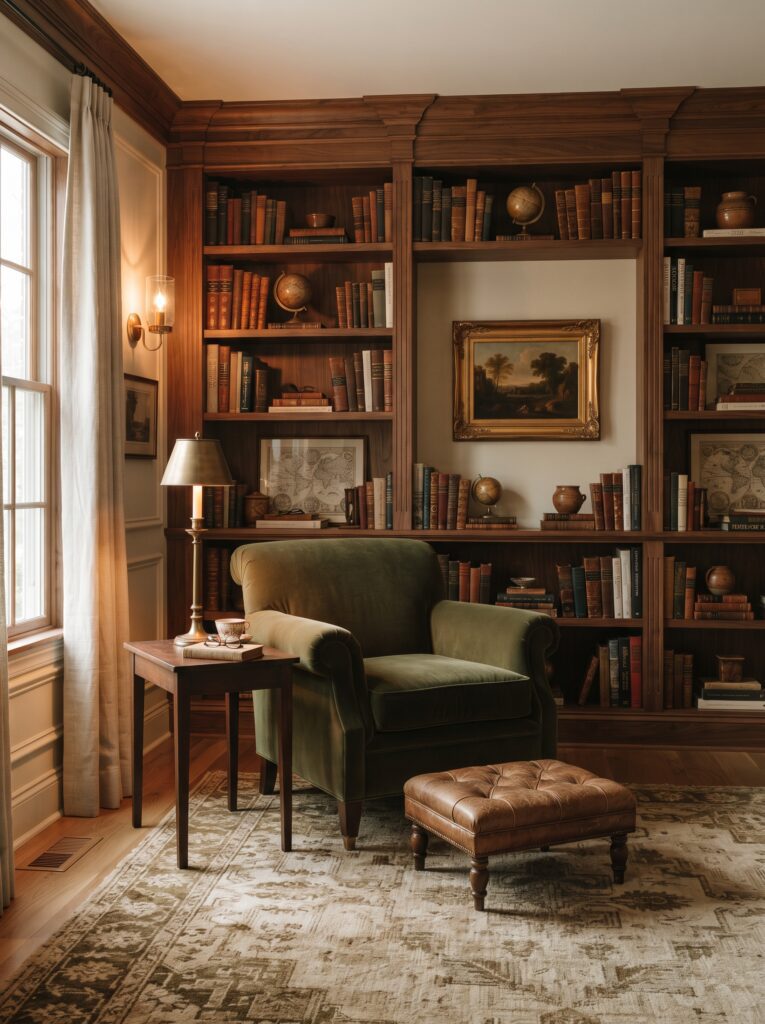
Whether you have an entire room filled with bookshelves or a small corner that can accommodate a comfortable chair and a few shelves, creating a home library can add character and warmth to your house. It can also become one of the most personal rooms because the books and objects you choose naturally reveal something about your interests and personality.
For homeowners who love classic home decor, cozy interiors, traditional design, old-world details, and sophisticated spaces, a home library can be an especially beautiful addition.
The good news is that you do not need a huge house or an enormous collection of books to create one.
With thoughtful furniture placement, warm lighting, natural wood, comfortable seating, artwork, and layered textures, even a modest space can feel like a private boutique hotel library.
What Makes a Home Library Feel Special?
A successful home library is about more than shelves filled with books.
The atmosphere matters just as much.
Think about the feeling you want when you walk into the room.
Perhaps you want it to feel:
- Quiet
- Warm
- Sophisticated
- Comfortable
- Timeless
- Personal
- Slightly vintage
- Relaxed but refined
These qualities can be created through a combination of materials and details.
Warm wood immediately adds character. Soft upholstery makes the room comfortable. Books bring personality. Lamps create intimacy. Artwork adds visual interest.
When these elements work together, the room begins to feel like a destination rather than simply another part of the house.
Choose the Right Location
You do not necessarily need to dedicate an entire bedroom to your home library.
Look around your house for underused spaces.
A spare room, hallway alcove, home office, landing area, or large corner can potentially become a reading space.
If you are fortunate enough to have an extra room, you can create a full library with built-in shelves and multiple seating options.
For smaller homes, consider creating a library wall combined with a reading chair.
The important thing is to choose a location where you can comfortably spend time.
Natural daylight is a bonus, especially if you enjoy reading during the day.
Make Books the Star
Books should naturally be one of the most important visual elements in the room.
But that does not mean every shelf needs to be completely packed.
A library can look more sophisticated when books are arranged with some breathing room.
Try combining vertical and horizontal arrangements.
Place several books upright together, then stack a few horizontally beside them.
This creates variation and prevents the shelves from looking overly rigid.
You can also leave small spaces for decorative objects.
A ceramic vase, framed photograph, small sculpture, or personal collection can sit between groups of books.
The result feels collected rather than overly staged.
Consider Built-In Bookshelves
If your budget and home allow it, built-in bookshelves can transform an ordinary room.
Floor-to-ceiling shelving creates a strong architectural feature and makes the library feel intentional.
You can keep the shelves classic white, warm wood, or a deeper painted tone depending on your decorating style.
Dark wood shelving creates a traditional library atmosphere.
Cream or soft white shelving creates a lighter look.
Walnut or medium wood can create a sophisticated transitional style.
If you rent your home or cannot install permanent shelves, freestanding bookcases can achieve a similar effect.
Use Warm Wood for a Classic Look
Wood has a natural connection with traditional libraries.
A walnut bookshelf, oak side table, wooden desk, or vintage cabinet can immediately add warmth.
You do not have to use the same wood finish throughout the room.
In fact, slightly different wood tones can create a more collected appearance.
For example, a medium walnut bookshelf can work beautifully with a darker wooden side table and lighter oak flooring.
The key is to keep the overall undertones compatible.
Choose Comfortable Seating
A library is ultimately a room for spending time.
That means comfortable seating is essential.
A deep upholstered chair can become the perfect reading spot.
A leather armchair can give the room a traditional study-inspired atmosphere.
A soft boucle or textured fabric chair can create a more contemporary interpretation.
If you have enough space, consider adding a small sofa or two reading chairs.
However, one excellent chair is often better than several uncomfortable ones.
Position the chair where the room feels most inviting—near a window, beside a bookshelf, or underneath a beautiful lamp.
Add a Small Ottoman
An ottoman can make a reading chair considerably more comfortable.
It provides a place to rest your feet while reading and can also function as additional seating when needed.
For a classic library, consider leather or textured upholstery.
For a softer modern interior, choose a neutral fabric.
If the room already contains many patterns, keep the ottoman simple.
If the room is mostly neutral, the ottoman can introduce subtle color or texture.
Create a Dedicated Reading Corner
Even if you have a full home library, creating a dedicated reading corner gives the room a clear purpose.
Place a comfortable chair beside a small table.
Add a warm table or floor lamp.
Keep a small stack of books nearby.
Add a soft throw or cushion.
You can also place the chair near a window to take advantage of natural daylight.
This small arrangement can become the visual heart of the room.
Lighting Is One of the Most Important Details
A library needs good lighting for practical reasons, but lighting also creates atmosphere.
Avoid depending entirely on one bright ceiling fixture.
Instead, layer different sources.
A floor lamp can illuminate a reading chair.
A table lamp can provide soft ambient light.
Wall sconces can highlight bookshelves.
A pendant or chandelier can provide general illumination.
Warm light tends to create a more intimate atmosphere in the evening.
For reading, make sure your main reading light is positioned appropriately so that it illuminates the pages without creating uncomfortable glare.
Use Artwork to Add Personality
Bookshelves can sometimes create a lot of visual repetition.
Artwork helps break up the rows of books.
You might place a small framed artwork on one shelf or hang a larger piece on an open wall.
Classic landscapes, botanical prints, portraits, abstract artwork, and black-and-white photography can all work depending on your interior style.
The artwork does not need to be specifically related to books.
Choose pieces that you genuinely enjoy.
A home library should feel like a reflection of the homeowner rather than a themed room.
Add a Rug for Warmth
A rug can make a library feel significantly more comfortable.
This is particularly important if your room has hardwood flooring.
A vintage-inspired rug can reinforce a traditional atmosphere.
A neutral wool rug can create a softer contemporary look.
A patterned rug can add personality to a room with relatively simple furniture.
Make sure the rug is large enough to visually connect the major pieces of furniture.
If the room contains a reading chair and small table, the rug can anchor both pieces.
Use Curtains to Soften the Room
Window treatments are another opportunity to add texture.
Heavy curtains can create a dramatic traditional library feeling.
Lighter linen curtains create a relaxed and airy atmosphere.
For a sophisticated look, choose materials with natural texture rather than extremely shiny synthetic fabrics.
If the room has beautiful architectural windows, keep the treatments simple so that the windows remain a feature.
Introduce Antique Brass Details
Metal accents can add subtle sophistication.
Antique brass is particularly effective in traditional and transitional libraries.
Consider brass for:
- Table lamps
- Floor lamps
- Cabinet hardware
- Picture frames
- Curtain rods
- Decorative objects
You do not need brass everywhere.
A few repeated touches are enough to create visual consistency.
Try a Darker Wall Color
If you love dramatic interiors, a deeper wall color can make a home library feel incredibly cozy.
Deep olive, charcoal, chocolate brown, navy, or muted forest green can work beautifully.
Dark walls can make bookshelves and artwork stand out.
They also create a more intimate atmosphere in the evening.
However, if your library is small or receives limited daylight, you may prefer a lighter wall color.
Cream, warm white, beige, or soft taupe can keep the room bright while still feeling sophisticated.
Create a Small Library in a Neutral Room
You do not have to choose dark colors to create a classic library atmosphere.
A neutral room can feel equally elegant.
Use warm ivory walls, natural wood shelves, cream upholstery, soft rugs, and antique brass lighting.
Then introduce depth through darker books, artwork, and accessories.
This approach works especially well in American homes with transitional or modern-classic interiors.
It also allows the room to feel connected to lighter areas of the house.
Organize Books by More Than Color
Color-coordinated bookshelves can look beautiful in photographs, but they are not always the most practical system.
If you frequently use your books, organize them according to categories that make sense to you.
You could separate:
- Fiction
- Nonfiction
- Art and design
- History
- Travel
- Biographies
- Cooking
- Music
- Reference books
You can still create attractive groupings within each category.
The goal is to make your library both beautiful and functional.
Mix Books With Meaningful Objects
One of the easiest ways to make a home library feel personal is to combine books with objects that have a story.
Perhaps you have a ceramic piece from a trip.
Maybe you inherited a small box from a family member.
Perhaps you collect vintage objects or small sculptures.
Place these pieces between your books.
The combination of books and personal objects creates a sense that the room has developed naturally over time.
Add a Small Desk
If you have enough space, a writing desk can make your library more versatile.
It can become a place to journal, work, write letters, organize paperwork, or study.
A traditional wooden desk works beautifully in a classic library.
For a contemporary space, choose a streamlined desk with simple lines.
Keep the surface relatively clear.
A lamp, notebook, pen holder, and a few books can be enough.
Create a Library That Works for the Whole Family
A home library does not have to be an adults-only space.
If children will use it, create lower shelves where they can easily reach their books.
Add comfortable seating and a soft rug.
You can create separate sections for children’s books and adult collections.
The room can become a shared family space for reading together, doing homework, or enjoying quiet time.
Use Plants Sparingly
A little greenery can soften a library.
A small potted plant on a bookshelf can introduce life without distracting from the books.
A larger plant can work beautifully in an empty corner.
Choose plants according to the natural light available.
The goal is to complement the room rather than turn the library into a plant collection.
Make a Home Library Feel Like a Boutique Hotel
If you want a more luxurious atmosphere, think about what makes upscale hospitality spaces feel comfortable.
They usually combine:
- Soft lighting
- Comfortable seating
- Rich textures
- Natural materials
- Layered accessories
- Artwork
- Thoughtful organization
You can apply the same principles at home.
A comfortable chair beside a warm lamp, a beautiful rug underneath, books within reach, and a small table for tea or coffee can create a boutique-hotel feeling without requiring a large budget.
Create an Old-World Atmosphere Without Making It Feel Dated
Traditional design does not have to look old-fashioned.
The easiest way to modernize a classic library is to mix old and new.
Pair traditional bookshelves with a contemporary chair.
Place a modern sculpture on an antique-inspired side table.
Combine vintage artwork with a clean-lined lamp.
Use classic wood alongside modern textiles.
This balance creates a transitional interior that feels timeless rather than stuck in a particular decade.
Home Library Ideas for Small Spaces
If you do not have a spare room, start small.
A narrow bookshelf and one comfortable chair can be enough.
A corner of a bedroom can become a reading area.
A hallway with built-in shelving can become a mini library.
An unused space beneath a staircase can potentially become a compact reading nook.
The important thing is to define the area visually.
A rug, lamp, chair, and bookshelf can immediately communicate that the space has a purpose.
How to Decorate a Home Library on a Budget
Creating a sophisticated library does not require expensive furniture.
Start with your books.
Then look for secondhand bookshelves, vintage side tables, used lamps, and pre-owned artwork.
Thrift stores, estate sales, antique markets, and online resale platforms can be excellent places to find pieces with character.
You can also update existing furniture.
Painting an old bookshelf, replacing cabinet hardware, or adding new upholstery can completely change its appearance.
Instead of trying to purchase an entire room at once, build it gradually.
A collected room often looks more interesting than one decorated in a single weekend.
Keep the Room Comfortable, Not Just Beautiful
A common decorating mistake is prioritizing appearance over usability.
A home library should encourage you to sit down.
Choose furniture that you actually want to use.
Make sure the reading chair is comfortable.
Keep books within easy reach.
Provide adequate lighting.
Maintain a comfortable temperature.
Use curtains or window coverings when necessary.
Small practical details can make the difference between a room that looks beautiful and a room that becomes part of your daily routine.
Don’t Overfill the Shelves
It can be tempting to fill every shelf as soon as you install it.
Try to resist.
Some open space can make a library feel more sophisticated.
Use empty areas to display artwork, ceramics, plants, or personal objects.
This also gives you flexibility to add books and collections over time.
A library should feel as though it is evolving.
Create a Room With a Story
The most successful home libraries do not feel generic.
They contain clues about the people who live there.
Maybe there are travel books beside family photographs.
Maybe a favorite chair sits beneath artwork collected over many years.
Maybe a vintage lamp belonged to a relative.
Maybe the shelves contain books that shaped your interests.
These details are what make the room feel authentic.
You do not need to follow a particular trend if it does not fit your personality.
Conclusion
A home library can be much more than a room for storing books. It can become a peaceful retreat, a creative workspace, a family reading room, or simply a quiet corner where you can step away from the noise of everyday life.
The most elegant library designs usually rely on simple ingredients: beautiful books, warm wood, comfortable seating, layered lighting, textured rugs, meaningful artwork, and personal objects. You can create the atmosphere gradually rather than trying to complete everything at once.
Start with a comfortable place to sit and a good source of light. Add bookshelves when possible. Layer in natural materials, artwork, textiles, and objects that have meaning to you.
Whether your dream is a dramatic walnut-lined library or a small reading corner beside a window, the goal remains the same: create a space that makes you want to stay.
A thoughtfully designed home library can bring a sense of calm and character to an otherwise ordinary part of your home—and sometimes, that quiet little room can become one of the spaces you love most.
- Elegant Fall Staircase Decor Ideas for a Sophisticated Autumn Home
- Beautiful Laundry Room Ideas That Make Everyday Home Organization Feel Luxurious
- How to Create a Cozy and Elegant Home Library That Feels Like a Private Retreat
- Elegant Dining Table Decor Ideas That Make Everyday Meals Feel Expensive
- How to Create an Elegant Home Music Room That Feels Sophisticated and Personal