
A walk-in closet can be much more than a place to hang clothes and store shoes. With thoughtful planning, it can become one of the most functional and beautiful spaces in your home—a private dressing area that feels organized, calm, and surprisingly luxurious.
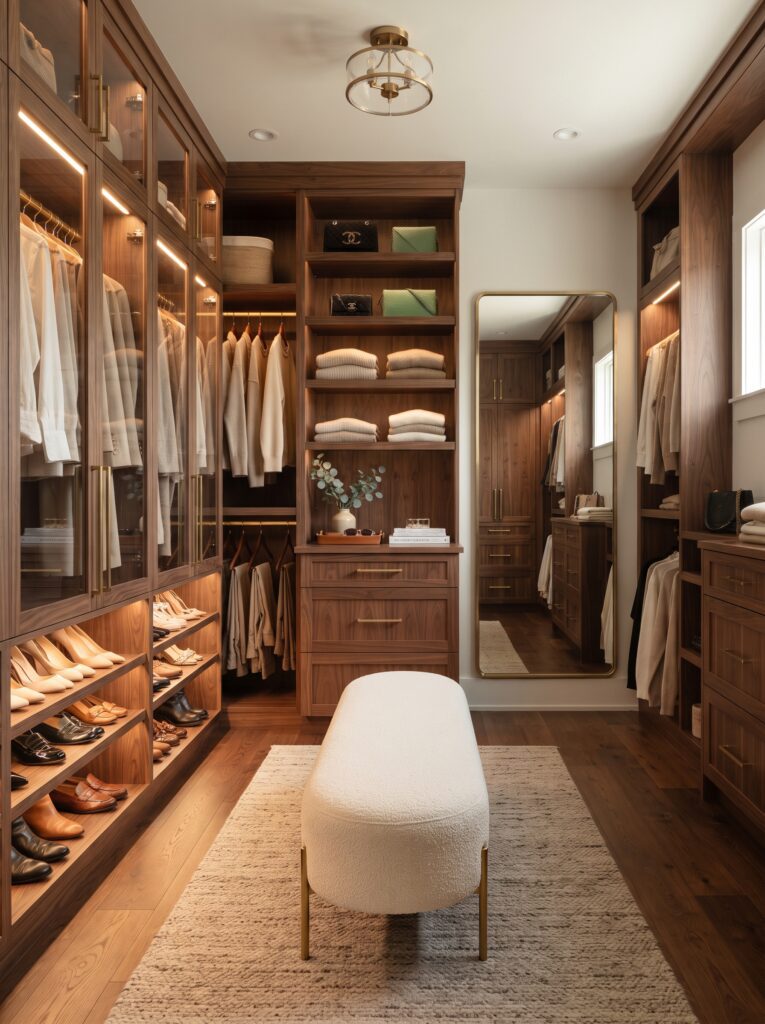
For many homeowners, the dream is not necessarily having the biggest closet. It is having a closet where everything has a place, clothing is easy to see, accessories are accessible, and the entire room feels intentional.
If you are searching for walk-in closet ideas, walk-in closet organization ideas, luxury closet design, or ways to make a small closet feel more expensive, there are plenty of design solutions that can create a polished result without requiring a massive renovation.
The secret is combining smart storage, attractive materials, good lighting, and thoughtful organization.
Why a Well-Designed Walk-In Closet Matters
Closets are often overlooked when decorating a home.
Living rooms receive furniture and artwork. Bedrooms receive beautiful bedding and lighting. Kitchens receive carefully selected cabinets and countertops.
But the closet is where your day often begins.
A well-designed walk-in closet can make getting dressed easier and reduce everyday visual clutter. When clothing, shoes, handbags, jewelry, and accessories have designated places, you spend less time searching for things and more time enjoying the space.
A beautiful closet can also make an ordinary daily routine feel more intentional.
You don’t need a celebrity-sized dressing room to achieve that effect.
Even a modest walk-in closet can feel sophisticated when the layout is efficient and the materials work together.
1. Start With a Functional Closet Layout
Before choosing colors, handles, shelves, or decorative accessories, consider the layout.
A beautiful closet that doesn’t function well will quickly become frustrating.
Think about the way you naturally use the space.
Where do you get dressed?
Where do you reach for shoes?
Where do you store handbags?
Which clothes do you wear most often?
Which items are seasonal?
Your answers should influence the placement of storage.
Frequently used clothing should be easy to reach, while less frequently used items can occupy higher shelves or less accessible areas.
If possible, divide the closet into clear zones.
For example:
Everyday clothing zone
Formal clothing zone
Shoes
Handbags
Accessories
Folded clothing
Seasonal storage
This simple division can make even a busy closet feel calmer.
2. Use Warm Wood for an Elevated Look
One of the easiest ways to create a luxury-inspired closet is through cabinetry.
Warm walnut, oak, or medium-toned wood can immediately add richness and character.
Instead of making every surface glossy white, consider introducing wood throughout the closet.
Warm wood works beautifully with:
- Cream
- Oatmeal
- Taupe
- Soft gray
- Black
- Aged brass
- Natural leather
For a more contemporary look, combine warm wood with clean lines.
For a traditional closet, consider paneled cabinetry and classic hardware.
For a transitional closet, mix simple cabinetry with vintage-inspired lighting and accessories.
3. Make Lighting a Priority
Good closet lighting is essential.
It should be attractive, but it also needs to help you see the actual colors and textures of your clothing.
A combination of lighting types often works better than relying on a single ceiling fixture.
Consider:
- Ceiling lighting
- Cabinet lighting
- Shelf lighting
- Pendant lights
- Wall sconces
- Mirror lighting
Integrated lighting inside shelves or cabinets can make a dramatic difference.
It can also give the closet a boutique-like atmosphere.
Warm lighting is particularly useful for creating a relaxed residential feeling, while task lighting around a mirror helps when getting ready.
4. Add a Full-Length Mirror
A full-length mirror is both practical and decorative.
It allows you to see an entire outfit while also making the room feel larger.
If your closet has enough space, choose a mirror with a substantial frame.
Options include:
- Aged brass
- Dark wood
- Black metal
- Antique-inspired gold
- Natural oak
For a classic look, an arched mirror can soften the straight lines of cabinetry.
For a modern closet, a simple frameless mirror can keep the room visually clean.
5. Create a Dedicated Shoe Display
Shoes can quickly become one of the most difficult items to organize.
Instead of keeping them scattered on the floor, create dedicated shelving.
Adjustable shelves allow you to accommodate different shoe heights.
Boots may need taller compartments, while sneakers and flats can use shorter shelves.
If you want a boutique-inspired appearance, organize shoes by type or color.
You can also place your most frequently worn shoes at eye level.
The goal is to make your collection easy to see rather than hiding everything in deep storage.
6. Give Handbags Their Own Space
Handbags often lose their shape when stacked or squeezed into crowded shelves.
A dedicated handbag section can protect them while making them easier to access.
Open shelves work well for structured bags.
Hooks can be useful for smaller everyday bags.
For valuable or delicate pieces, enclosed glass-front cabinets can provide protection while keeping them visible.
If your closet is small, use vertical space rather than taking up valuable floor area.
7. Use Glass-Front Cabinets
Glass-front doors can make a closet feel more like a luxury boutique.
They allow you to see what’s inside while protecting clothing and accessories from dust.
They work particularly well for:
- Handbags
- Shoes
- Jewelry
- Watches
- Folded sweaters
- Special accessories
If you choose glass-front storage, keep the contents reasonably organized.
Visible storage looks beautiful when curated but can make a room feel messy when overcrowded.
8. Add an Island If You Have the Space
A central island is one of the classic features of a larger walk-in closet.
It provides additional drawers and a convenient surface for folding clothing or organizing accessories.
But an island should not be added simply because it looks luxurious.
There needs to be enough space around it for comfortable movement.
If your closet is relatively compact, a narrow dresser or wall-mounted storage may be more practical.
For larger rooms, an island can become the central architectural feature.
Choose drawers rather than open shelving if you want to hide smaller items.
9. Include a Comfortable Bench
A small bench can make a closet significantly more functional.
It gives you somewhere to sit while putting on shoes and can also become a visual focal point.
A cushioned bench in:
- Cream boucle
- Linen
- Velvet
- Leather
can add softness to a room filled with hard cabinetry.
For a traditional closet, consider a wooden bench with an upholstered cushion.
For a modern closet, choose a simple upholstered form.
If floor space is limited, a compact ottoman can provide the same function.
10. Introduce Aged Brass Hardware
Hardware is one of the small details that can dramatically change the overall appearance of cabinetry.
Aged brass is particularly effective when you want a warm, classic appearance.
It pairs beautifully with walnut, oak, cream, and taupe.
Other options include:
- Matte black
- Brushed nickel
- Polished chrome
- Antique bronze
Try to choose hardware that complements the home’s overall style.
The closet should feel connected to the rest of the house rather than like a completely separate design experiment.
11. Organize Clothing by Function
A closet becomes easier to maintain when the organization system matches your lifestyle.
One approach is to group clothing by category:
Dresses
Tops
Pants
Jackets
Sweaters
Formalwear
Activewear
You can then organize each category by color.
Another approach is to organize by color first.
There is no single correct system.
The best system is the one you will actually maintain.
If you reach for black, cream, and neutral clothing frequently, keeping those pieces together can make daily outfit planning easier.
12. Use Matching Hangers
Matching hangers are a small upgrade with a significant visual impact.
When every hanger is different, even an organized closet can look chaotic.
Slim matching hangers create visual consistency and can save space.
Wooden hangers offer a warmer, traditional appearance.
Velvet hangers are useful when you want clothing to remain securely in place.
Whichever type you choose, consistency matters more than the specific material.
13. Don’t Forget Jewelry Storage
Jewelry deserves dedicated organization.
Instead of keeping necklaces, earrings, and bracelets in a random drawer, consider shallow compartments with dividers.
A jewelry drawer can include:
- Ring sections
- Earring compartments
- Necklace hooks
- Watch cushions
- Small accessory trays
For a luxury-inspired closet, a glass-topped drawer can make jewelry feel like part of the room’s design.
14. Create a Small Getting-Ready Zone
If space allows, designate one area specifically for getting ready.
A mirror, stool, small surface, and attractive lighting can create a mini vanity.
This doesn’t need to be elaborate.
Even a narrow countertop with a mirror above it can provide a useful preparation area.
Keep frequently used items nearby so you don’t need to move between the closet and bathroom constantly.
15. Add Soft Textiles
Closets can contain many hard surfaces.
Cabinetry, mirrors, shelving, metal hardware, and flooring can make the space feel visually rigid.
Soft textiles help balance that.
Consider:
- A runner
- Small upholstered bench
- Fabric baskets
- Linen storage boxes
- Window treatments if the closet has windows
A textured runner can also make standing and getting dressed more comfortable.
Choose a low-pile style that is easy to clean and doesn’t interfere with doors.
16. Make a Small Walk-In Closet Feel Larger
You don’t need a huge room to create an attractive closet.
If space is limited, prioritize vertical storage.
Use shelves that extend close to the ceiling and place less frequently used items on upper shelves.
Light colors can also make a room feel more open.
Mirrors are another useful tool.
Instead of using many bulky pieces of furniture, use built-in cabinetry that follows the walls.
The cleaner the floor remains, the more spacious the closet will feel.
17. Use Open Shelving Strategically
Open shelving can make clothing and accessories easy to see.
However, not everything needs to be exposed.
A good closet usually benefits from a combination of:
Open storage
for frequently used items.
Closed storage
for less attractive or less frequently used items.
Drawers
for small accessories.
Glass storage
for items you want to display.
This combination creates visual balance.
18. Add Personality With Artwork
A closet doesn’t have to be purely functional.
Artwork can make it feel like an actual room.
A small framed print above a dresser or bench can add personality without taking up storage space.
Consider:
- Botanical artwork
- Abstract prints
- Vintage fashion illustrations
- Black-and-white photography
- Small oil-style paintings
Choose artwork that complements the closet’s palette.
The goal is to make the room feel personal rather than showroom-like.
19. Bring in One Decorative Accent
You don’t need dozens of accessories.
One or two carefully selected objects can be enough.
Try:
- A ceramic vase
- Small sculpture
- Decorative tray
- Vintage box
- Framed photograph
- Small plant
Keep decorative items away from areas where they interfere with daily use.
A closet should remain functional first.
20. Make the Closet Smell Beautiful
A luxury experience is not only visual.
Scent can also influence how a space feels.
A subtle cedar, linen, lavender, or clean botanical fragrance can make the closet feel fresh.
Cedar storage accessories can also be practical for protecting clothing.
Avoid overwhelming fragrances, especially in a small enclosed space.
A subtle scent is usually more pleasant than a strong one.
21. Use a Boutique-Inspired Color Palette
For a timeless closet, consider a restrained palette.
Some combinations include:
Warm Walnut + Cream
Classic, warm, and sophisticated.
Taupe + Brass
Soft and elegant.
White Oak + Black
Clean and contemporary.
Chocolate Brown + Oatmeal
Rich and cozy.
Soft Gray + Natural Wood
Calm and transitional.
Keeping the palette limited helps the clothing become part of the visual composition.
22. Make the Closet Match Your Home
One mistake homeowners sometimes make is designing a closet that feels disconnected from the rest of the house.
If your home has warm wood floors and brass details, consider repeating those materials.
If the rest of your home is modern, keep the closet relatively clean-lined.
If your home is traditional, classic cabinetry and vintage-inspired hardware may feel more natural.
Consistency creates a stronger overall design.
23. Luxury Doesn’t Have to Mean Expensive
A luxury-looking closet is often more about organization and visual consistency than the price of every item.
You can create a polished effect by:
- Using matching hangers
- Installing consistent hardware
- Adding warm lighting
- Organizing by category
- Using attractive storage boxes
- Adding one beautiful mirror
- Keeping surfaces uncluttered
- Choosing a cohesive color palette
These changes can make a dramatic difference without completely rebuilding the room.
24. Closet Organization Habits That Keep the Space Beautiful
Even the best closet design can become messy without a simple maintenance routine.
A few habits can help.
Return clothing to its designated area after wearing it.
Keep frequently used accessories accessible.
Rotate seasonal clothing when necessary.
Remove items you no longer use.
Avoid filling every shelf to maximum capacity.
Leave some breathing room between hanging garments.
When the closet has empty space, it becomes easier to maintain.
25. The Final Details That Make a Closet Feel Special
The difference between an ordinary closet and a beautifully designed dressing room often comes down to small details.
Think about:
- Hardware
- Hangers
- Lighting
- Mirrors
- Textiles
- Storage boxes
- Drawer dividers
- Artwork
- Seating
- Flooring
These elements work together to create an experience.
You don’t need every luxury closet feature.
You simply need the features that make sense for your lifestyle.
Conclusion
A walk-in closet should make your everyday routine easier, not more complicated. The most successful closet designs combine beautiful materials with practical organization. Warm wood cabinetry, thoughtful lighting, full-length mirrors, dedicated shoe storage, glass-front cabinets, comfortable seating, and carefully planned drawers can transform an ordinary storage room into a sophisticated dressing space.
Whether you have a spacious primary closet or a smaller walk-in wardrobe, focus on creating a system that works for the way you actually live. Choose a cohesive color palette, use vertical space intelligently, keep frequently used items accessible, and introduce a few personal details to make the room feel like yours.
A luxurious closet isn’t defined only by its size or price tag. It is defined by how effortlessly it works—and how good it makes you feel every time you walk in.
- Cozy Outdoor Living Ideas for Chilly Fall Evenings
- Wallpaper Ideas That Turn a Forgotten Space Into a Design Moment
- Beautiful Home Gym Ideas That Don’t Look Like a Garage Workout Space
- Walk-In Closet Ideas That Make Everyday Dressing Feel Luxurious
- Elegant Fall Front Porch Ideas That Feel Warm, Not Overdone